
Tips for Potty Training a Girl
Potty training girls is one of those parenting milestones that can feel like a very big project. Then, before you know it, it's just a funny story you tell at soft play. Right now, in the thick of it, with a changing bag over one shoulder and a toddler who has just announced she needs a wee with absolutely zero warning? It can feel a lot. You're mid-school run, snack pot rattling around somewhere at the bottom of your bag, and she needs to go. Right now. This very second.
If you're here, you're either just starting to think about potty training your girl or you're already knee-deep in training pants and sticker charts. Either way, this guide covers everything you need, from knowing when to start, right through to handling the wobbly bits with patience and a good sense of humour.
Potty Training Tips for Girls: Where to Start
Before anything else, it helps to know that potty training isn't a race. Not even a little bit. The age at which little ones are ready varies a lot, and the most useful thing you can do right now is watch for the signs rather than watching the calendar.

Signs Your Daughter Might Be Ready
Readiness looks a little different in every child, but these are the signals worth looking out for:
She's staying dry for longer stretches, including after naps
She knows when she's done a wee or a poo (even if she tells you cheerfully after the fact or tried to hide it)
She can pull her trousers or leggings up and down on her own, or is getting close
She's showing interest in the toilet or potty, such as following you in, asking questions, wanting a go herself
She understands simple instructions and can communicate her needs, even in basic toddler terms
You don't need every single one of these ticking at once. Two or three solid signs is usually plenty. Trust your gut: you know your girl best.

What Age to Start Potty Training a Girl
Most girls begin potty training somewhere between 18 months and 3 years, with the average sitting around 2 to 2.5 years in the UK. However, the right age to start potty training your girl is simply when she is ready, not when a milestone chart or a well-meaning relative suggests she should be.
Research published by Psychology Today found that girls typically complete toilet training around 2 to 3 months earlier than boys, and tend to show readiness signs from around 24 months compared to 26 months for boys on average. So while the gap isn't enormous, it does mean your daughter may well be ready to start a little sooner than her male peers.
| Age Range | What's Typical |
|---|---|
| 18 months | Some early signs of awareness; rarely fully ready |
| 2 to 2.5 years | Most common window for girls to start training |
| 3 years+ | Completely normal; some children just need a little more time |
Starting too early often means more accidents, more frustration and, rather unhelpfully, a longer road to being reliably dry. Starting when she's actively showing those signs of readiness tends to move faster, because she's an enthusiastic little participant rather than a reluctant one.
If you're unsure, a chat with your health visitor is always worth it. They've seen it all and can help you figure out whether the timing feels right for your daughter.
How to Start Potty Training Girls
Once you've spotted those readiness signs and chosen a sensible window (read: not the week before you go on holiday or start at a new nursery), here's how to get potty training your girl off to the best start.
Pick Your Moment Well
Consistency is your best friend during potty training. Try to start when you have a few days at home without too much disruption - a long weekend or a quiet week works really well. The first couple of days are the most hands-on, and being close to the potty makes a huge difference. Clear the diary a little, stock up on snacks and spare leggings, and go for it.
Introduce the Potty Gently
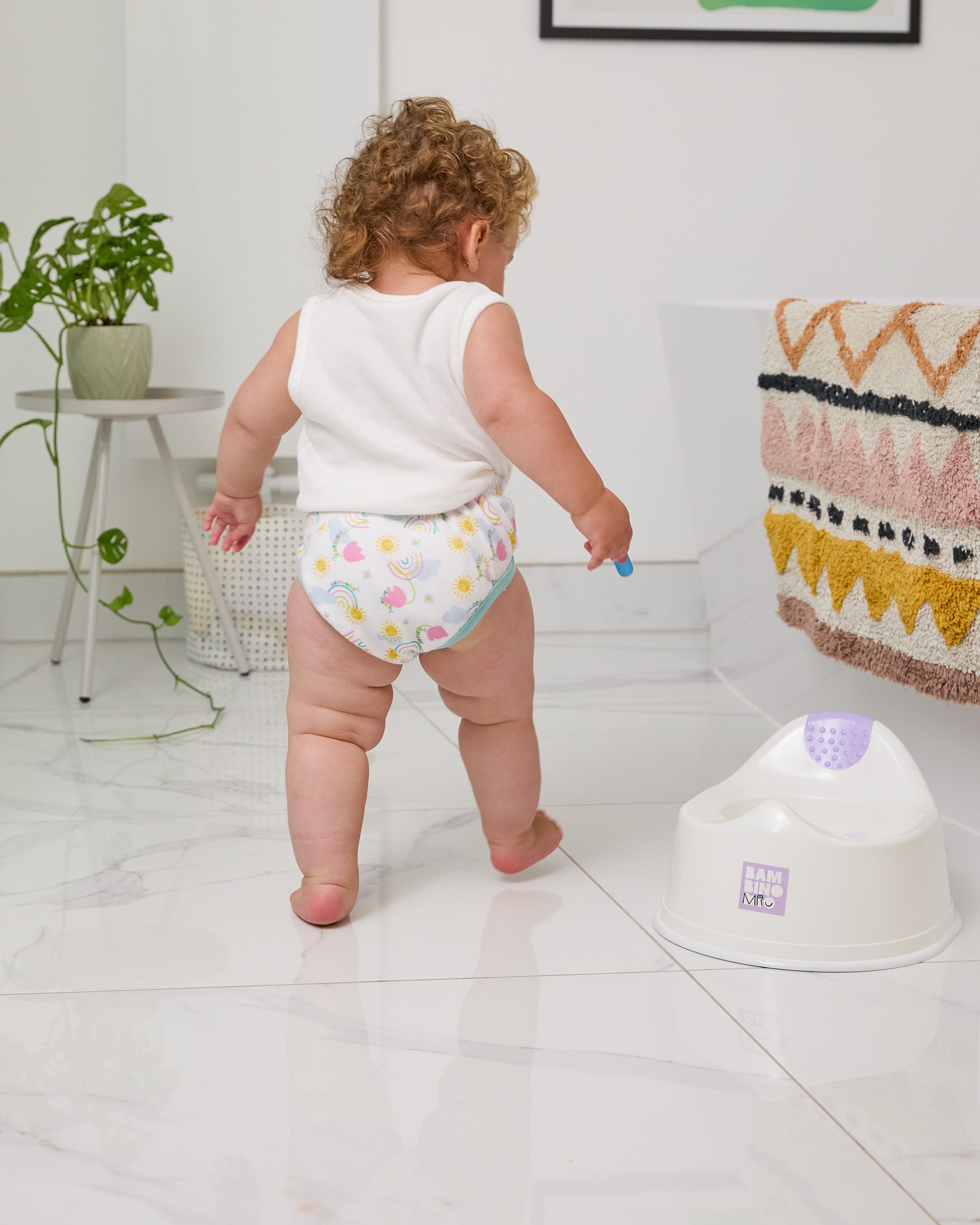
Some little ones take to the potty straightaway; others need a bit of time to feel comfortable with it. Let her sit on it fully clothed first if that helps. Bring it into the routine at natural pauses in the day, such as after breakfast or before bath time.The Wiping Chat (This One's Important for Girls)
Front to back wiping matters for girls, and it's worth making it part of your potty training conversation from the very beginning. Wiping front to back helps prevent urinary tract infections, which girls are more prone to than boys. It doesn't need to be a big deal, just a calm, matter-of-fact thing you teach her alongside everything else.
Keep Clothes Simple
Stretchy leggings and pull-up style trousers are your best friends right now. Anything with fiddly buttons or complicated fastenings slows things down badly when urgency strikes. Easy waistbands mean she can manage more independently, which does wonders for her confidence.Make Peace With Accidents
They will happen. Often, at first. Accidents are a completely normal part of potty training girls, not a sign anything is going wrong. Cleaning up calmly, saying something like "oops, let's try the potty next time" and moving on quickly keeps the atmosphere light and encouraging, which is exactly what she needs.How Does Potty Training Differ for Boys and Girls?
Honestly? Less than most people expect. The fundamentals of consistency and patient encouragement apply equally to every child. There are a few practical differences worth knowing about when potty training girls specifically, however.
| Girls | Boys | |
|---|---|---|
| Sitting vs standing | Always sitting | May need to learn standing later |
| Average readiness age | Slightly earlier on average | Slightly later on average |
| UTI risk | Higher, front to back wiping is key | Lower |
| Potty mechanics | Straightforward | Can involve a bit more negotiation |
Girls tend to learn sitting down for both wee and poo from the very start, which makes things a bit more straightforward in practice. There's no debate about standing versus sitting, and no aim to master. One less thing to navigate.
Girls can also be a little more prone to UTIs during training, particularly while wiping technique is still being learned. It's worth keeping an eye out for signs of discomfort or more frequent urination in the early weeks and heading to your GP if anything doesn't seem right.


How to Encourage Potty Training for Girls
Motivation is wonderfully personal. Some little girls are completely sold by a sticker chart; others couldn't care less about stickers but would do anything for an extra story before bed. Figuring out what makes your daughter tick is genuinely one of the most useful things you can do when encouraging potty training.
Here's what tends to work well.
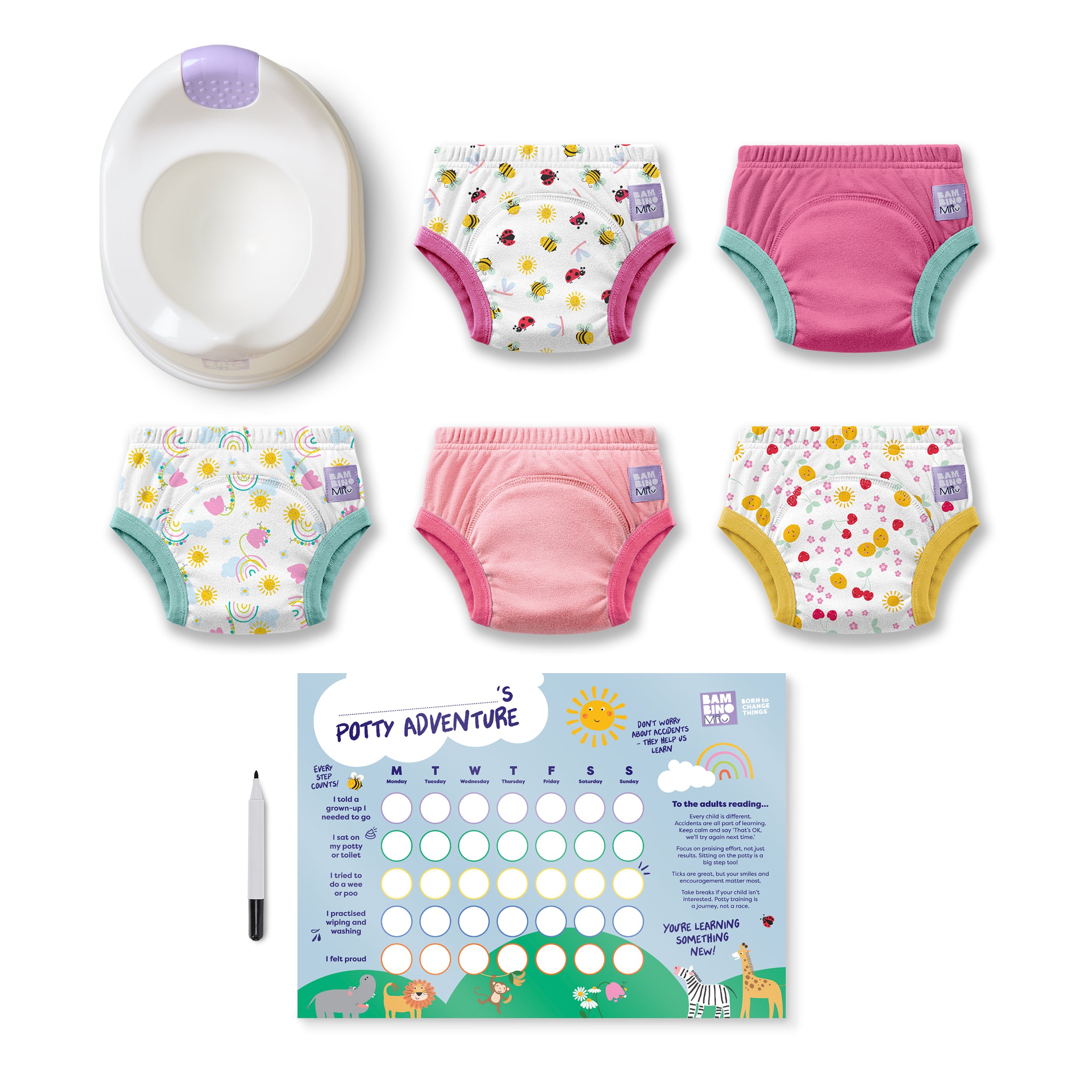
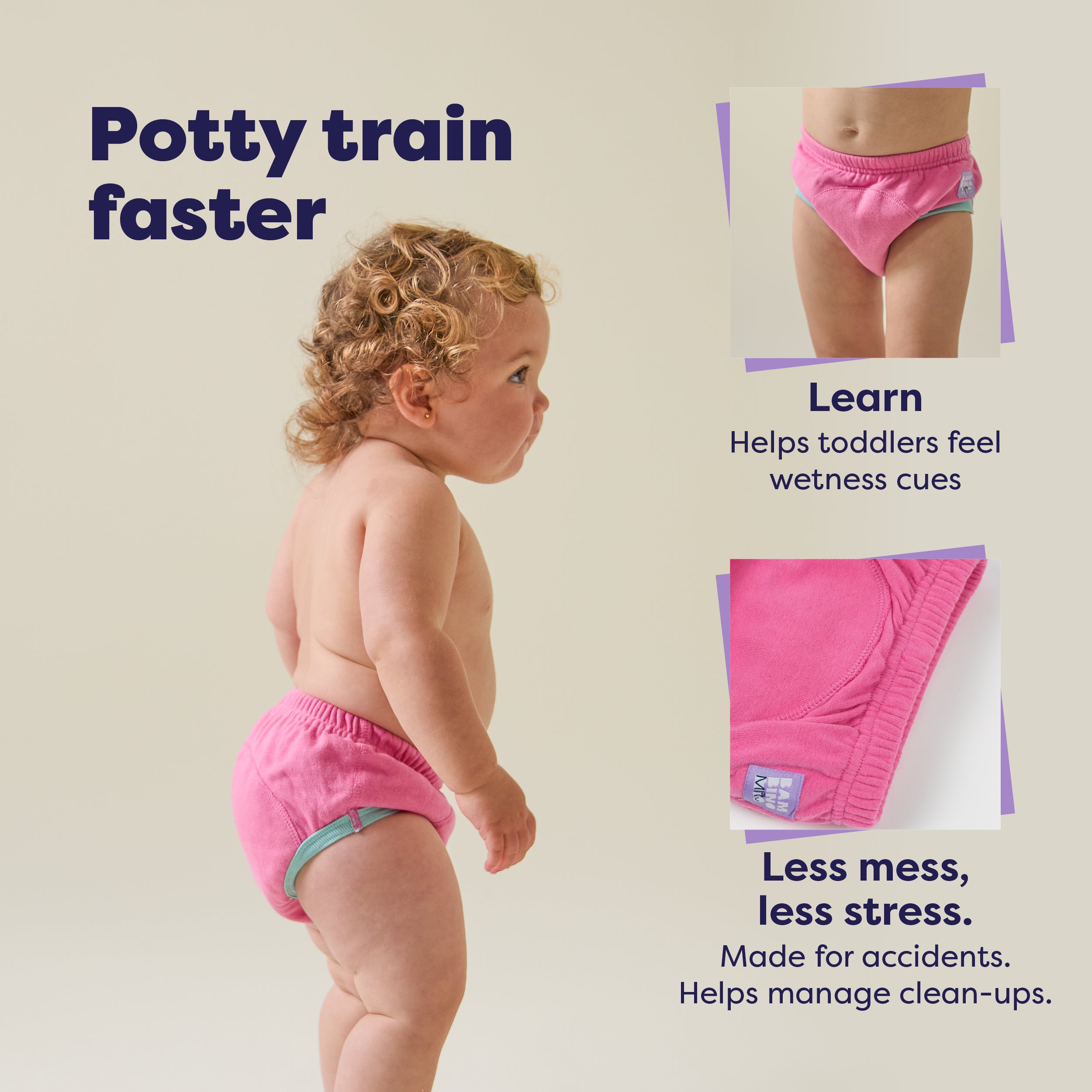
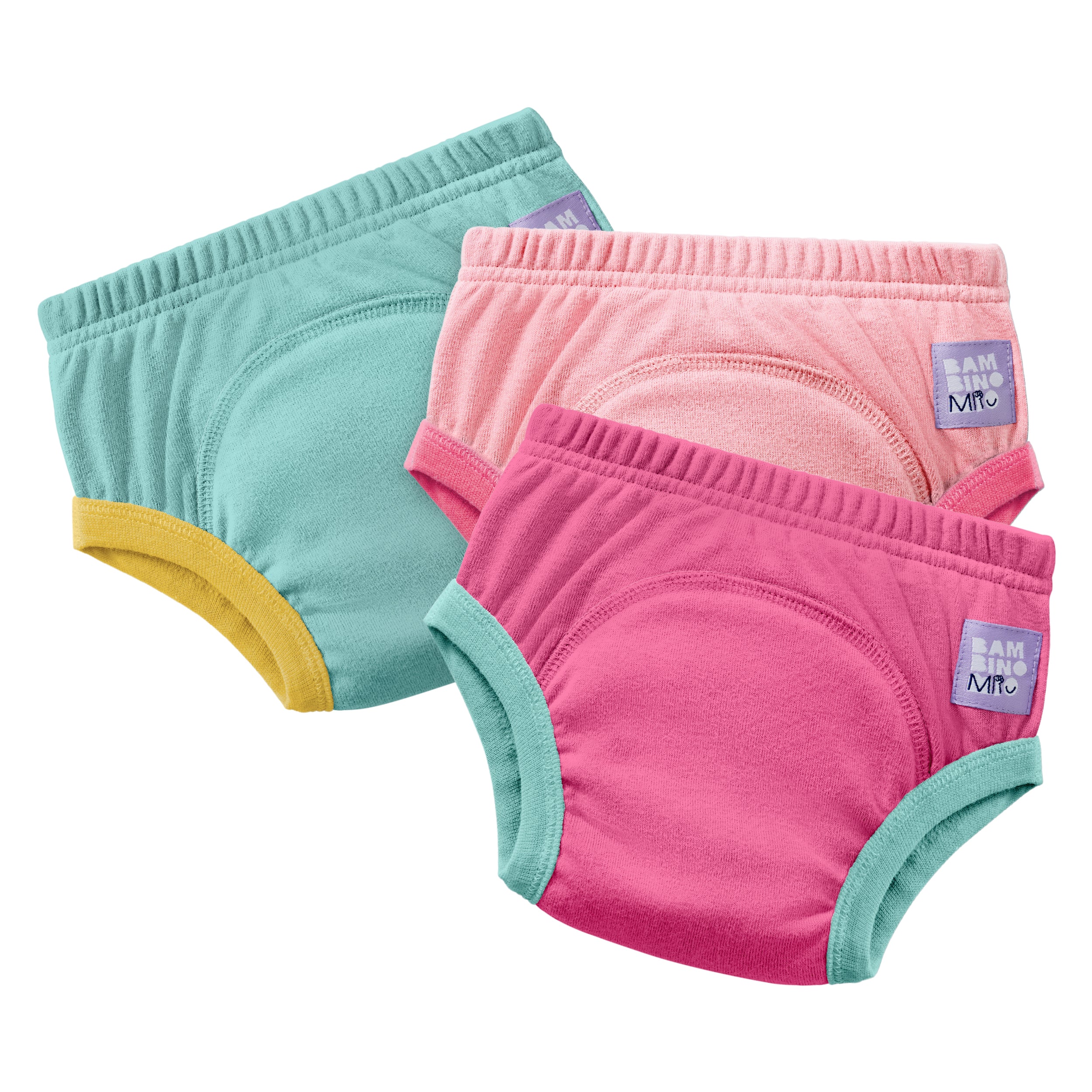
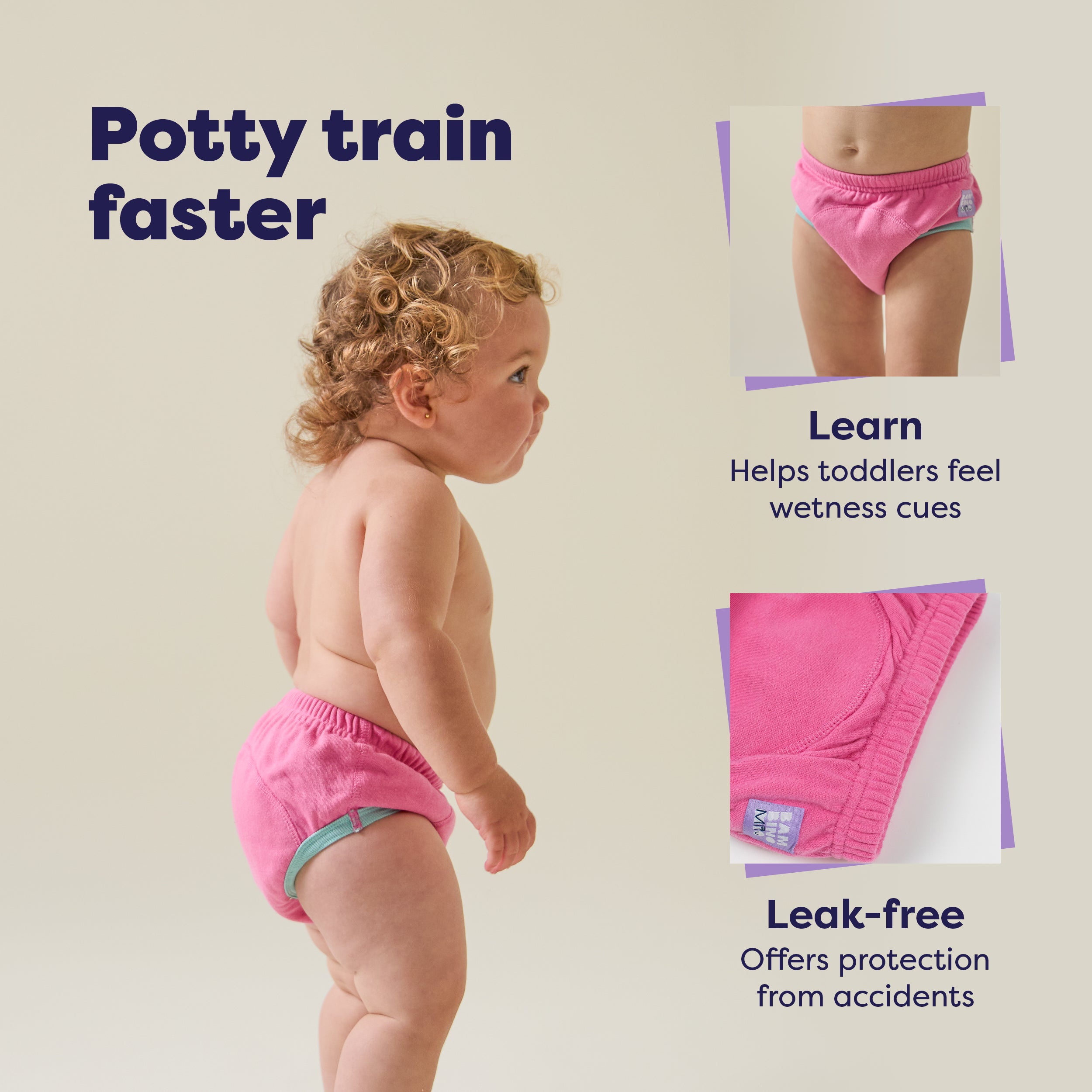
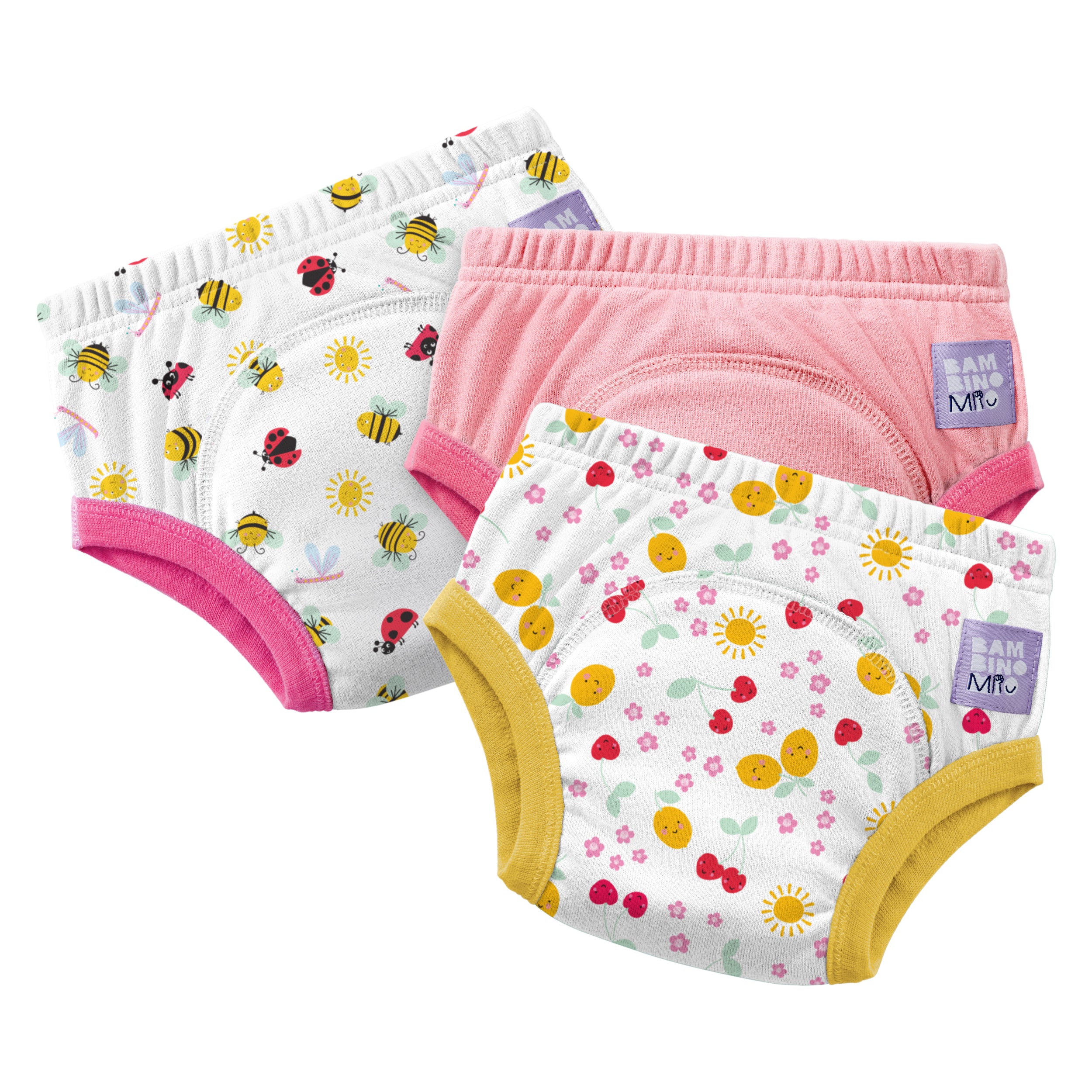
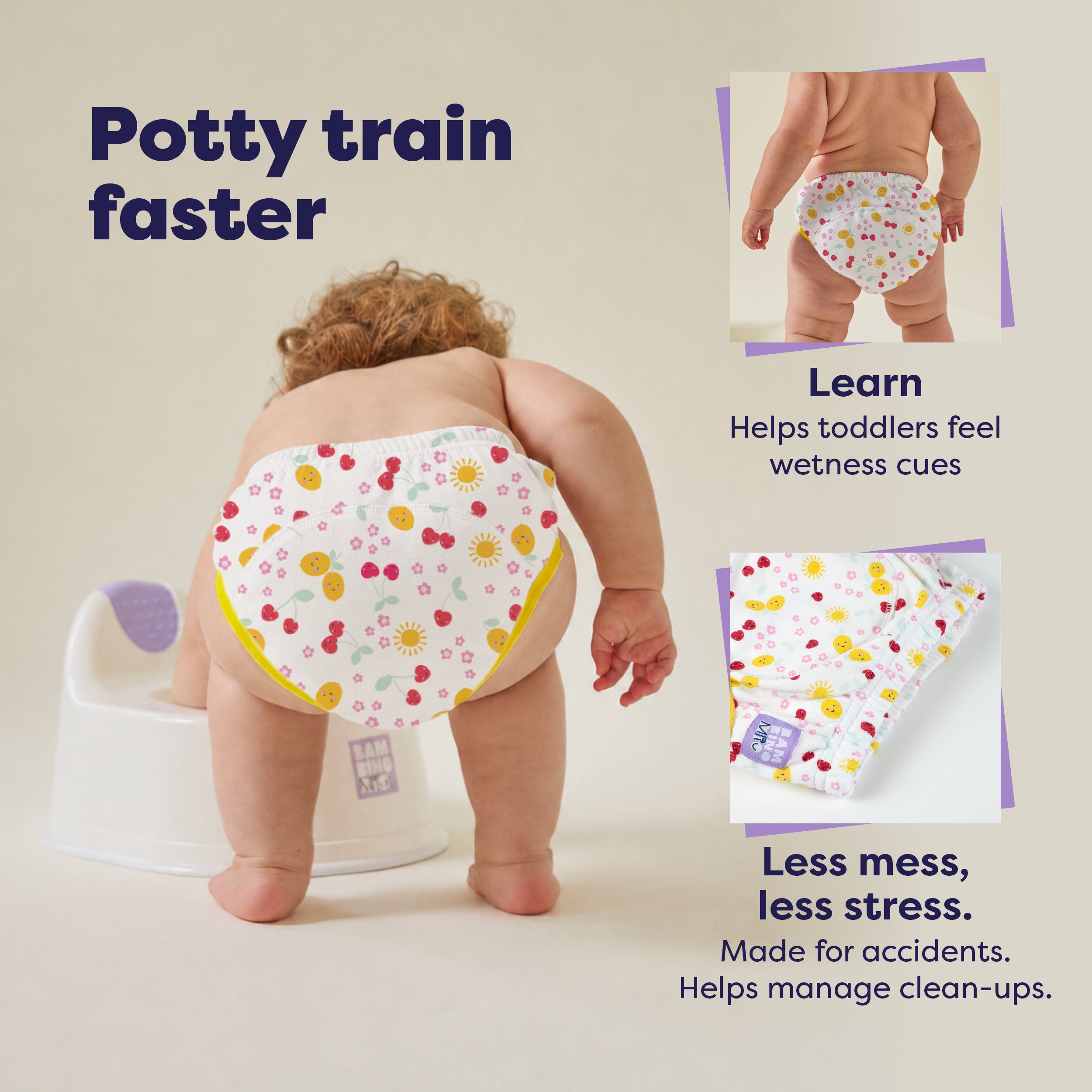
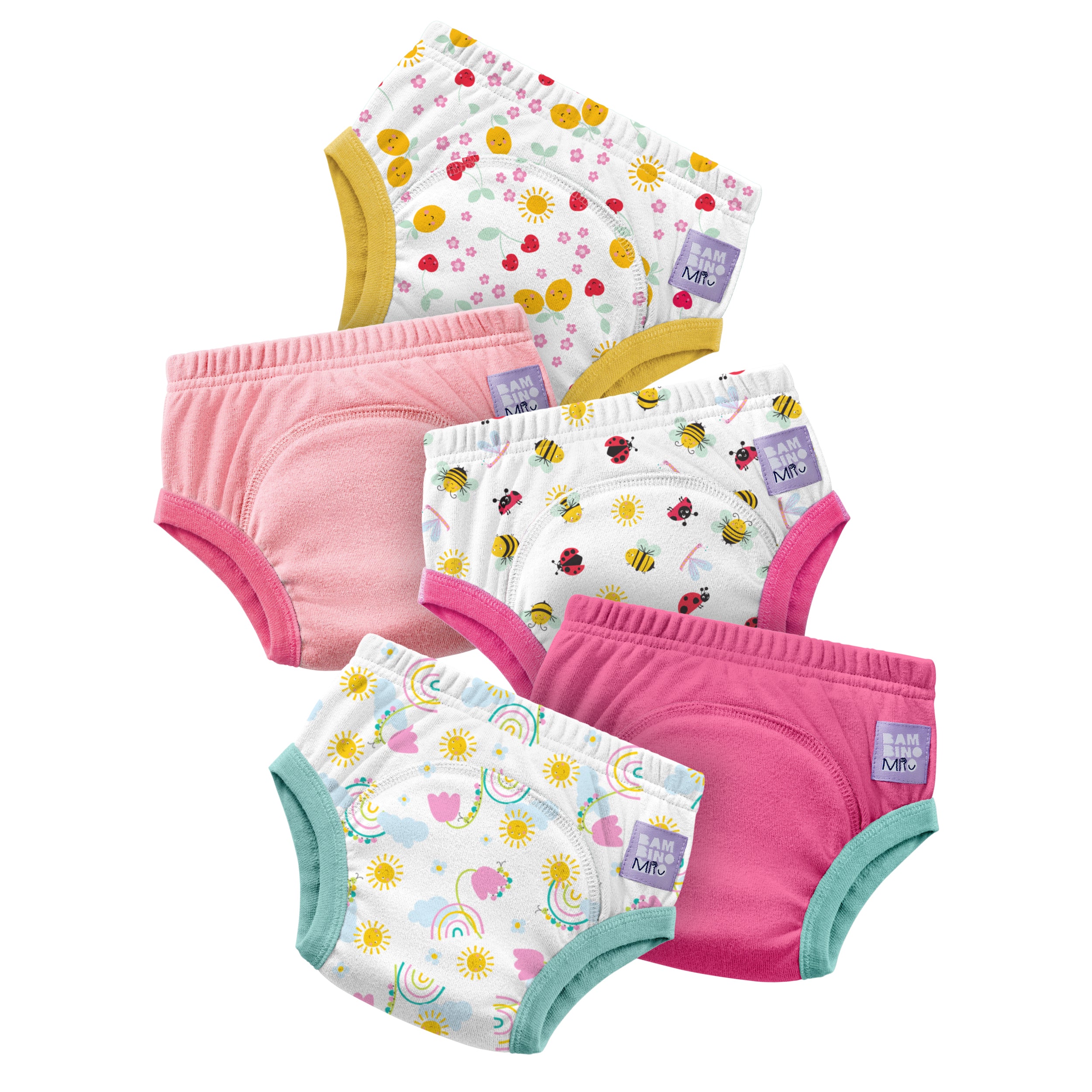
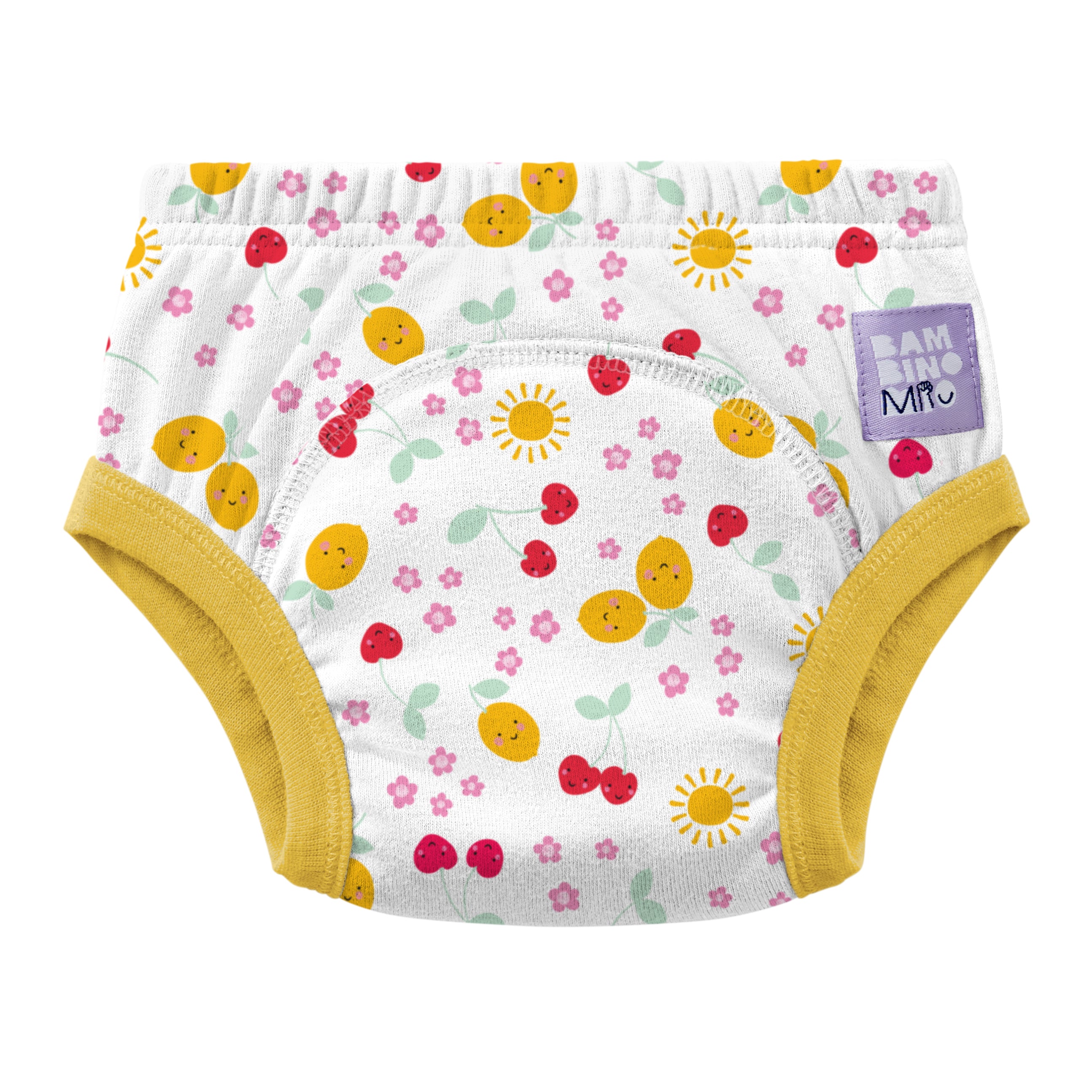
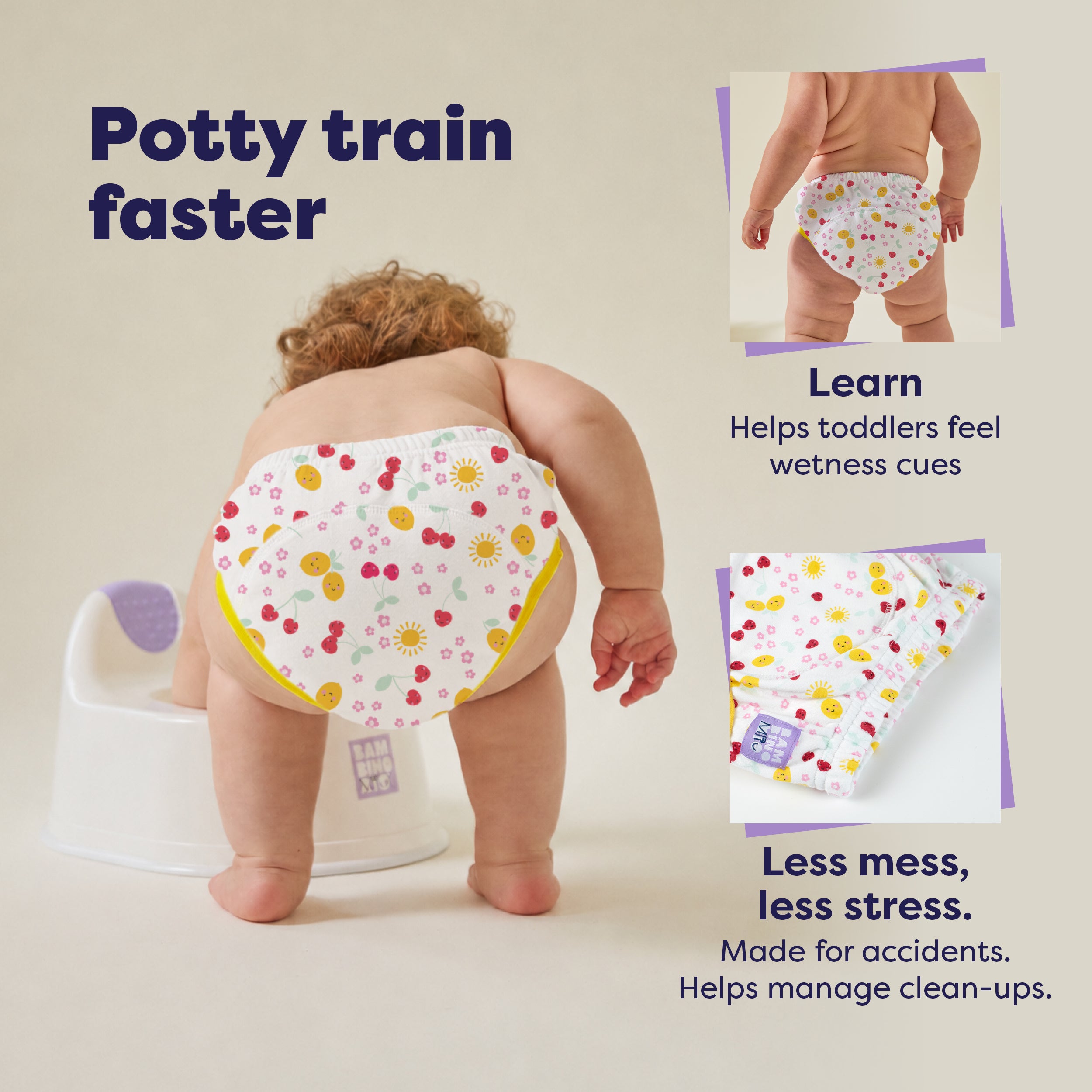
Give her ownership. Let her choose her own potty. Yes, even if it's the pink sparkly one or the one shaped like a frog. The same goes for her potty training pants. When she picks her own patterns and feels part of the process, she's far more invested in keeping them dry. That little bit of pride goes a long way.
Celebrate every win, big and small. "You did it, clever girl!" goes a very long way. She's working hard at something genuinely new. Positive reinforcement keeps the momentum going without any of the pressure.
Normalise it at every turn. Talk about it calmly, read books about it together, let her see that using the potty is just a perfectly ordinary part of life. The less dramatic it feels, the less resistance you'll usually get.
Get nursery on board. If she's at nursery or with a childminder, make sure everyone is using the same approach. Different messaging at home and nursery can be confusing for little ones in the early weeks. Most nurseries are very well practised at supporting children who are potty training, just let them know you've started and they'll work with you happily.
Encouragement is a vital part of making the process feel like something fun rather than a punishment.
Common Potty Training Challenges (and How to Handle Them)
Even when things are going really well, you'll probably hit a bump or two. Here are the most common ones and what to do about them.
Regression
Some children do brilliantly and then, a few weeks or months down the line, start having accidents again. This is completely normal, especially around big changes such as a new sibling arriving or starting nursery. Try not to panic. Go back to basics calmly, keep the routine steady, and it usually passes on its own.
Refusing the Potty
If she suddenly digs her heels in after making lovely progress, it's worth thinking about what might have shifted. A negative experience (a scary flush, feeling rushed, an uncomfortable potty) can be enough to knock her confidence. Step back, lower the pressure and let her come back to it at her own pace. It nearly always works better than pushing through.
The Wiping Chat (This One's Important for Girls)
Front to back wiping matters for girls, and it's worth making it part of your potty training conversation from the very beginning. Wiping front to back helps prevent urinary tract infections, which girls are more prone to than boys. It doesn't need to be a big deal, just a calm, matter-of-fact thing you teach her alongside everything else.
Night Dryness Coming Later
This one catches a lot of parents off guard. Day dryness and night dryness are completely separate developmental milestones, and it's entirely normal for a child to be reliably dry during the day but still need a nappy at night for months afterwards. Research shows it is better for a child's bladder and bowel health to stop using nappies between 18 and 30 months, but night dryness depends on hormonal changes that are completely out of her control. There's no need to tackle both at once. It comes when it comes.
| Challenge | What Helps |
|---|---|
| Regression | Back to basics, calm routine, no drama |
| Potty refusal | Less pressure, more time, check for negative triggers |
| Night accidents | Separate milestone entirely - patience and a good waterproof sheet |
| Slow progress generally | Every child is different; keep going gently |
Choosing the Right Moment to Start Potty Training Your Girl
Potty training girls tends to go most smoothly when life isn't already at full tilt. That doesn't mean waiting for some mythical perfect window, mostly because it doesn't exist, and life is always a bit full. But if there's a big trip coming up or a major change on the horizon, giving yourself a few more weeks before starting can make the whole thing feel considerably less stressful.
A settled few days at home, a potty she loves, pants she's excited about and a parent who's feeling relatively calm - that's honestly a pretty good recipe.
If you're just getting started and want a broader overview of what to expect from the whole journey, our guide to potty training for new starters is a great place to begin.
Every little girl gets there in her own time. With a calm approach, the right kit and a healthy sense of humour about the inevitable soggy moments, so will yours.
She's doing something brave and new, and your confidence in her matters more than any sticker chart. So does having potty training pants she's genuinely excited to wear, a potty she helped choose, and a parent who greets every accident with a clean pair of pants and a reassuring smile. Browse our complete selection of potty training pants and accessories here.You've got this. She's got this - she just might need a few extra pairs of pants first