
How to Potty Train Boys
Ask any parent who's been through potty training boys and you'll get one of two responses. Either a knowing smile and a reassuring "honestly, it was fine," or a slightly wild look in the eyes and a story involving a potty being used as a drum. Sometimes both, from the same person.
The truth is, potty training your little boy doesn't have to be the ordeal it's sometimes made out to be. With the right approach, the right kit and a good stash of spare trousers, you've got this. Here's everything you need to know before you get started.
Are Boys Harder to Potty Train?
It's one of the first things people say, isn't it? "Oh, boys take so much longer." And while there is a small kernel of truth in there, it's worth keeping things in perspective before you panic.
Research has found that the median age for boys to stay reliably dry during the day is around 35 months, compared to 32.5 months for girls. Boys also tend to show early readiness signs (like an interest in the potty) from around 26 months on average, versus 24 months for girls.
| Age Range | What's Typical for Boys |
|---|---|
| 18–24 months | Rarely fully ready; some early awareness |
| 2–2.5 years | Readiness signs may begin to appear |
| 2.5–3 years | Most common window to start potty training boys |
| 3 years+ | Completely normal; every little boy gets there |
So yes, boys often run a little later, but we're talking a couple of months, not a couple of years. Starting when your son is ready, rather than chasing a more specific timeline, is the single biggest factor in how smoothly things go.
When to Start Potty Training Boys
The most useful thing you can do before you start is watch your son rather than the calendar. Readiness signs are a far more reliable guide than any age milestone, and starting when he's showing them tends to make the whole process faster and a lot less fraught.
Signs Your Son Might Be Ready
He's staying dry for an hour or two at a stretch, sometimes after naps too
He notices when he's done a wee or a poo, even if the announcement is cheerfully after the fact
He can pull his trousers up and down on his own, or is getting close
He's showing interest in the potty or toilet, following you in, asking what's happening, wanting a go
He can understand and follow simple instructions and communicate when he needs something
Two or three of these ticking consistently is plenty to suggest he's ready to have a go. If you're not sure, your health visitor is always worth a chat. They know their stuff and will give you an honest steer on timing.
Do Boys Sit to Pee When Potty Training?
Yes, and this is probably the most searched question in the entire potty training boys universe, so let's get into it properly.
Starting seated is absolutely the right call, and it's what the NHS recommends too: if you have a boy, encourage him to sit down to pee, as sitting down will also encourage him to go if he needs a poo. Practically speaking, it means he's learning one thing at a time rather than juggling sitting, standing and aiming all at once. Bladder and bowel emptying is also more complete when seated, which helps everything work as it should.
Standing up tends to come naturally over time, usually once he starts noticing other boys doing it at nursery or when he's tall enough for it to just make sense. You don't need to teach it during training; it sorts itself out.
How to Start Potty Training Boys
Once those readiness signs are showing up reliably and you've found a good window to begin, here's how to get things off to the best start.
Pick Your Moment Wisely
Consistency is everything in the early days of potty training, so try to start when home life is relatively settled. A long weekend at home with minimal plans is ideal for the first few days, when being close to the potty really matters. Not the week before a holiday, or before a house move. Just a nice, ordinary stretch of time where you can focus without too much else going on.
Introduce the Potty Before You Begin
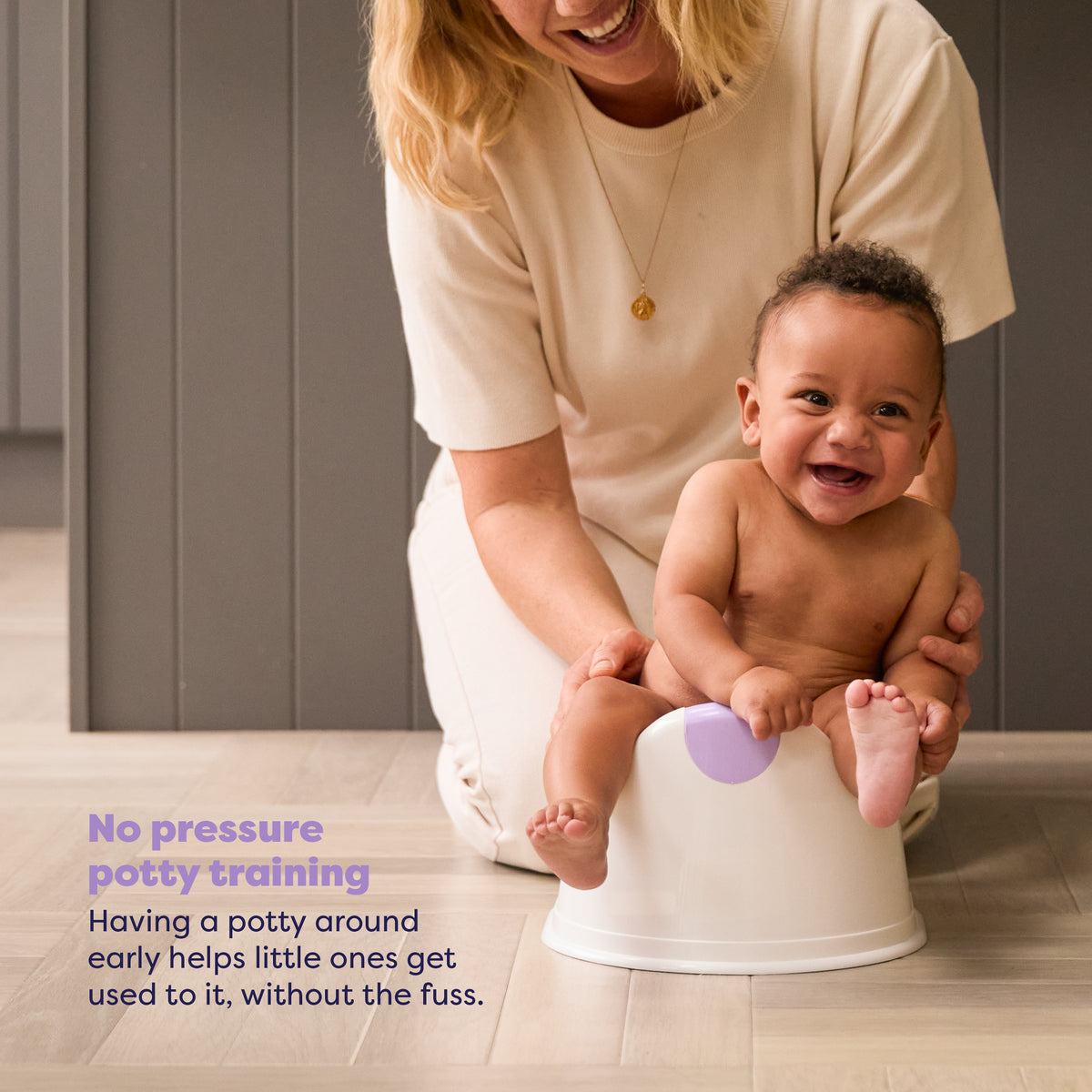
Bring the potty out a little before you officially start so it becomes a familiar and totally unremarkable object. Let him sit on it fully clothed if that helps him get comfortable with it. Some boys are immediately fascinated; others need a few days of it just being there before they want to engage with it. Both are fine.
Build a Gentle Routine
Rather than waiting for him to ask (which may not happen reliably at first), build regular potty sits into the day, such as after breakfast or before bed. You're doing the prompting while his awareness catches up, and over time he'll start initiating more and more himself. It's a gradual handover, not an overnight switch.
Keep Clothes Simple
Elasticated waistbands and easy-to-remove trousers are your absolute best friends right now. When urgency hits (and it always, always hits at the least convenient moment), fiddly fastenings are nobody's friend. Simple clothes mean he can manage more independently, which is brilliant for his confidence and brilliant for your nerves.
Handle Accidents With a Shrug
They will happen. Lots, at first. Cleaning up calmly with a "never mind, let's try the potty next time" keeps the whole atmosphere light and safe. He needs to know that accidents aren't disasters, because if he starts associating potty training with stress or disappointment, progress gets considerably trickier. Channel your inner zen parent. You've got this.
Potty Training Tips for Boys That Actually Work
Every little boy is different, but these are the things that tend to make the biggest difference.
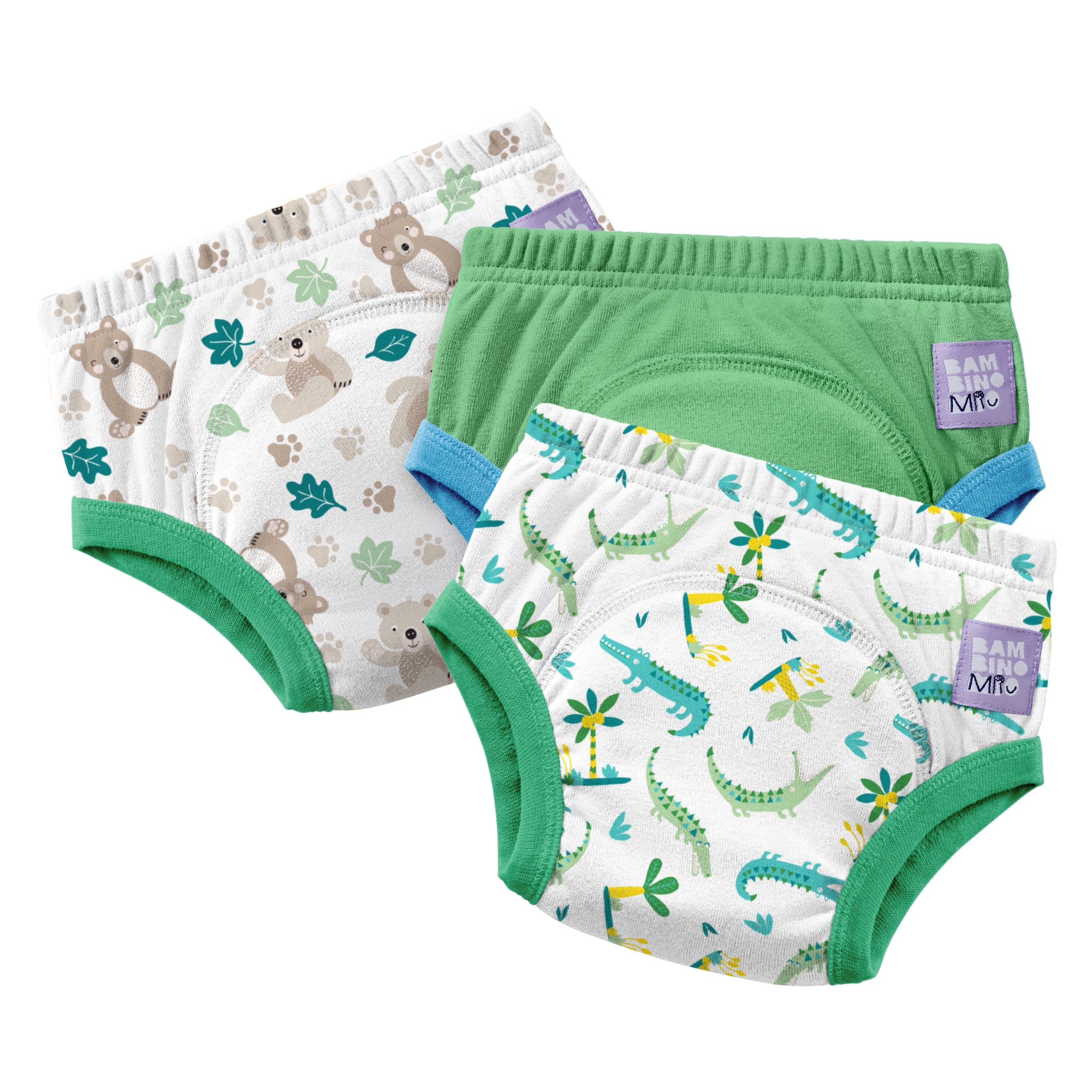
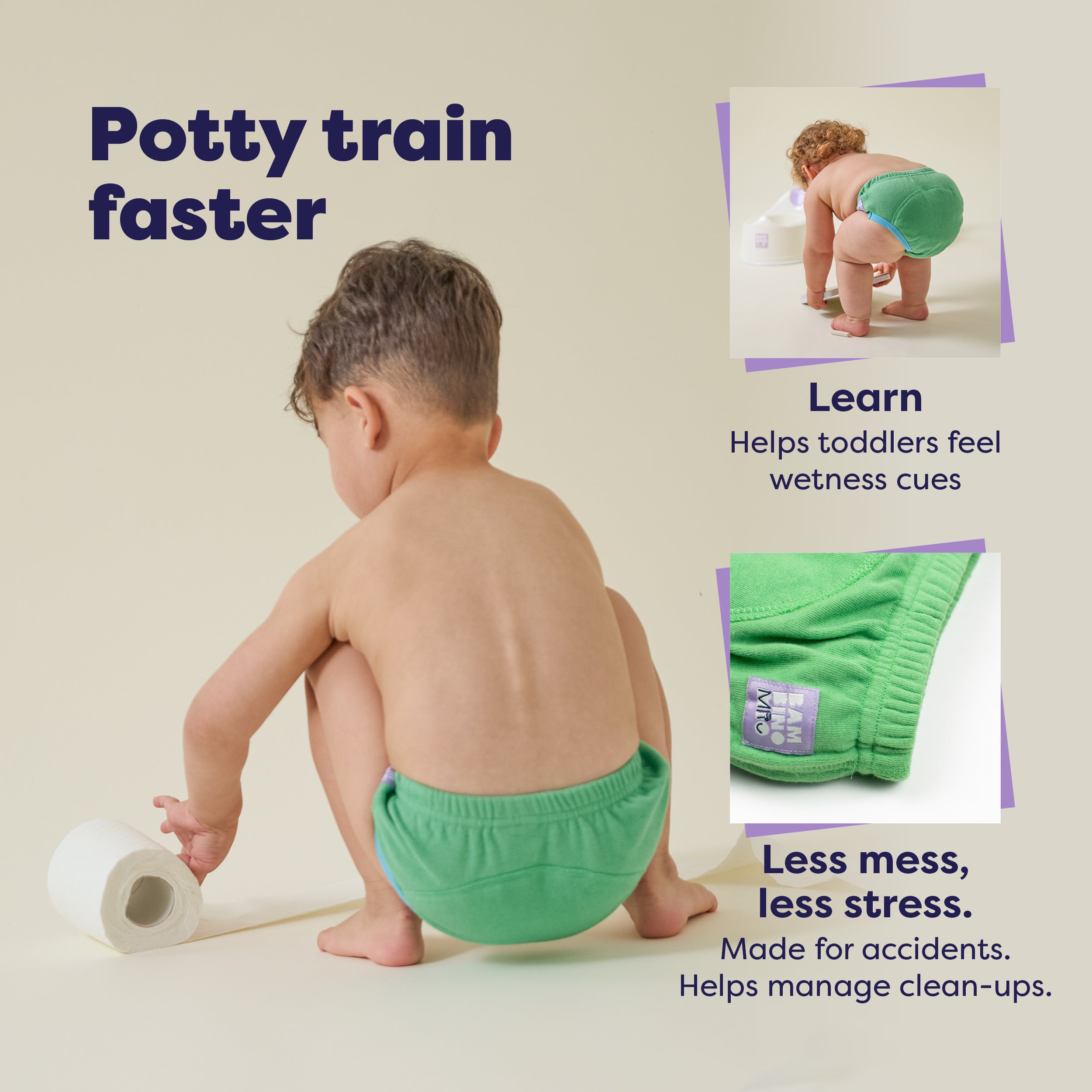
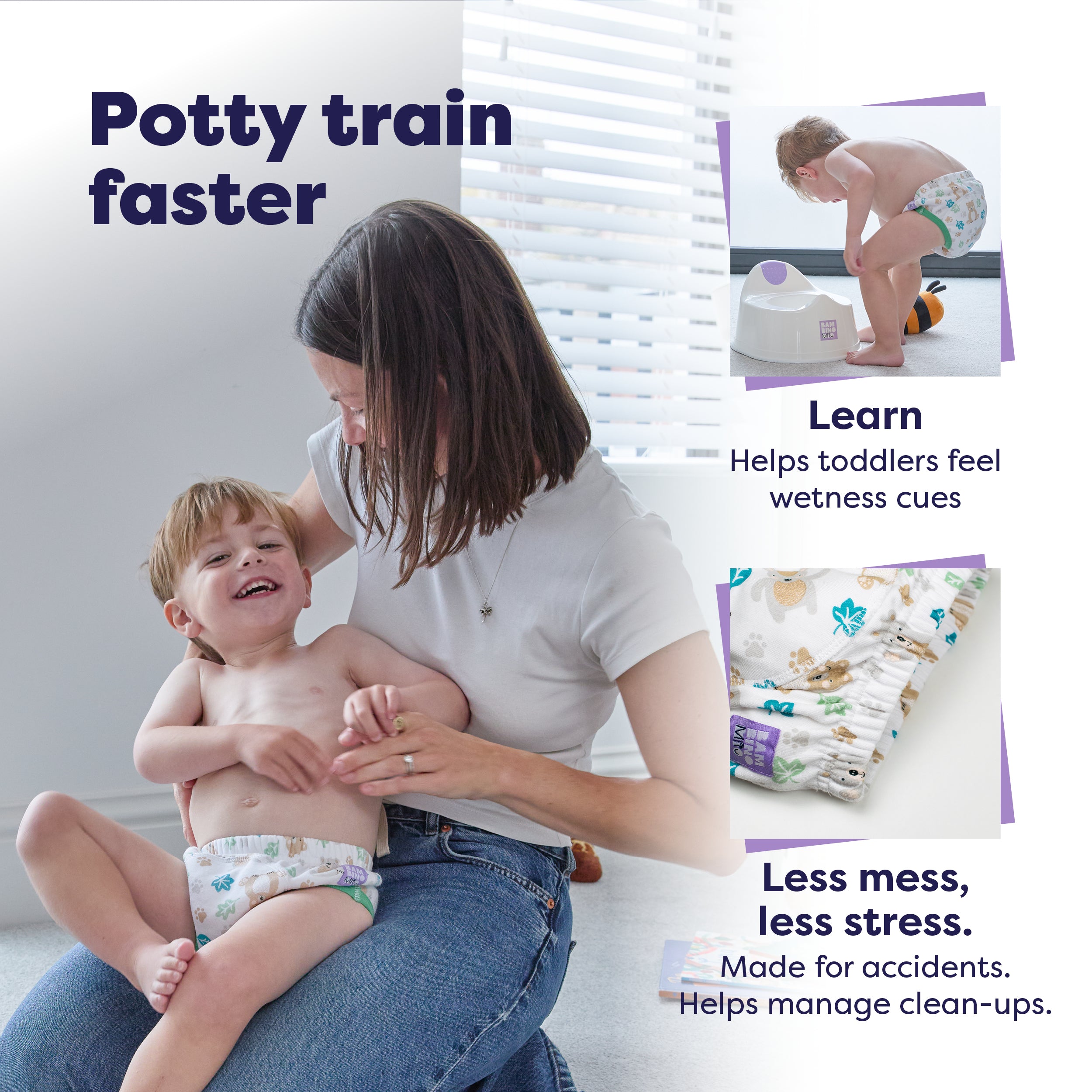
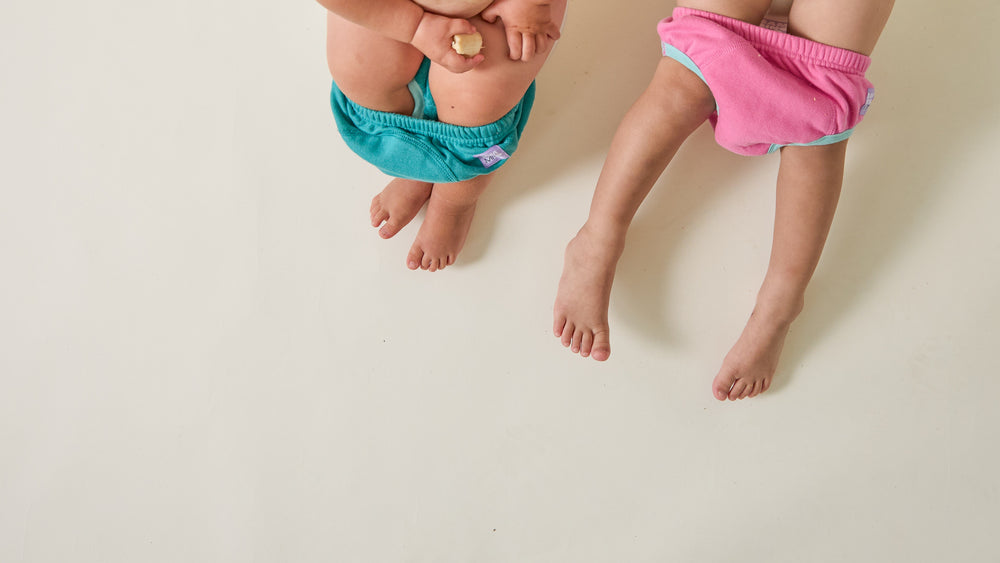
Let him choose his kit. A potty he helped pick out and potty training pants in a print he loves are surprisingly powerful motivators. When he feels ownership over the process he's far more invested in it. Bambino Mio's reusable potty training pants come in designs that children want to wear, which is honestly half the battle won before you've even started.
Find his currency. Some boys are sticker chart devotees. Others couldn't care less about stickers but would do anything for five minutes of extra telly or a particular treat. Work out what makes your son tick and lean into it shamelessly. Positive reinforcement is one of the most effective tools you have.
Keep nursery in the loop. If he's at nursery or with a childminder, consistent messaging between home and childcare really matters. Most nurseries are well practised at supporting children through potty training, so just let them know you've started and what's working at home so you're all singing from the same hymn sheet.
Keep it low-key. The less pressure there is around potty training, the better it tends to go. Cheerful and matter-of-fact is the tone you're aiming for, as in "this is just a normal part of growing up" rather than a big production. Big reactions to accidents and enormous celebrations for successes can both create unnecessary pressure.
Relaxed and encouraging is the sweet spot, allowing the journey to be a lot less stressful for everyone involved.
How Does Potty Training Differ for Boys and Girls?
Honestly, less than people tend to expect. The fundamentals apply equally to every child. But there are a few practical differences worth knowing about.
| Boys | Girls | |
|---|---|---|
| Sitting vs standing | Start seated; standing comes naturally later | Always seated from the start |
| Average readiness age | Slightly later on average | Slightly earlier on average |
| Wiping hygiene | Good general hygiene habits to build in | Front to back wiping essential from day one |
| Training duration | Can take a little longer on average | Slightly quicker on average |
The sitting-versus-standing question is the most distinctly boy-specific one, and it's covered above. The other meaningful difference is that front-to-back wiping is a critical thing to teach girls from the start to prevent UTIs. Boys have a lower UTI risk so it's less of a pressing concern, though good hygiene habits are always worth building in.
How to Encourage Potty Training for Boys
Motivation is deeply personal at this age. A bit of detective work into what makes your son tick goes a long way. Here's what tends to work well more broadly.
Involve him in every decision you can. His potty, his pants, maybe even a special cup for his reward drink. The more he feels like this is something happening with him rather than to him, the better. That sense of pride and ownership is a quiet but genuinely powerful driver.
Celebrate every single win. Sitting on the potty and trying, even when nothing happens, deserves acknowledgment. You're rewarding the effort and the behaviour, which keeps him motivated even when progress feels slow. "Well done for trying, let's try again soon!" is just as valuable as the big celebrations.
Normalise it at every turn. Books about potty training, seeing older children at nursery using the toilet, calm conversations about it being something everyone does. All of it helps make the potty feel like a completely ordinary and unthreatening part of life. The less dramatic it is, the less resistance you'll usually get.
Potty training is a big deal for both parents and toddlers, but try not to put too much pressure on it. The journey may not always be perfect, but you'll get there with persistence.
Night Dryness: What to Expect
Night dryness catching parents off guard is one of the most common things that comes up during potty training, so it's worth flagging clearly. Daytime dryness and night dryness are completely separate developmental milestones, and it's perfectly normal (particularly for boys) to be reliably dry during the day for many months before nights follow suit.
Research shows it is better for a child's bladder and bowel health to stop using nappies between 18 and 30 months, but this refers to daytime training. Night dryness depends on a hormonal change that regulates overnight urine production, and children have absolutely no control over when that happens. A good waterproof mattress protector and a patient outlook is all you need. It comes when it comes.
When Potty Training Stalls
Progress isn't always linear, and a wobble doesn't mean anything has gone wrong. Big changes like a new sibling arriving or starting nursery can knock things off course temporarily. Go back to the gentle routine without any fuss and give him a bit of time. It nearly always settles back down on its own.
If he's suddenly refusing the potty after making lovely progress, it's worth thinking about what might have shifted. A negative experience he hasn't told you about, or simply feeling rushed, can be enough to create resistance. Step back and let him come back to it at his own pace. Pushing through rarely helps.
For a full overview of the whole potty training journey right from the start, check out our our guide for new starters.
Every little boy gets there in his own time, and your calm, cheerful confidence in him is honestly one of the most powerful things in your toolkit.
He's learning something brave and new. Stock up on the spare trousers, grab some training pants he's excited about, and enjoy the journey, soggy moments and all. Before you know it, you'll be the one giving another parent that knowing smile. Ready to give it a go? Shop our complete selection of potty training pants and accessories.