The Ultimate Guide to Potty Training: Tips, Tools and Confidence for Every Parent
Potty training: two words that can bring up all sorts of feelings for parents. There's the excitement that you're nearly out of the nappy stage combined with mild panic about where to even begin. This is the ultimate potty training guide for parents who want a realistic, gentle approach, not a three-day quick fix or an endless waiting game. You'll have heard the "wait for the signs" camp and the "do it in three days" crowd. Honestly, neither tells the full story.
Truthfully, there's no magic method and no perfect moment (although we wish there was!). What there is, however, is a gradual process that builds confidence and routine over time. Take the pressure off and children tend to get there more naturally. You'll also spend considerably less time wondering whether you're doing it wrong.
We've pulled together everything you need to know: when to start, how to build early habits, what to use and what to do when things don't go to plan. After all, potty training is rarely a straight line, and that's completely normal.
The Ultimate Potty Training Guide Includes:
- When Do Most Children Start Potty Training?
- Why So Many Families Struggle With Potty Training
- How to Introduce the Potty
- Your Step-by-Step Potty Training Guide
- Potty Training Setbacks: What's Normal and What to Do
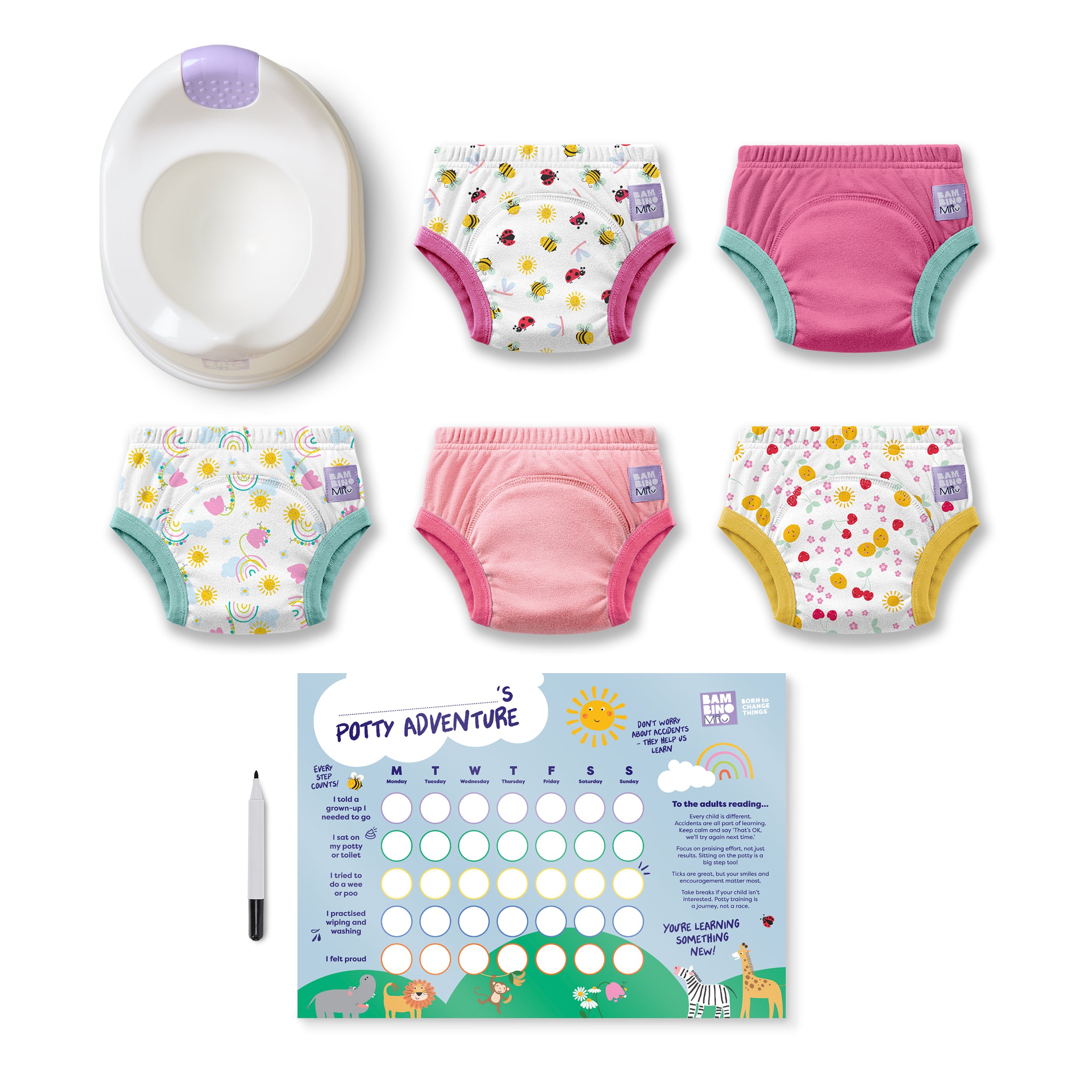
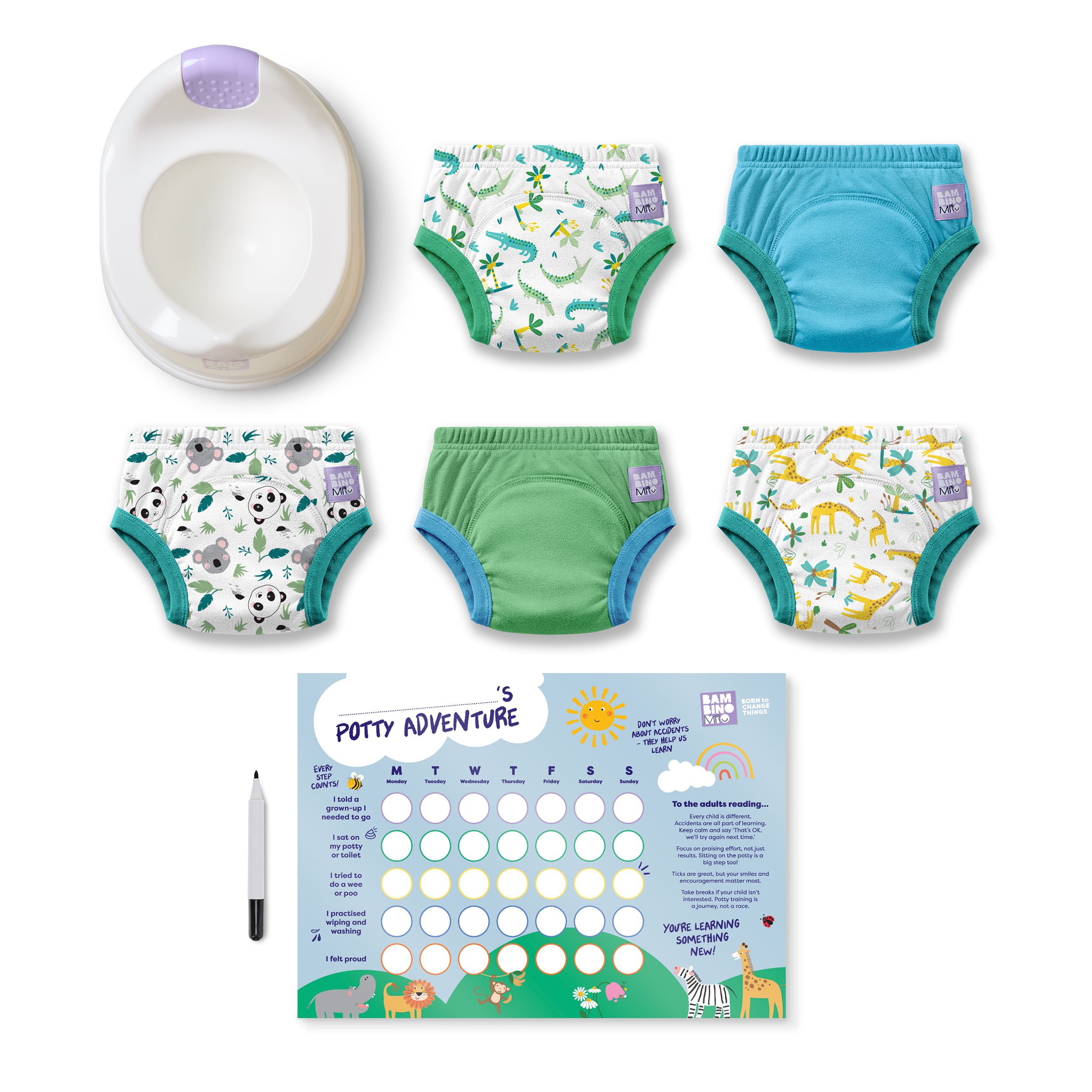
- What You Need for Potty Training: A Simple Kit List
When Do Most Children Start Potty Training?
The guidance is to have children out of nappies between 18 months and 3 years, but the journey to getting there can start much earlier than that. Baby pottying or EC can begin from day one, and introducing a potty as soon as your baby can sit up helps build familiarity long before formal training begins. Most children make the transition from nappies to pants somewhere around 12 to 18 months.
Rather than waiting for every sign of readiness to appear, it's more helpful to think about when your child might be ready to go nappy-free. Helpful signs include staying dry for longer stretches, showing curiosity about toilet habits, and becoming more independent with dressing.
Current guidance from ERIC, the Children's Bowel and Bladder Charity, suggests that holding out for every readiness sign can actually slow things down. Disposable nappies are designed to keep children feeling dry, so many won't show obvious cues that they're ready. Familiarity comes from exposure and confidence comes from practice. Starting gently, without expectation, is usually more effective than waiting for a specific moment to arrive.
Many families begin a more chilled out introduction well before they're ready to ditch nappies entirely, and that early groundwork often makes the actual transition much smoother.
Why So Many Families Struggle With Potty Training
Research carried out jointly by Bambino Mio and Cheeky Wipes found that over 30% of children are starting school without being fully potty trained, and 66% of parents feel confused or unsupported during the process. That's a lot of families working through something that really should feel more manageable.
Part of the picture is disposable nappies. As they're designed to keep babies feeling dry, they make it harder for children to connect the sensation of needing to go with the act of going. It's why you can have a toddler who seems completely unbothered about a wet nappy, with no real urge to tell you or do anything about it.
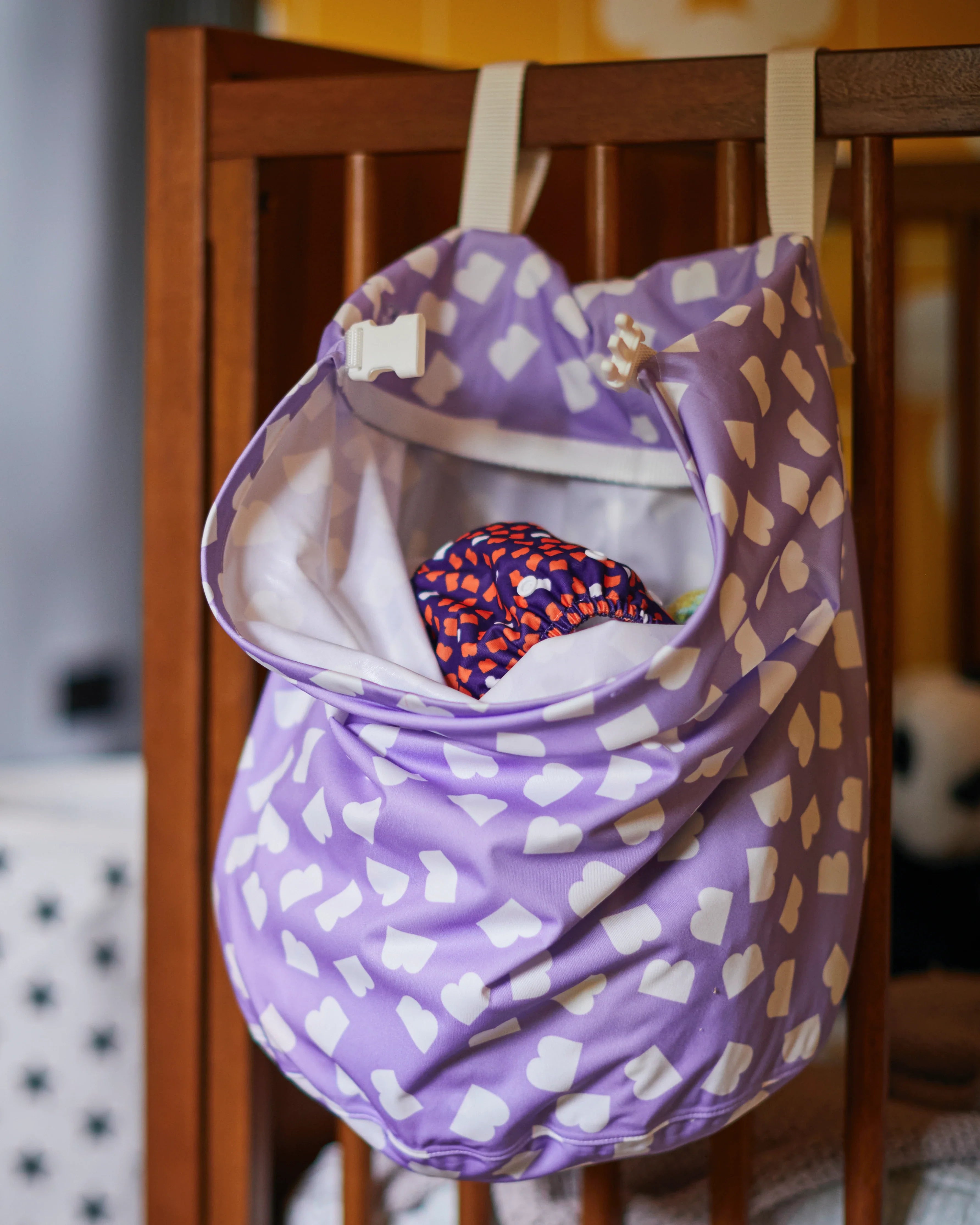
Reusable nappies, such as our Revolutionary Reusable and the Miosolo, work differently. They allow toddlers to feel when they're wet, which builds sensory awareness earlier and supports more intuitive potty learning down the line. Plus, our cute patterns make our line of reusable nappies put the 'fun' in 'functional'.
How to Introduce the Potty (Without Making It a Big Deal)
There's no potty hard-launch required. The most effective potty training starts gently, woven into the daily routine rather than announced as a new phase. Think of it less like flipping a switch and more like planting a seed.
Building Potty Habits Into Your Daily Routine
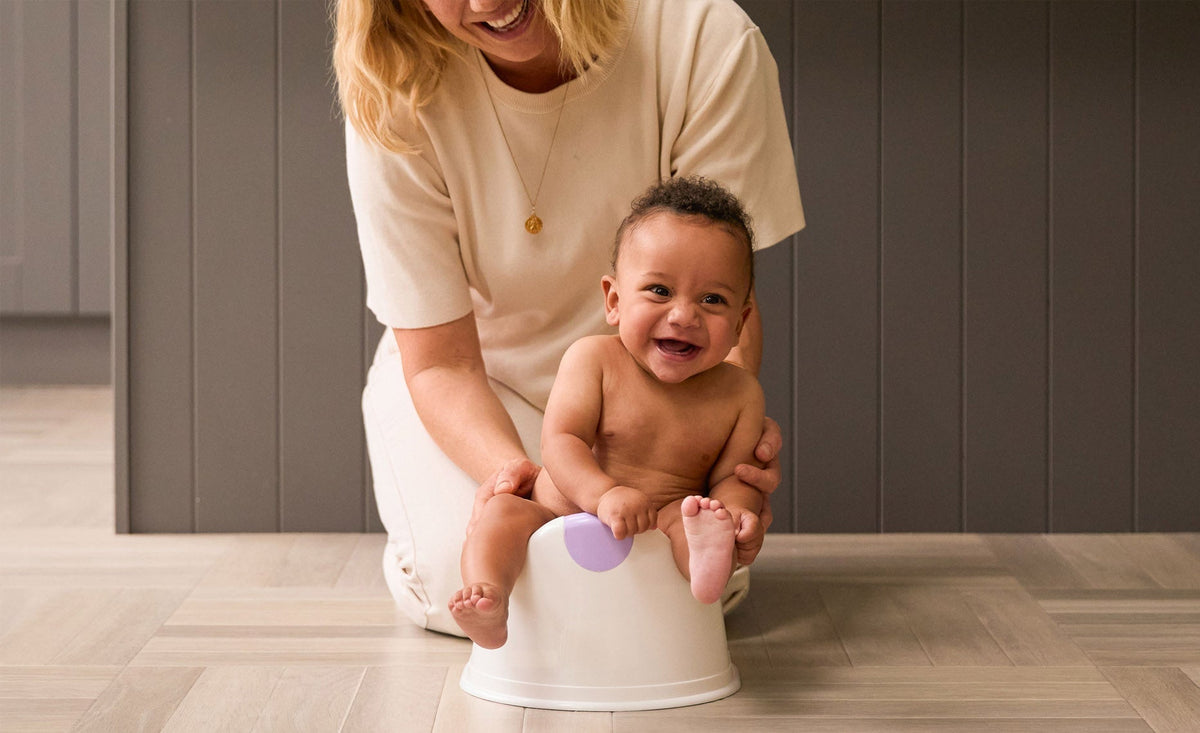
Try offering our potty at natural points in the day: after naps, after meals, while brushing their teeth, or before the bath. Let your child sit on it fully clothed at first, just to get comfortable with it being there. Some families find sound cues like "pss pss" helpful for building early awareness; as strange as it may feel at first, it can be a helpful que. Nappy-free time at home gives toddlers a chance to start tuning in to their own body signals too - just make sure to put your favourite rug away first, just in case.
Calm praise for sitting or trying makes a real difference, even when nothing actually happens. Keep our reusable baby wipes close by for quick clean-ups during nappy-free time. There will be little accidents here, there and everywhere, so keep your sofas covered up! They're an important part of learning, and totally normal.
What Is Baby Pottying and Is It Right for You?
The gradual approach we've been talking about links to what's sometimes called Elimination Communication (EC), or Baby Pottying. Rather than waiting until a child is old enough to lead the process, this method is about paying a little more attention to your baby from early on. Most parents notice when their baby has done a wee or poo once it's already in the nappy. Baby pottying is simply about noticing the signals they make before they go, and offering the potty at those moments, with the nappy used as a backup rather than a default. It's less about timing every trip perfectly and more about building awareness from early on.
Why is hydration important during potty training?
It might seem logical to limit your toddler's drinks to avoid accidents, but it's actually worth doing the opposite. Dehydration can irritate the bladder and cause constipation, which puts pressure on the bladder and is the number one cause of potty training setbacks. Keeping your toddler well hydrated throughout the day helps keep the bladder calm and stools soft. It also allows the bladder to stretch and grow to its normal capacity, which teaches your child's brain to recognise what a genuinely full bladder feels like. That recognition is a key part of achieving long-term dryness, so keep those drinks coming.
Your Step-by-Step Potty Training Guide
Every child moves through potty training at their own pace, but the underlying process tends to follow a similar pattern. These steps aren't rigid stages with fixed timelines, so think of them more as a loose roadmap you can follow without pressure.
Introduce the Potty as a Normal Object (When They Begin Sitting)
Before any sitting or trying, the potty just needs to exist in your child's world. Leave the potty somewhere visible in the bathroom or wherever nappy changes happen. Talk about it naturally, letting your child touch it, sit on it fully clothed, or even use it as a step. There's no agenda here; you're simply making it familiar rather than new and strange when the time comes to use it properly.
Start Talking About Bodies and What They Do
Children learn through language long before they can act on it. Start using simple, consistent words for wee and poo, and narrate what's happening at nappy change time: "You've done a wee, let's get you clean." This kind of everyday commentary builds the vocabulary and body awareness your child will need later. It might feel a bit odd at first, but it makes a real difference.
Offer the Potty at Routine Moments (From Around 12 Months)
Once your child is comfortable with the potty being there, start offering it at predictable points in the day: after waking up, after meals and before the bath. Keep it low-key. The goal at this stage isn't results, but just building the habit of trying. Some children will produce something straightaway, while others will sit for thirty seconds, announce they're done, and promptly wee on the floor two minutes later. Both are completely normal, even if one is more favourable than the other.
Introduce Nappy-Free Time at Home
Short stretches without a nappy give toddlers the chance to start recognising the physical sensation of needing to go, and they'll experience this same awareness when wearing potty training pants too. Start with twenty or thirty minutes at a time when you're at home and the floor is easy to clean.
Have the potty nearby and watch for signs they need to go: fidgeting, going still suddenly, hiding, or crossing their legs. Nappy-free time also builds independence, as your toddler can sit on the potty themselves without needing any help getting undressed. Accidents will happen. That's the whole point. Each one is information for your child's developing brain.
Move to Reusable Training Pants During the Day
You know the drill: soft play is in full swing and your toddler is absolutely flying down the slide, the last thing you need is an accident that cuts the session short. Or you're halfway round the supermarket and suddenly a toilet is required, immediately, with a two-year-old who cannot wait. Getting to a place where your child can recognise and act on the urge to go changes daily life considerably, and the right training pants help get you there.
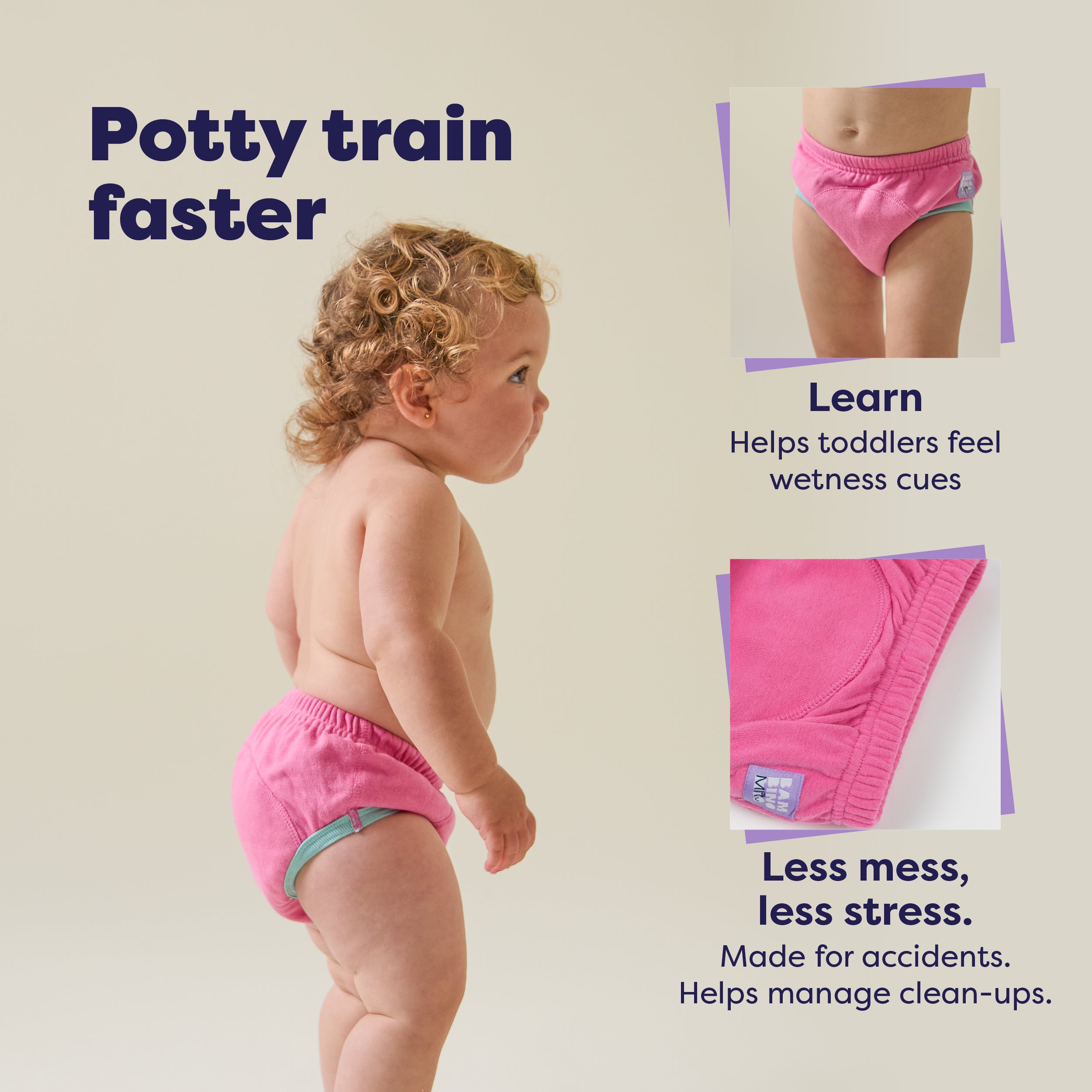
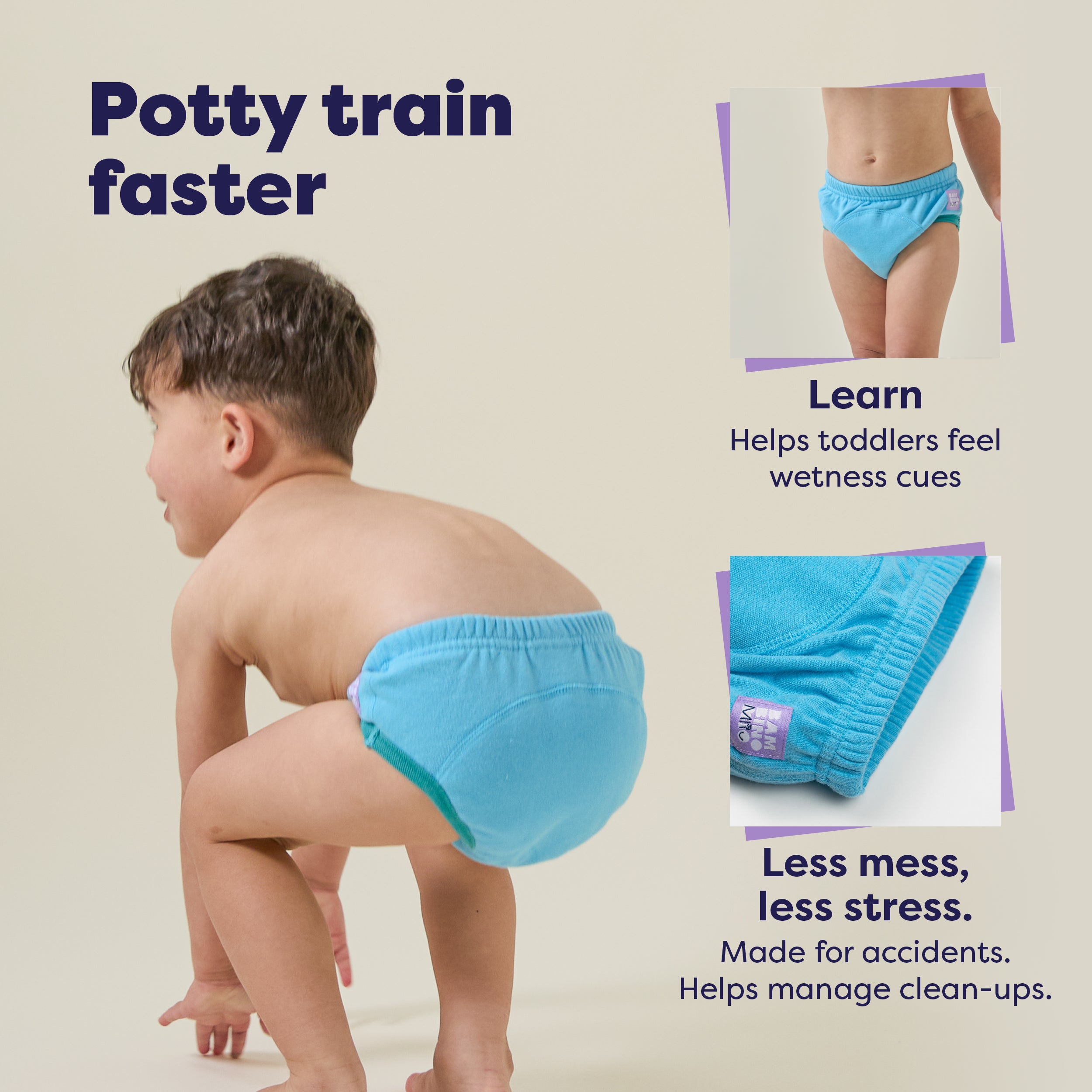
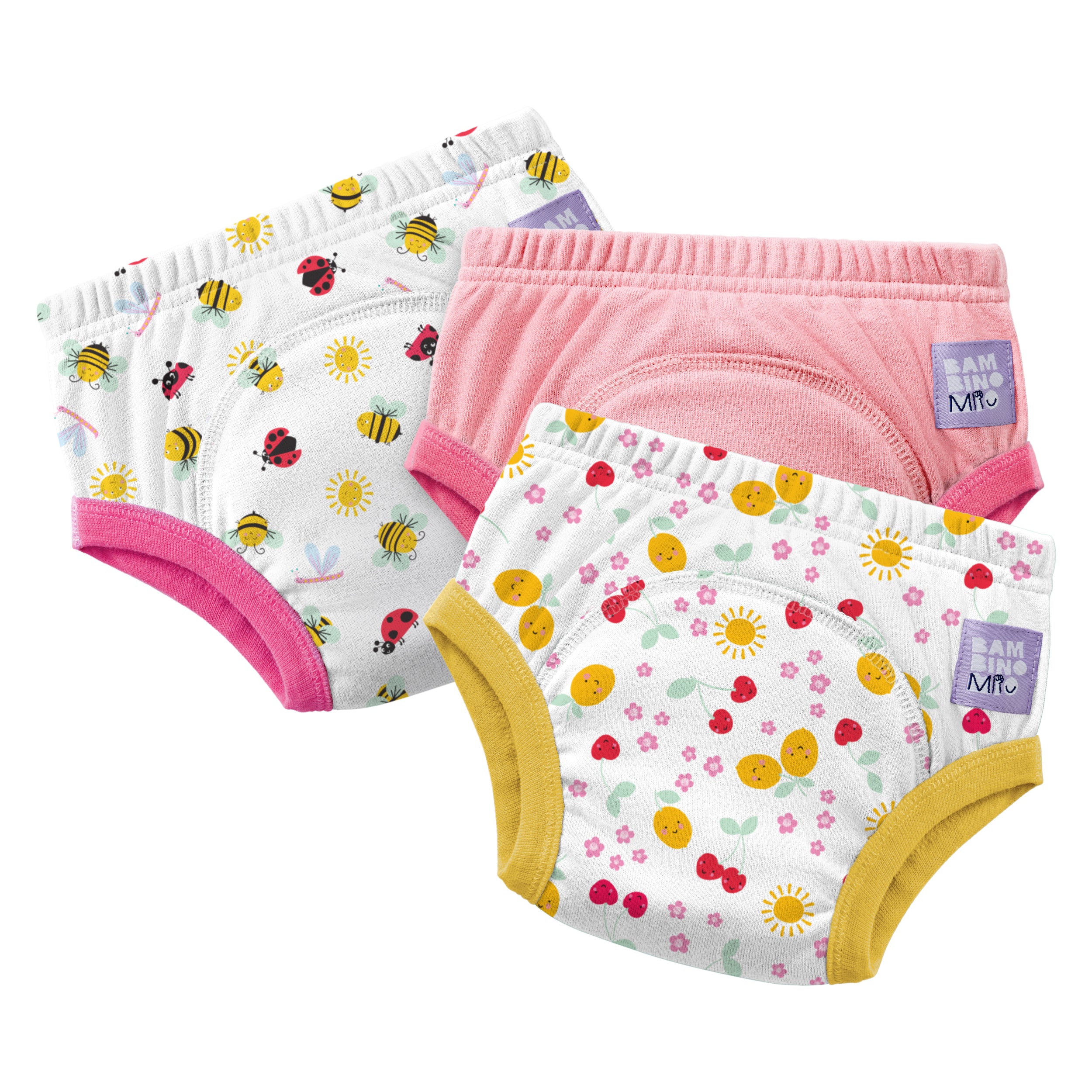
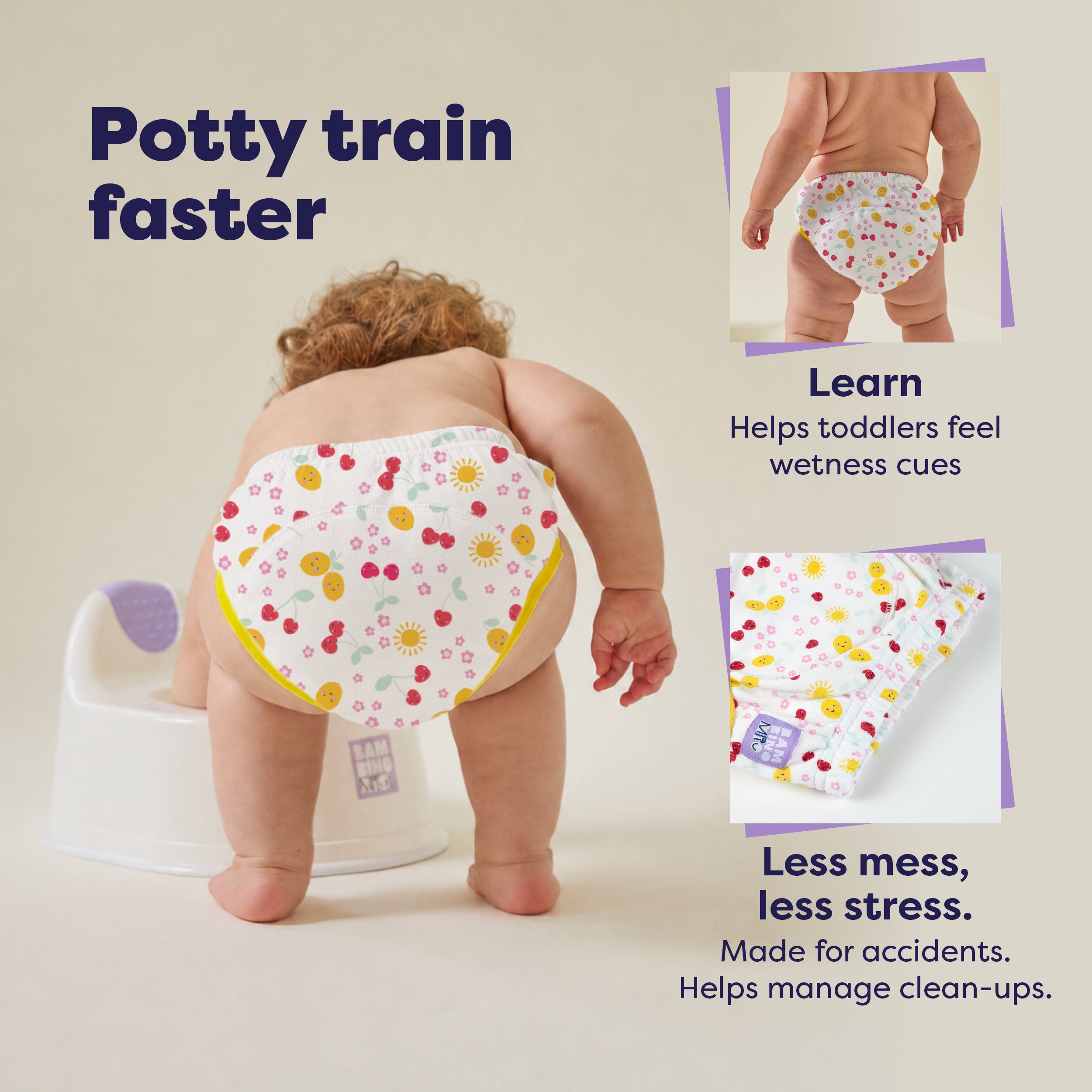
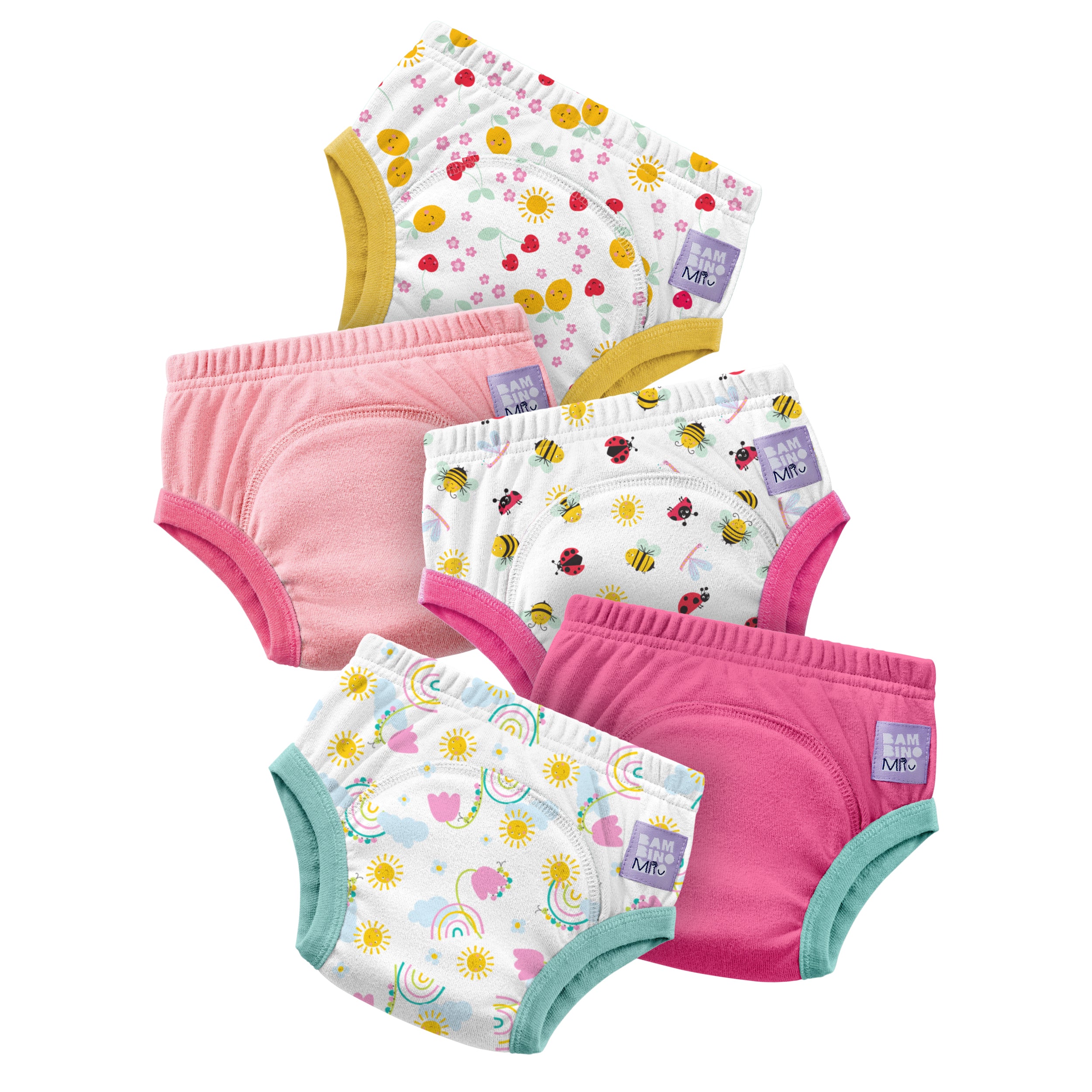
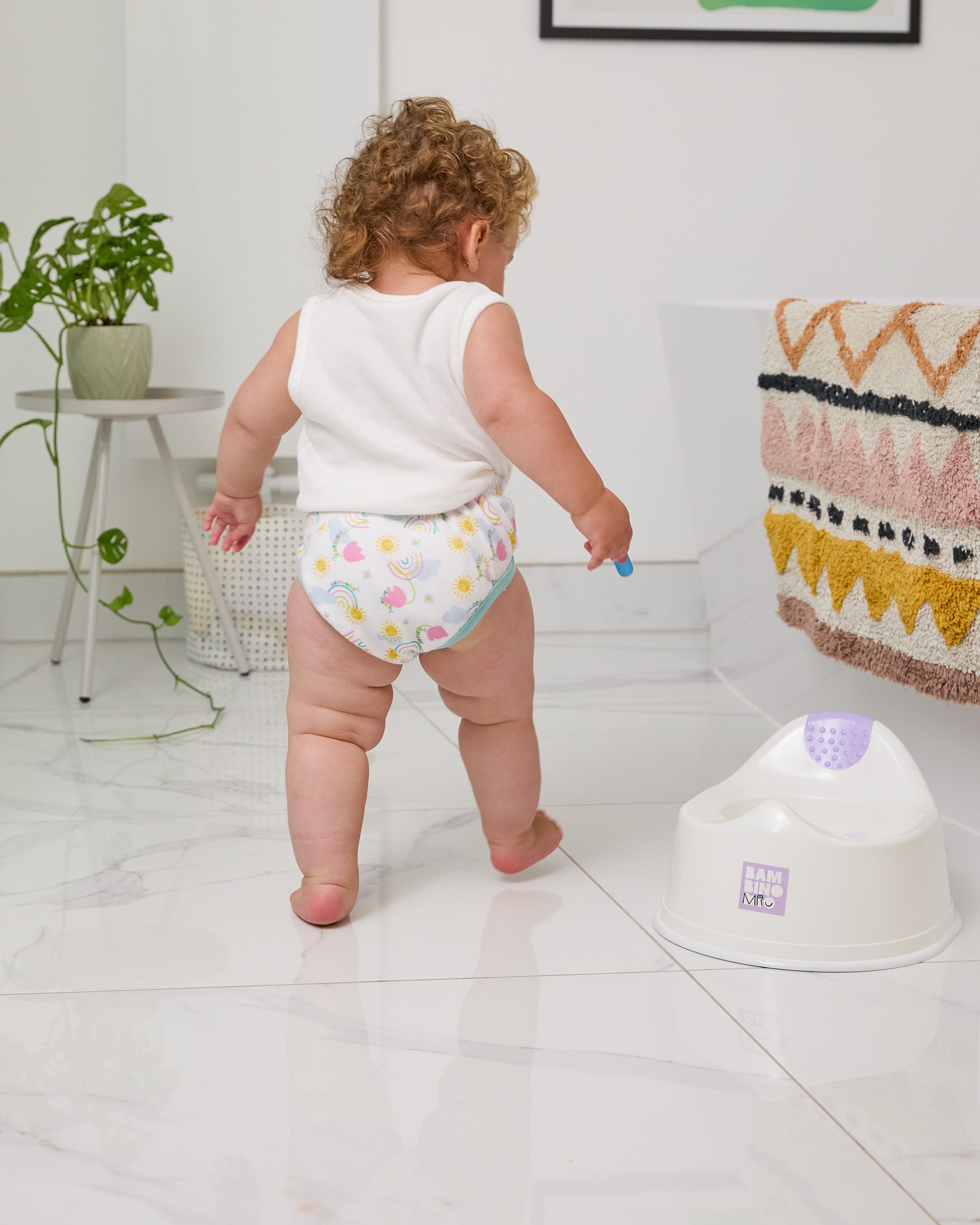
When your child is starting to show some awareness, and making it to the potty at least some of the time, it's a good moment to swap nappies for reusable potty training pants during waking hours. Unlike disposable pull-ups, training pants let toddlers feel dampness when an accident happens, which keeps that sensory feedback loop working. Just make sure to keep some spare pants and trousers in your bag. Nappies can still be used for naps and night time at this stage; there's no rush to do everything at once.
Build Confidence Away From Home
Once things are going reasonably well at home, it's time to start venturing out with training pants on. This is the stage that can feel most nerve-wracking for parents. A spare outfit in the changing bag and a rough idea of where the loos are will get you further than you'd think. Before long, the trips that once required a full logistics briefing will just be... well, a normal Tuesday.
Introduce the Toilet and Transition Away From the Potty
Some children are happy to move from potty to toilet naturally. Others find the toilet a bit daunting at first, and that's fair enough. A toilet training seat makes the switch much less intimidating, giving your child a secure, right-sized seat so they're not perching nervously on the edge. A small step so they can get up independently helps too. Keep the transition relaxed and let your child lead on timing.
Work Towards Night-Time Dryness
Night-time dryness tends to come later than daytime dryness, sometimes considerably later. It's a physiological process as much as a learned one; children need to produce enough of the hormone that reduces urine output overnight, and that develops at different rates. Keep using a nappy or training pant at night until your child is regularly waking with a dry nappy. Wetting the bed occasionally, even after a run of dry nights, is very common and nothing to worry about, we promise.
Potty Training Setbacks: What's Normal and What to Do
Progress in potty learning rarely goes in a straight line, and that's worth knowing before you start. One day, they'll be running to the potty unprompted, and the next, you're changing the bedding at 2 a.m., wondering what happened. Setbacks are completely normal, particularly during times of change, and some triggers are more common than others:
Starting nursery or a new childcare setting
A new sibling is arriving
A change in daily routine or home environment
Constipation, which can make toileting uncomfortable and cause children to avoid it altogether
When regression happens, revisiting the routine and keeping things calm tends to help more than anything else. The NHS potty training guidance is a helpful reference if you're unsure whether what you're seeing is typical.
Potty Training Habits That Can Slow Progress
Some common patterns are worth being aware of, not to add pressure, but so you can make small adjustments early. These are the ones that tend to come up most often:
Waiting too long for the "right" moment to begin
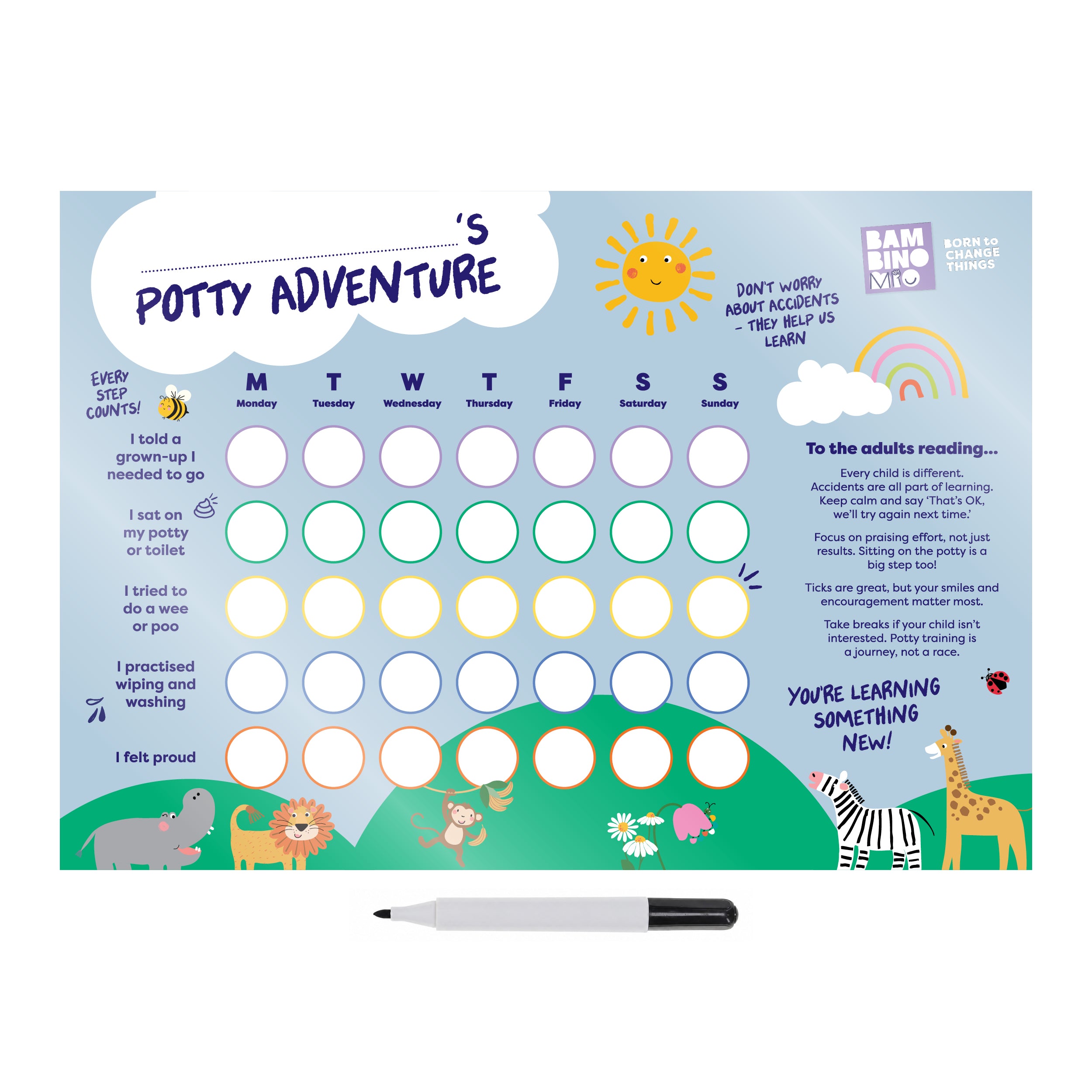
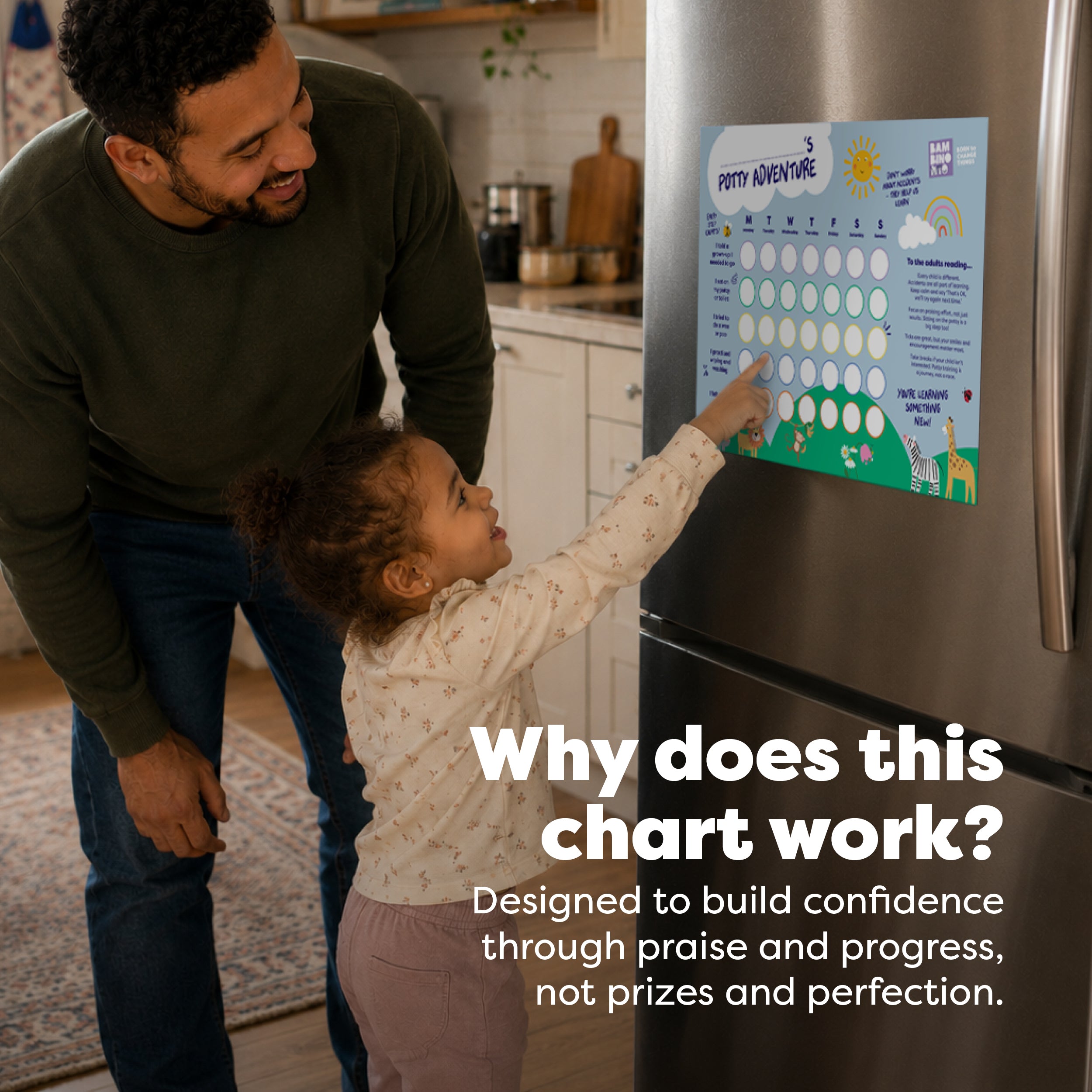
Reacting negatively to accidents, which knocks confidence quickly
Being inconsistent with the daily routine
Over-relying on pull-ups instead of moving to training pants
None of these is disasters, they're just useful things to catch early. Small tweaks to any of the above can make a noticeable difference without needing to start from scratch.
What You Need for Potty Training: A Simple Kit List
Keeping things simple really does help. Here's what's worth having before you get started:
Our Potty or Toilet Training Seat
The obvious starting point. Our potty is great for the early stages at home, and a toilet training seat is worth introducing when your child is ready to move to the big loo.
Reusable Potty Training Pants
The workhorse of the whole process. Our range offers just enough absorbency for small accidents without masking the sensation, which is exactly what supports learning.
Easy-to-Remove Clothing
Elasticated waists are your best friend at this stage. The fewer buttons and zips, the better.
A Waterproof Mat
A waterproof baby change mat is particularly useful. Accidents will happen, and a mat makes the whole thing far less stressful.
Reusable Wipes
Keep some reusable wipes close by for quick, easy clean-ups throughout the day.
As handy as it would be, potty training doesn't have a universal script. Some children take to it quickly, others need more time, and both are completely fine. What tends to work across the board is building skills gradually and treating accidents as part of the learning rather than a setback.
The goal is a toddler who gets there most of the time and doesn't stress when they don't. Those dry days are coming, and they're worth every bit of the journey. Browse the full Bambino Mio potty training accessories collection for everything you need to make this stage feel positive for everyone involved.