Nappy and Potty Training Glossary
From birth to big-kid pants, there's a lot of new language to get your head around when you add to the family. This nappy and potty training glossary covers all of the terms worth knowing so you’re not left scratching your head on wash day or staying up all night troubleshooting.
A
Absorbency
How much liquid a nappy or booster can hold before leaking. It depends on the materials (bamboo and cotton, for example, perform differently), the number of layers and how well the nappy has been prepped before first use. If leaks are becoming a regular thing, absorbency is usually where to start looking.
All-in-One (AIO) Nappy
A reusable nappy where the waterproof outer, absorbent inner and fastenings are all built into one piece. It goes on like a disposable and washes as one unit. The Bambino Mio Miosolo is an all-in-one.Aplix
Another name for hook-and-loop fastening, similar to Velcro. It gives an adjustable fit and is easy to use one-handed, which is handy when you're dealing with a wriggly baby. Fold the tabs back before washing so they don't grab onto everything else in the drum.
B
Bamboo
A natural fibre used in many reusable nappy inserts and wipes. It's soft, highly absorbent and gentle on sensitive skin. It takes longer to dry than microfibre but the softness makes it worth it, especially for newborns.
Bright & Mighty Laundry Sheets
Concentrated, plastic-free laundry sheets that work well on reusable nappies without affecting the waterproofing or absorbency over time. Pre-measured and low-waste, they’re a solid swap if you're cutting down on plastic packaging at home.Bright & Mighty Stain Bar
A solid stain-treatment bar for the marks that nappies (and basically everything a baby touches) tend to collect. Rub it onto the stain before washing. It's gentle enough for reusable nappy fabrics and effective enough to make wash day feel a bit more satisfying.Booster
See Nappy Booster.
C
Carbon Footprint
The total amount of greenhouse gas emissions associated with a product across its whole life, from manufacturing through to disposal. Reusable nappies have a significantly lower carbon footprint than disposables over a child's nappy-wearing life, particularly when washed at lower temperatures and line dried.
Changing Bag
The bag you carry everywhere once a baby arrives, stocked with nappies, wipes, a wet bag and whatever else your particular child requires. Most changing bags have enough room for reusable nappies without any rethinking needed. A wet bag slots in just as easily as a pack of disposables.
Cloth Nappy
The broad term for any reusable, washable nappy. It covers everything from flat terry squares to modern all-in-ones and is often used interchangeably with "reusable nappy."
Compression Leak
A leak caused by pressure on the nappy, typically from being picked up, sitting in a car seat, playing on a bouncer or squeezed in a sling. Usually happens when a synthetic insert is over-saturated. Switching to a natural fibre insert or adding a booster can help.
Cotton
A natural, breathable fibre used in reusable nappies and wipes. Durable and easy to wash, it gets softer and more absorbent over time, so your nappies actually improve with use.
D
Delamination
When the waterproof PUL layer of a nappy cover starts peeling or separating, usually from washing at too high a temperature or tumble drying against the care label. A delaminated nappy will leak and can't be fixed. It's the main reason wash instructions are worth following.
Detergent Buildup
What happens when too much detergent is used over time, or it isn't fully rinsed out during washing. It leaves a residue on nappy fibres that affects absorbency and can cause smells. Using the right amount of detergent for your machine and water type goes a long way to preventing it.
Dry Pailing
The most common way to store used reusable nappies between washes. Remove any solids, then store the nappy dry in a lidded bucket or wet bag until wash day. No soaking needed, as most modern reusable nappies are designed with dry pailing in mind.
E
Eco Nappy
A nappy designed with sustainability in mind through reusable design, reduced plastic, or a mix of both.
Elastication
The stretchy sections around the legs and back of a nappy that create a seal and help prevent leaks. Good elastication is soft enough not to leave marks but fitted enough to do its job.
Elimination Communication (EC)
An approach where parents learn to recognise and respond to a baby's cues for needing to wee or poo, holding them over a potty or toilet rather than relying on a nappy to catch everything. It can be used from birth and practised full or part-time alongside nappies. Some families use it as an early introduction to the potty, others as a way to reduce nappy use altogether.
F
Fitted Nappy
A shaped, absorbent nappy that fastens like a regular nappy but needs a separate waterproof wrap over the top. Very absorbent and popular for overnight use, though it does mean a two-step change.
Flat Nappy
A single flat piece of fabric — usually cotton or terry — that is folded, fastened with a nappy pin and worn with a wrap. Easy to wash and dry, though it takes a bit more practice to fold than a modern shaped nappy.
Fleece Liner
A reusable liner made from fleece. It's naturally stay-dry, pulling moisture away from skin so baby feels drier for longer. Washable and reusable, it's a good alternative to disposable liners.
G
Gusset
The fabric between the legs of a nappy or training pants. A well-designed gusset sits snugly against the thighs to help contain leaks and blowouts.
H
Hemp
A natural fibre used in some nappy inserts and boosters. Very absorbent and durable, as well as eco-friendly. Often blended with cotton for a good balance of performance and practicality.
Hook-and-Loop Fastening
A nappy fastening that works like Velcro, as it's adjustable and easy to use one-handed. Fold the tabs back into the laundry tabs before washing to stop them grabbing onto other fabrics in the drum.
I
Insert
The absorbent pad inside a pocket nappy, or added to an all-in-one for extra capacity. Inserts can be made from microfibre, bamboo, cotton or hemp. They're usually removable for washing, which helps everything dry faster.
L
Landfill
Where the vast majority of disposable nappies end up. A single child goes through around 4,000 to 6,000 disposable nappies before they're toilet trained, and most take hundreds of years to break down. It's one of the most cited reasons parents make the switch to reusables.
Leakguard
A design feature — usually a double gusset or leg cuff — that provides a secondary barrier against leaks. Particularly useful in the newborn stage when nappy contents tend to be on the runnier side.
Liner
See Nappy Liner.
M
Microfibre
A synthetic material used in many nappy inserts. It absorbs quickly but can leak under compression and doesn't hold as much over time as natural fibres. It should never sit directly against a baby's skin, as it can dry it out.
Miosolo All-in-One Reusable Nappy
Bambino Mio's all-in-one reusable nappy, designed for babies from around three months. Everything is built in, so there is no stuffing or no separate inserts required. It goes on like a disposable, adjusts as your baby grows and washes in one piece. A good choice for nursery days or anyone who wants reusable without the extra steps. Made from OEKO-TEX® Standard 100 certified fabrics.
N
Nappy Bag
A nappy bag is a small disposable bag for sealing and containing a soiled nappy before it goes in the bin. Useful when you're out and don't have access to a wet bag or just need a clean, discreet way to dispose of a nappy on the go.
Nappy Booster
An absorbent pad that can be added to a nappy to increase its capacity. Nappy boosters are particularly useful for longer stretches such as nap time or nursery, as well as night time. They slot in without adding too much bulk.
Nappy Liner
A thin layer that sits between the nappy and baby's skin. Liners make dealing with solids much easier and help protect the nappy fabric from nappy creams. Available as disposable or reusable, depending on what works for your routine.
Nappy Nippa
A Y-shaped fastener used to secure flat and prefold nappies. It grips the fabric using teeth rather than piercing it, making it easier and safer than traditional nappy pins.
Nappy Rash
Skin irritation in the nappy area caused by prolonged moisture, friction or certain ingredients. Breathable reusable nappies and regular changes help prevent it. A liner can also keep moisture away from skin and act as a barrier when using nappy cream.
O
OEKO-TEX® Standard 100
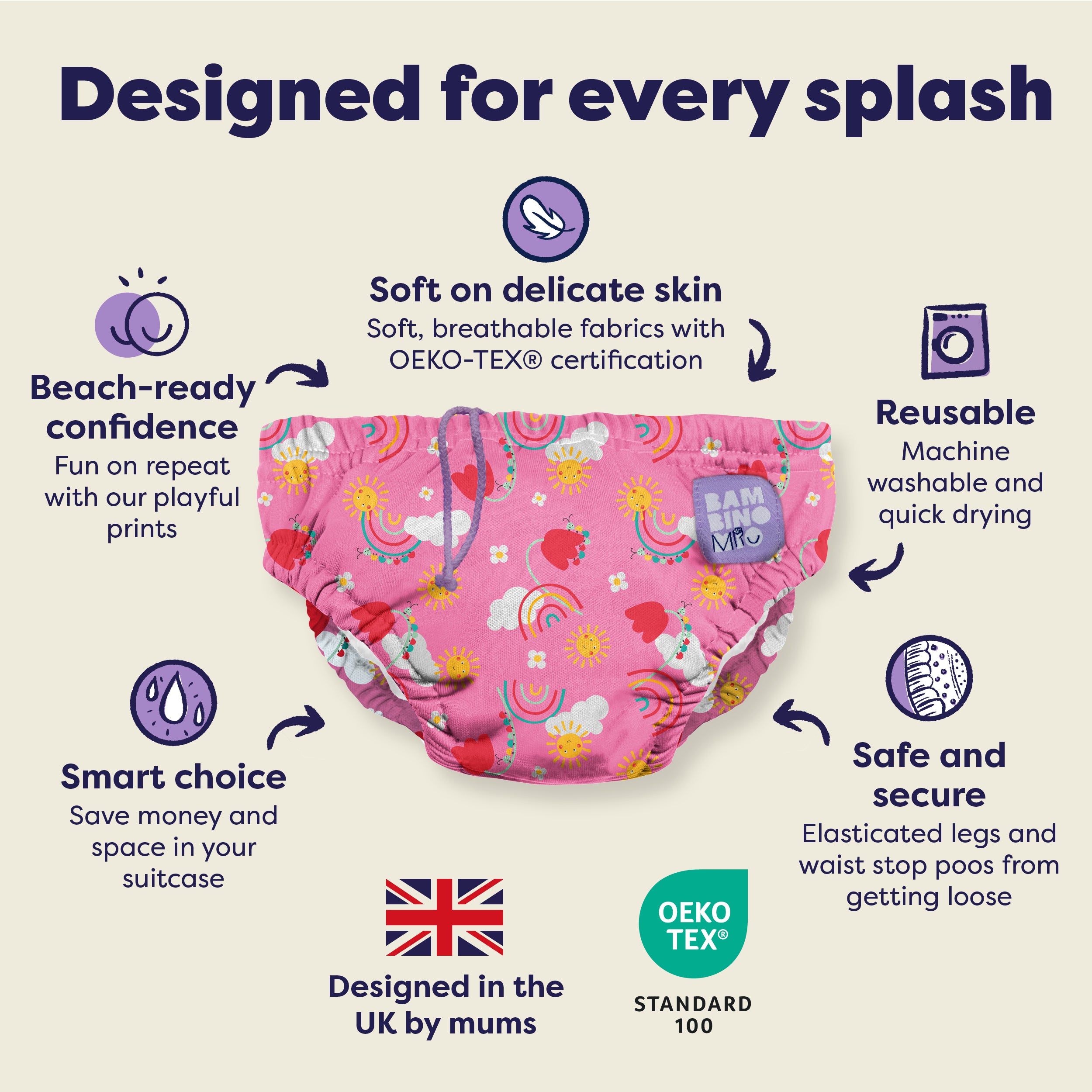
An independent certification for textiles, confirming that a product has been tested for harmful substances and is safe against skin. Every component is tested, not just the finished item.
One-Size (OS) Nappy
A nappy designed to fit across a wide weight range (usually from around 4kg to 16kg or beyond) through snap or aplix adjustments.
Overnight Nappy
A nappy set-up built to last 10 to 12 hours without leaking. Usually involves a fitted nappy or a boosted pocket nappy with a wrap. Many parents use a different system overnight than they do during the day, which is completely fine.
P
Portable Potty
A compact, foldable potty for life on the move. It fits in a changing bag and means that when your toddler announces they need the potty in the middle of a car park, you're sorted.
Potty
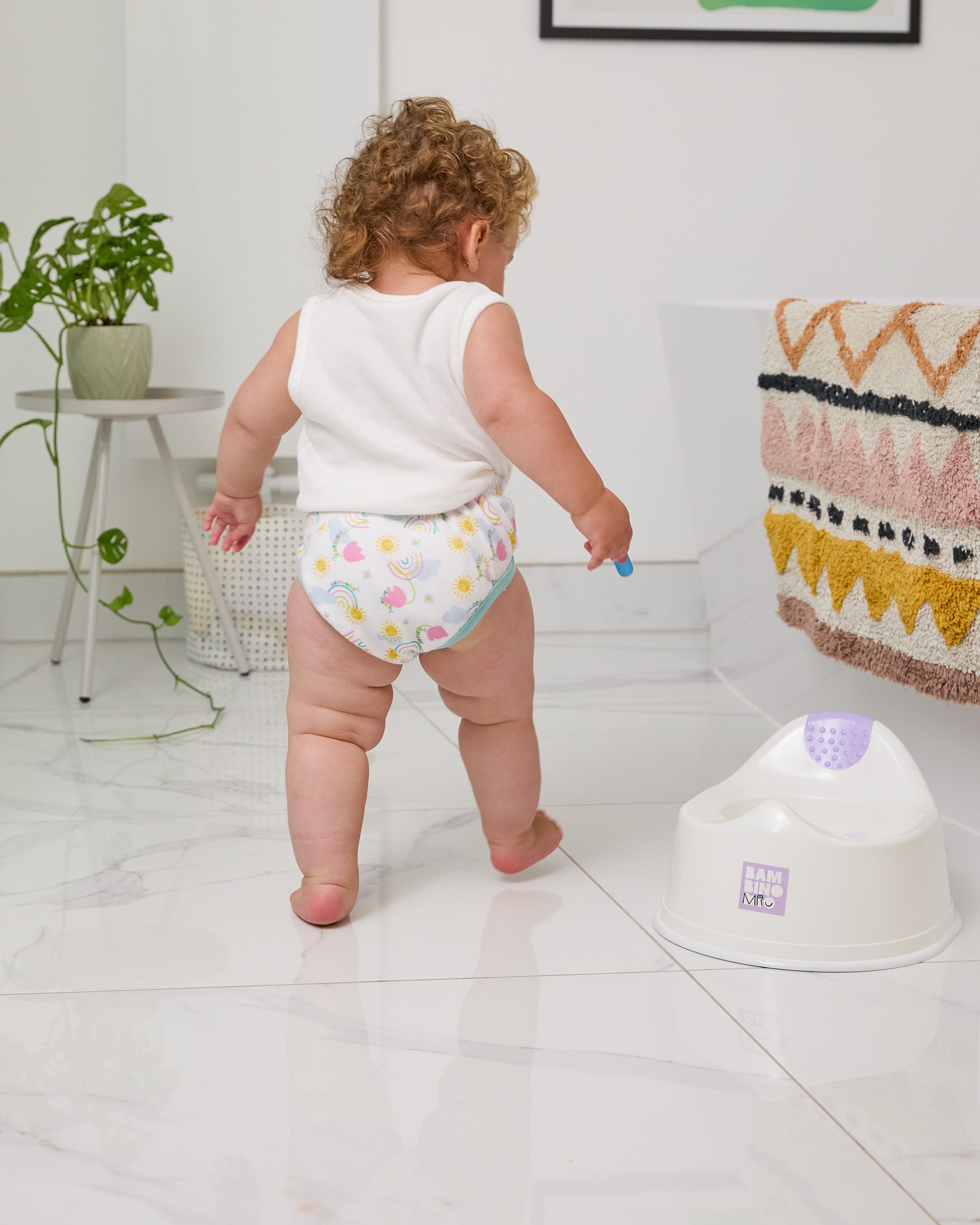
The child-sized seat that marks the start of the potty training journey. Placed at floor level so children can get on and off independently. Introducing it early even just as something to sit on can help children feel comfortable before training begins.
Potty Training
The process of helping a child move from nappies to using a toilet or potty on their own. There's no single right method or perfect age. Most children show signs of readiness somewhere between 18 months and 3 years, though every child is different. Patience and a reliable supply of spare clothes are the real essentials.
Potty Training Pants
See Reusable Potty Training Pants.
Prefold
A flat nappy that has been pre-folded and stitched into sections of varying thickness, making it quicker to use than a flat. Usually used with a wrap and fastened with a nappy pin.
Prep Wash
The wash (or washes) done before using a new reusable nappy for the first time. Most nappies, particularly natural fibre ones, need one or more prep washes to reach their full absorbency. Follow the manufacturer's guidance, as the number of washes varies by material.
PUL (Polyurethane Laminate)
The waterproof fabric used in most modern reusable nappy outers and wraps. Lightweight, breathable and durable when cared for correctly. Avoid washing above the recommended temperature or tumble drying on high heat, as this can damage the laminate over time.
R
Readiness Signs
Cues that suggest a child may be ready to start potty training. These include staying dry for longer stretches, showing awareness of wees and poos as they happen, being able to follow simple instructions and showing an interest in the toilet or potty. Most children show several signs between 18 months and 3 years, though every child moves at their own pace.
Regression
When a child who has been reliably using the potty or toilet starts having accidents again. It's very common and usually temporary, often triggered by a change in routine, such as a new sibling or starting nursery. It tends to pass on its own with a calm, consistent response.
Repelling
When a nappy stops absorbing properly and liquid runs off the surface rather than soaking in. Usually caused by detergent buildup, fabric softener or nappy cream on the fabric. A stripping wash often fixes it.
Reusable Baby Wipes
Soft, washable wipes that replace single-use wet wipes. Reusable baby wipes work well with water or a gentle solution and wash alongside your nappies. Noticeably softer than disposable wipes on newborn skin, and considerably cheaper over time.
Reusable Potty Training Pants
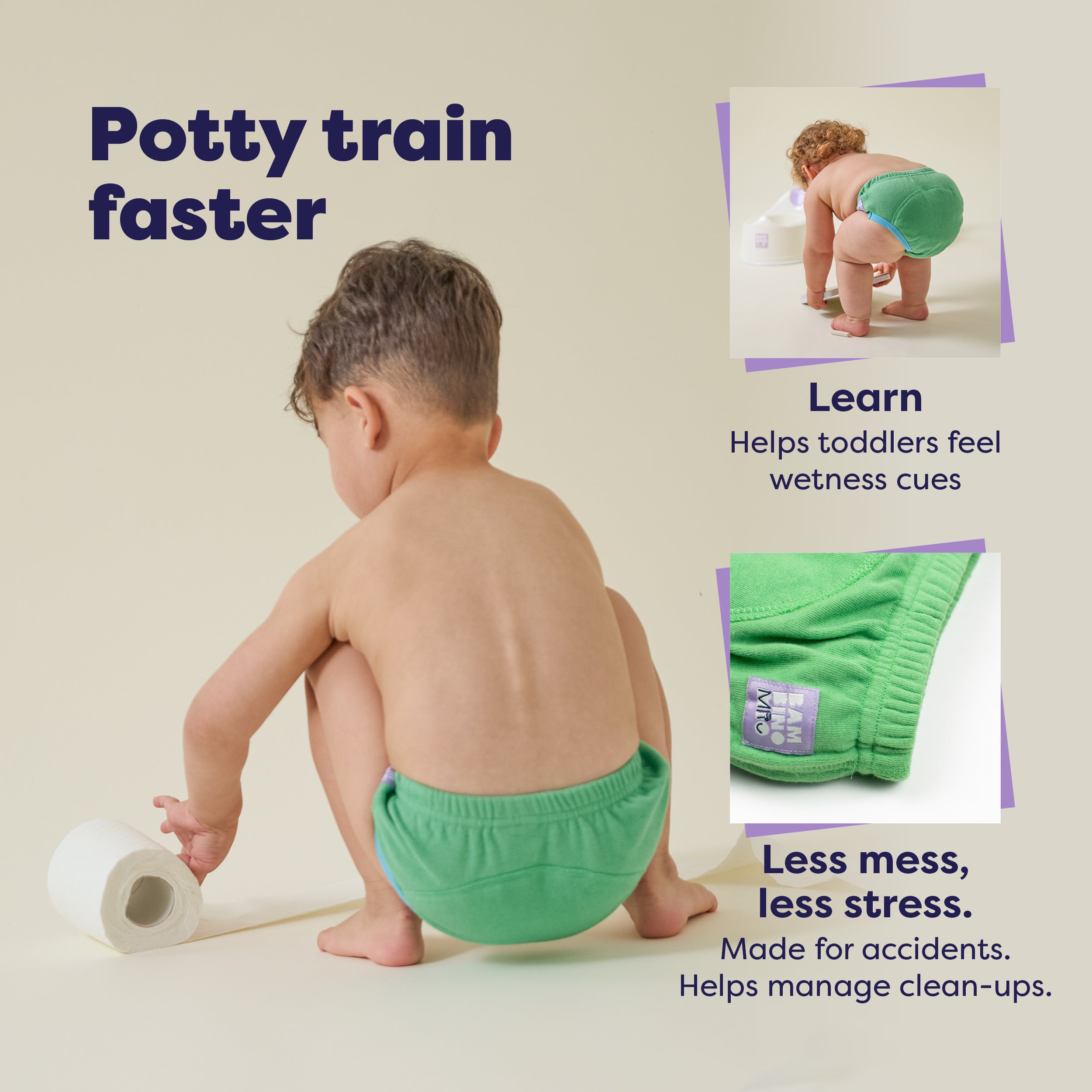
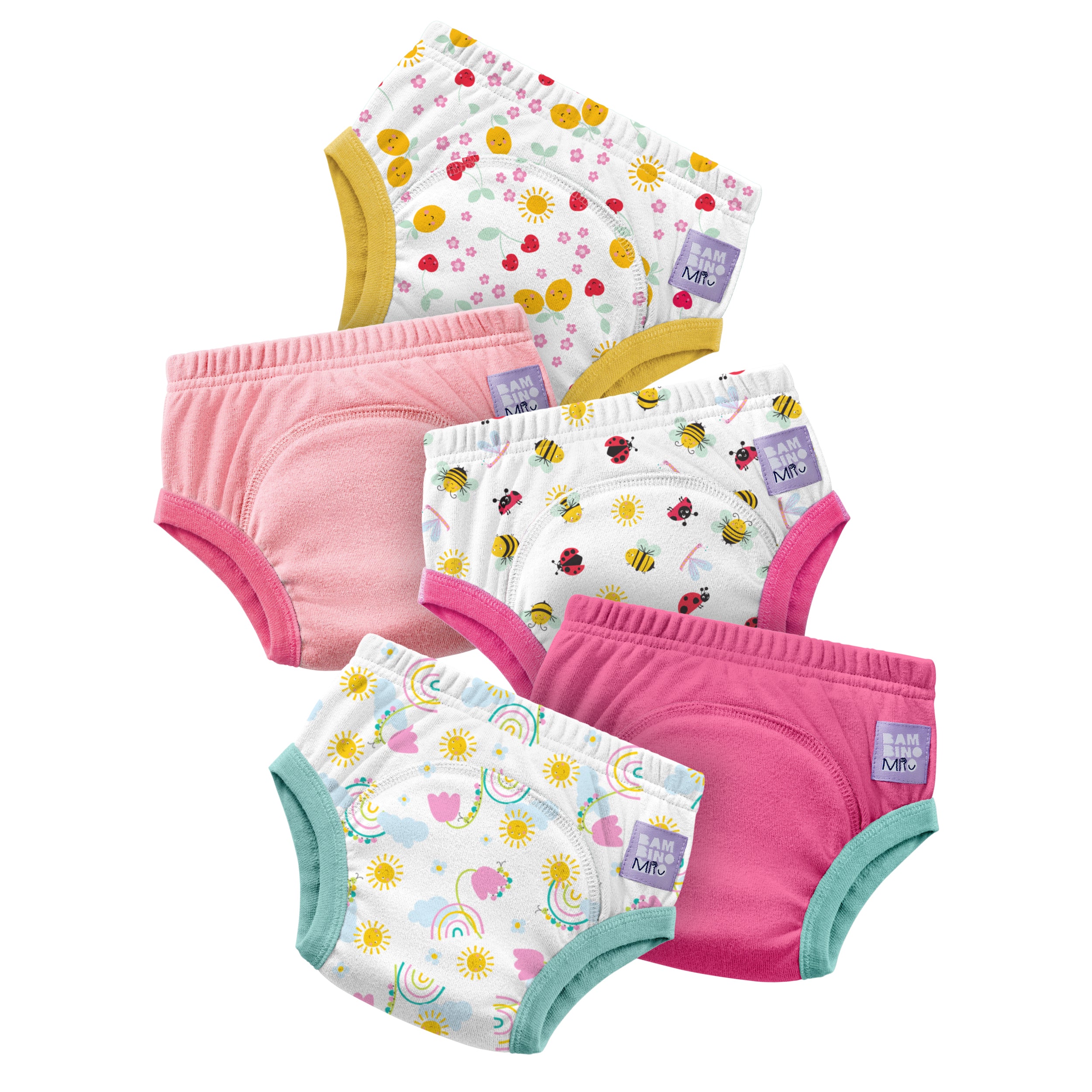
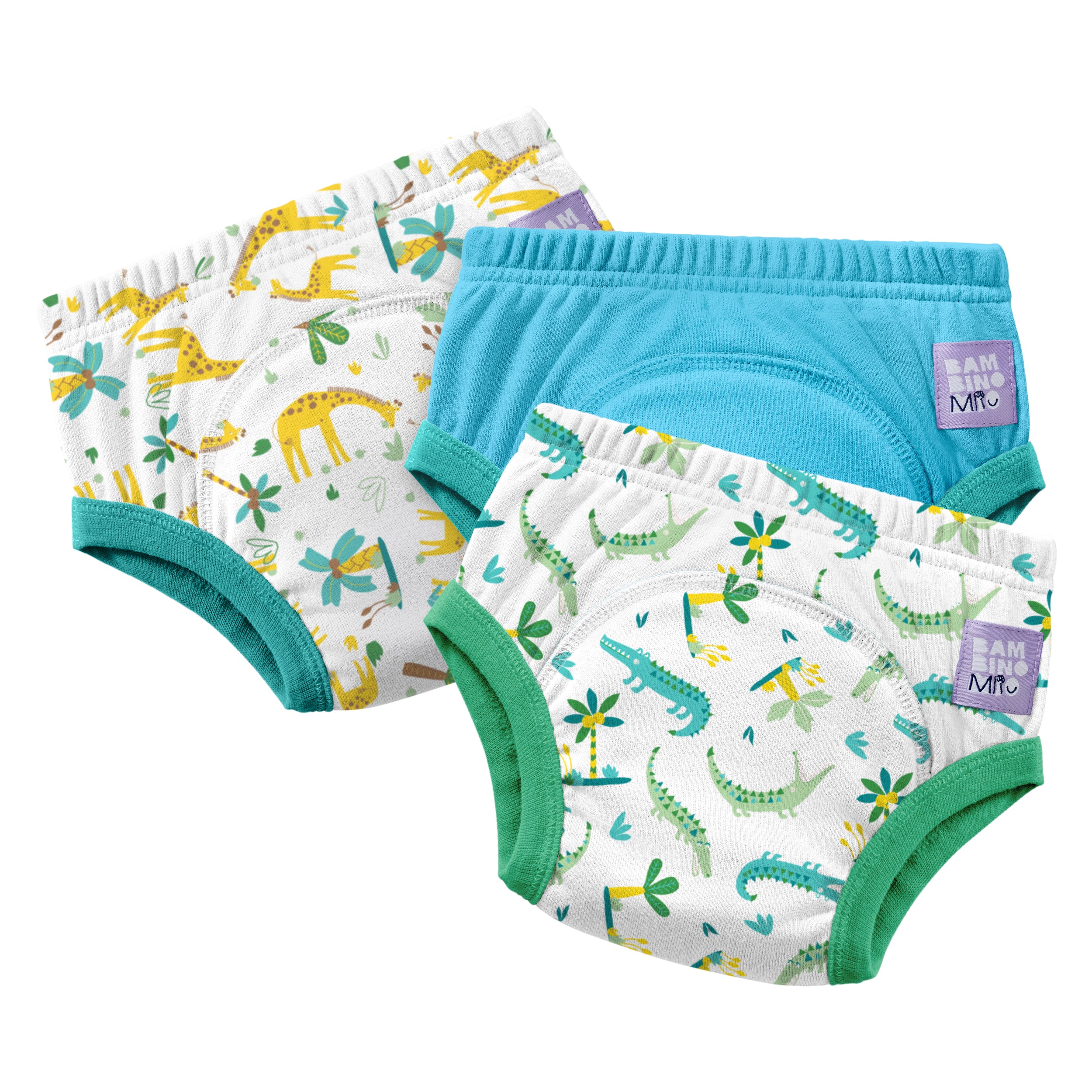
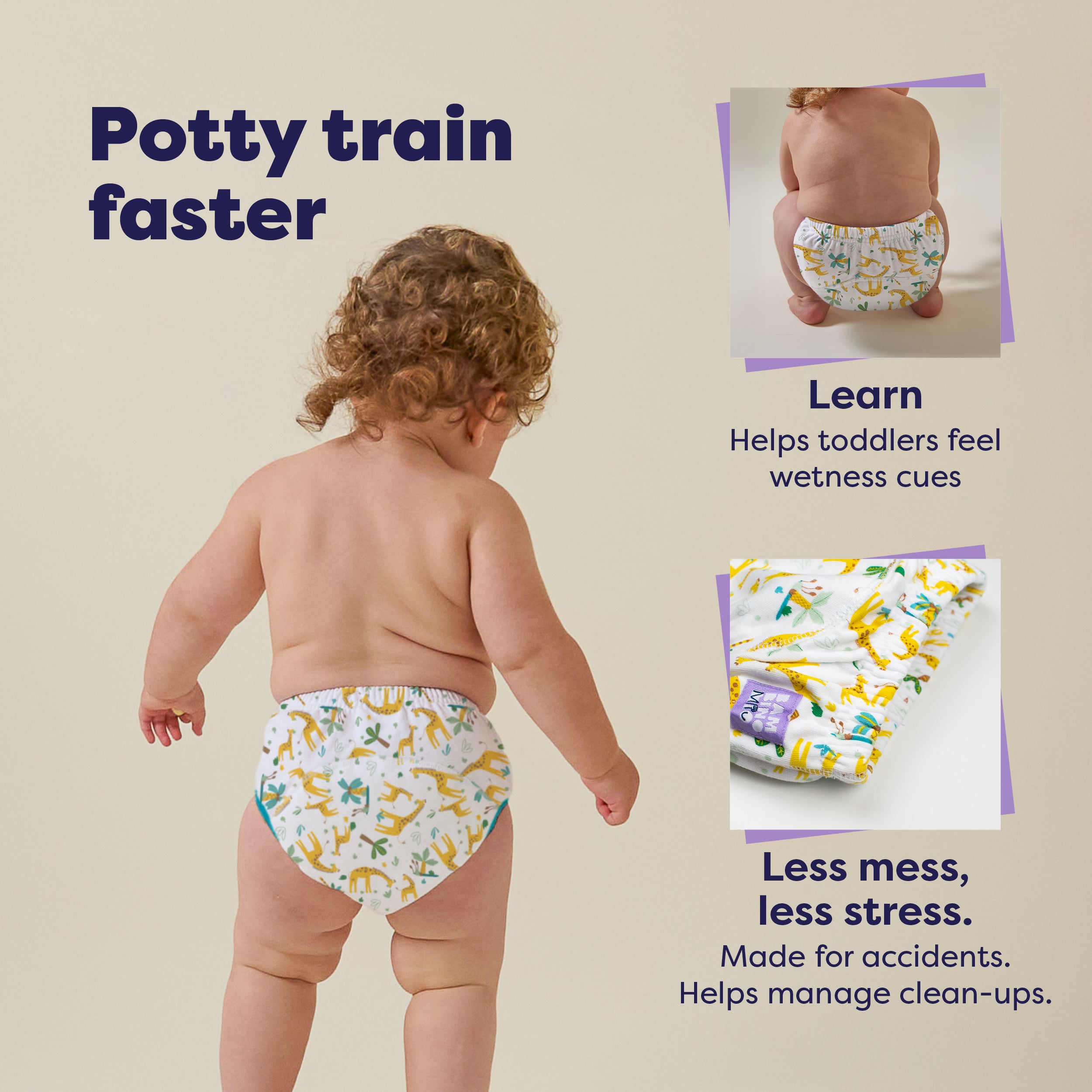
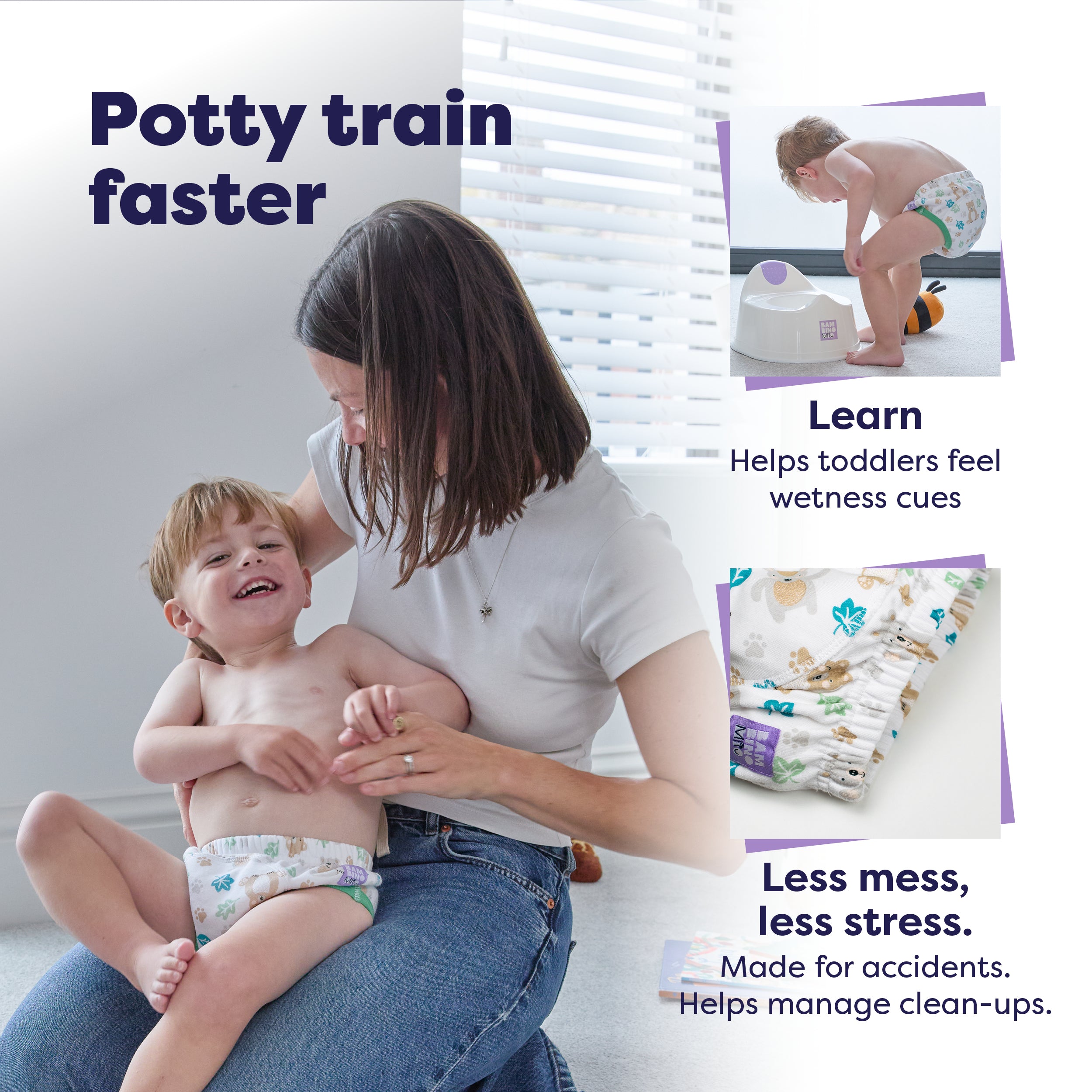
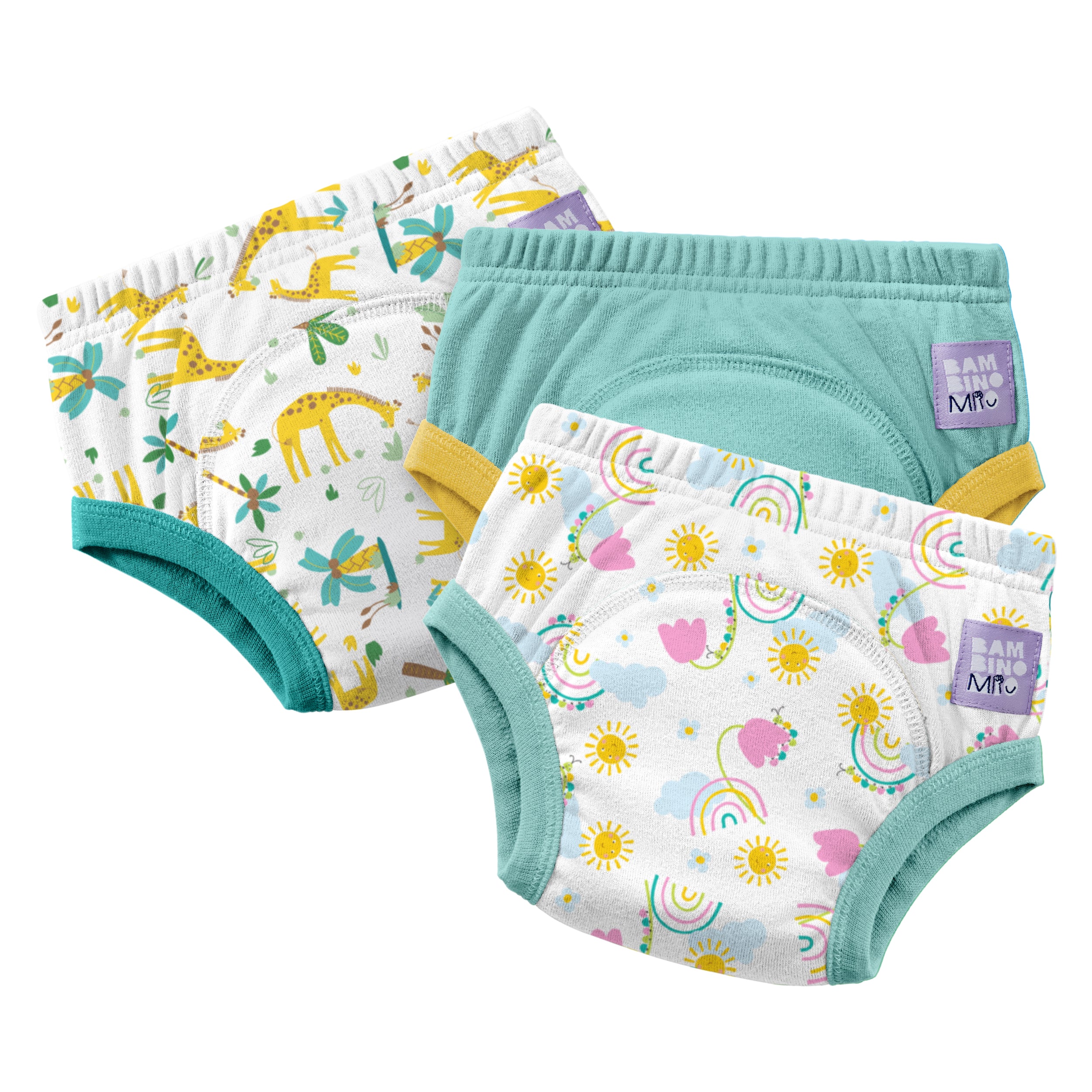
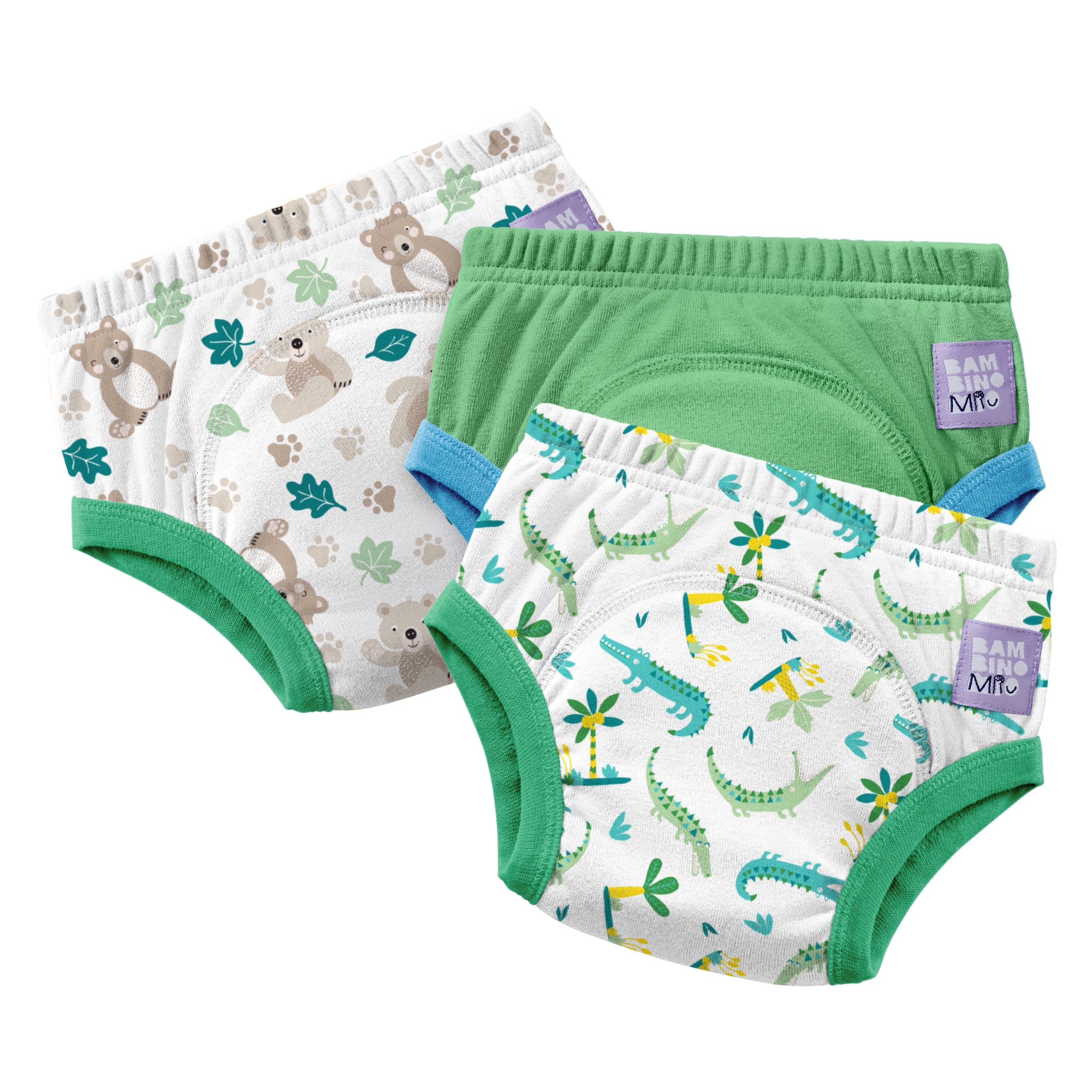
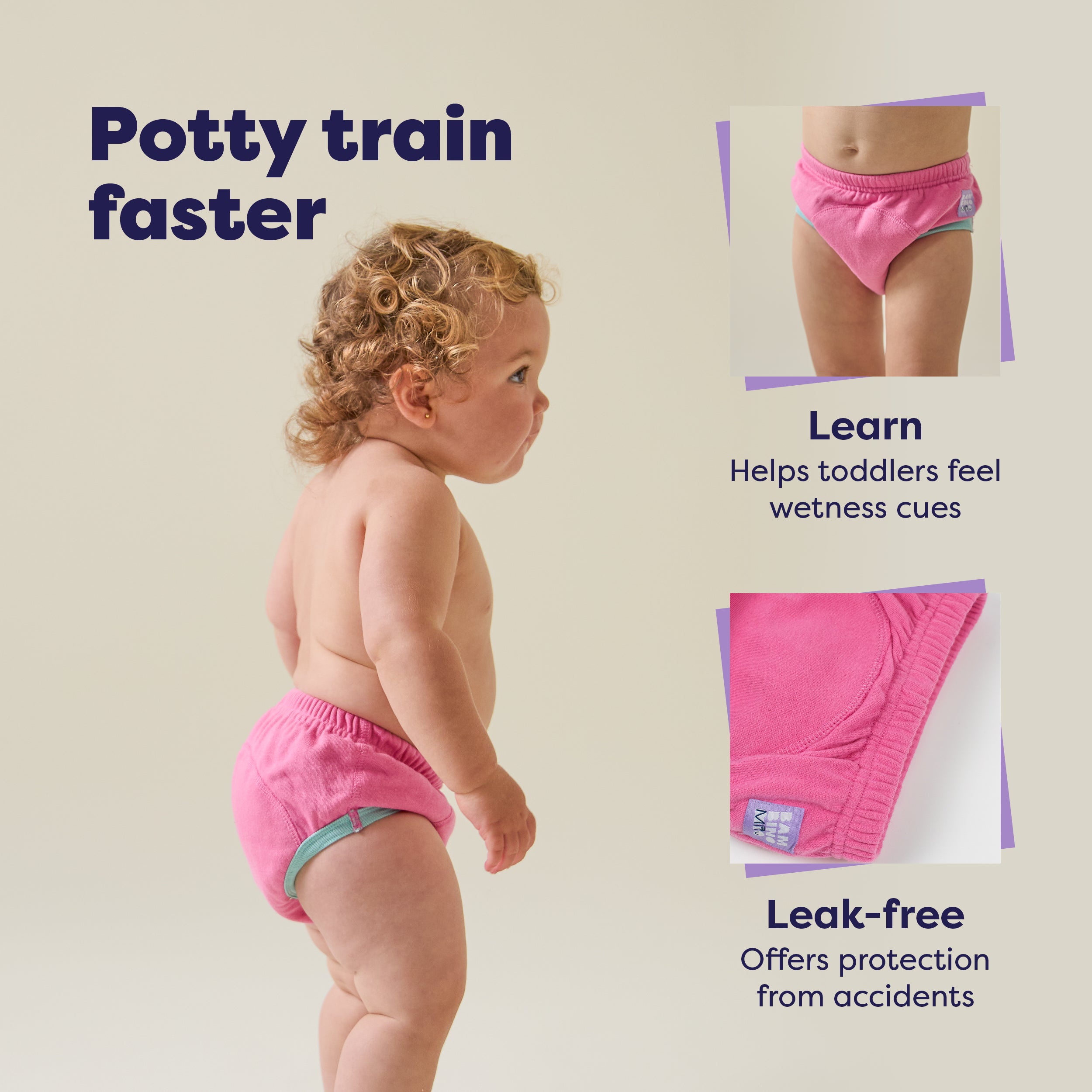
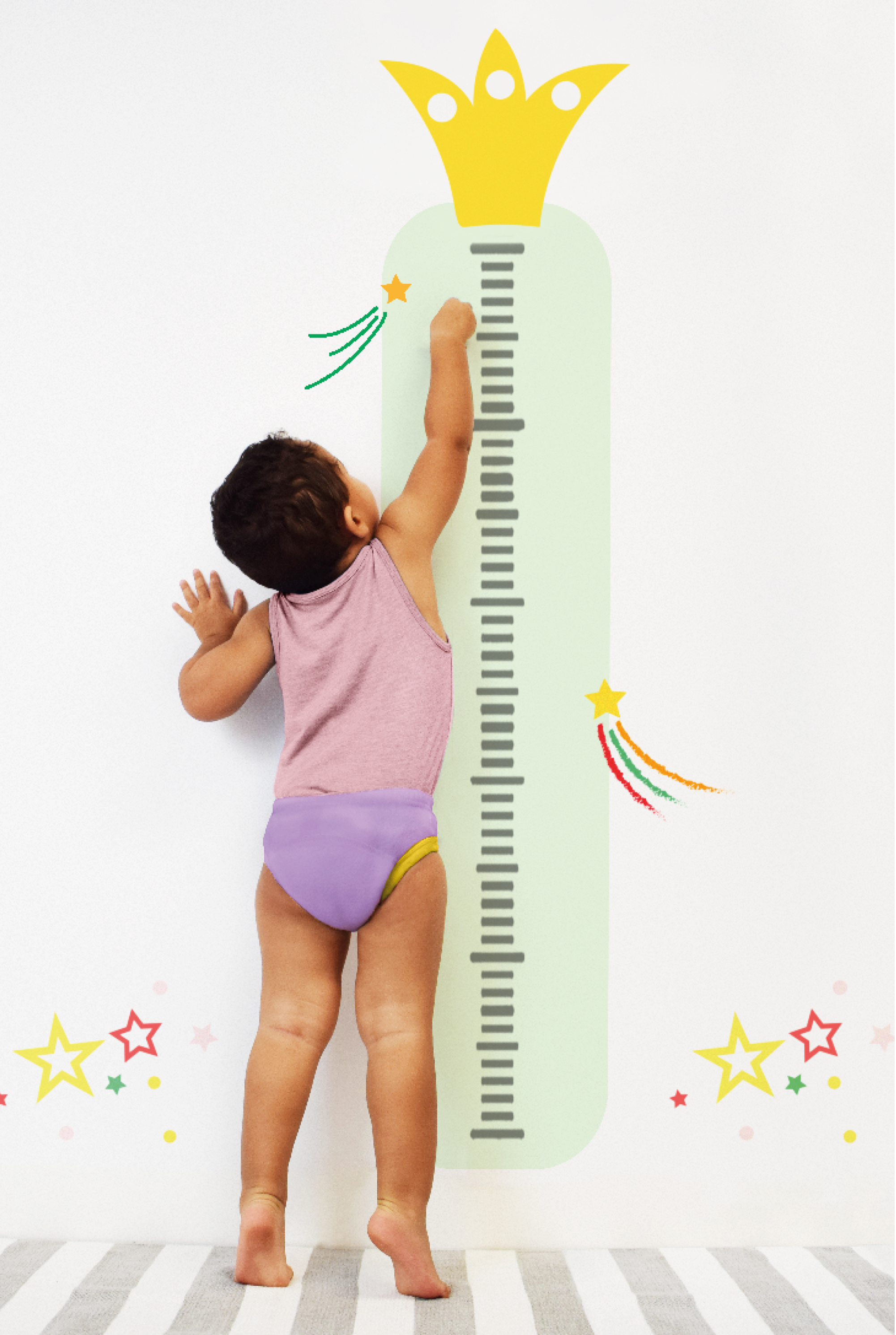
Training pants that sit somewhere between a nappy and proper underwear. Absorbent enough to contain minor accidents but not so padded that children can't feel when they're wet, which matters for learning. Training pants pull up and down like regular underwear, which helps children feel like the transition is already happening.
Revolutionary Reusable Nappy
The Revolutionary Reusable is Bambino Mio's newborn-to-potty nappy, designed to fit from birth right through to toilet training. It adjusts across multiple size settings so you're not hunting for new nappies at each stage.
Rise Snaps
The row of press-studs on the front of a one-size nappy that adjust the length as your baby grows. Snapping them up makes the nappy shorter for smaller babies, unsnapping them adds length for bigger ones.
S
Sizing
Reusable nappies come in birth-to-potty (one-size) designs or sized options (newborn, small, medium, large). One-size nappies are more economical overall but can be a little bulky on very small newborns. Sized nappies tend to give a neater fit at each stage but mean buying into multiple sizes over time.
Snaps
Press-stud fastenings used on many reusable nappies. More durable than hook-and-loop over time and they won't pick up fluff in the wash. Slightly less adjustable and a little slower to fasten, but very reliable.
Stripping
A deep-cleaning process for nappies that have developed a build-up of detergent residue or ammonia. Usually involves a hot wash and sometimes specific additives. It's a fix for a specific problem, not a regular part of the wash routine.
Sunning
Laying clean nappies out in direct sunlight to naturally fade stains and freshen the fabric. It works surprisingly well, with even weak winter sun having an effect. A good habit after a stripping wash too.
T
Terry Cloth
The classic towelling fabric used in traditional flat nappies. Highly absorbent, very durable and gets better with washing. One of the most cost-effective reusable options, though it does require folding and a separate wrap.
Toilet Training Seat
A child-sized seat that fits over a standard toilet, making the opening more toddler-friendly. A natural next step once your child is ready to move on from the potty.
Training Pants
See Reusable Potty Training Pants.
W
Wash Routine
The process of cleaning used reusable nappies. A standard routine is a cold pre-wash to rinse out soiling, followed by a longer main wash at 40 or 60 degrees with a full dose of detergent. Getting this right is the single most important thing you can do to keep nappies performing well.
Wet Bag
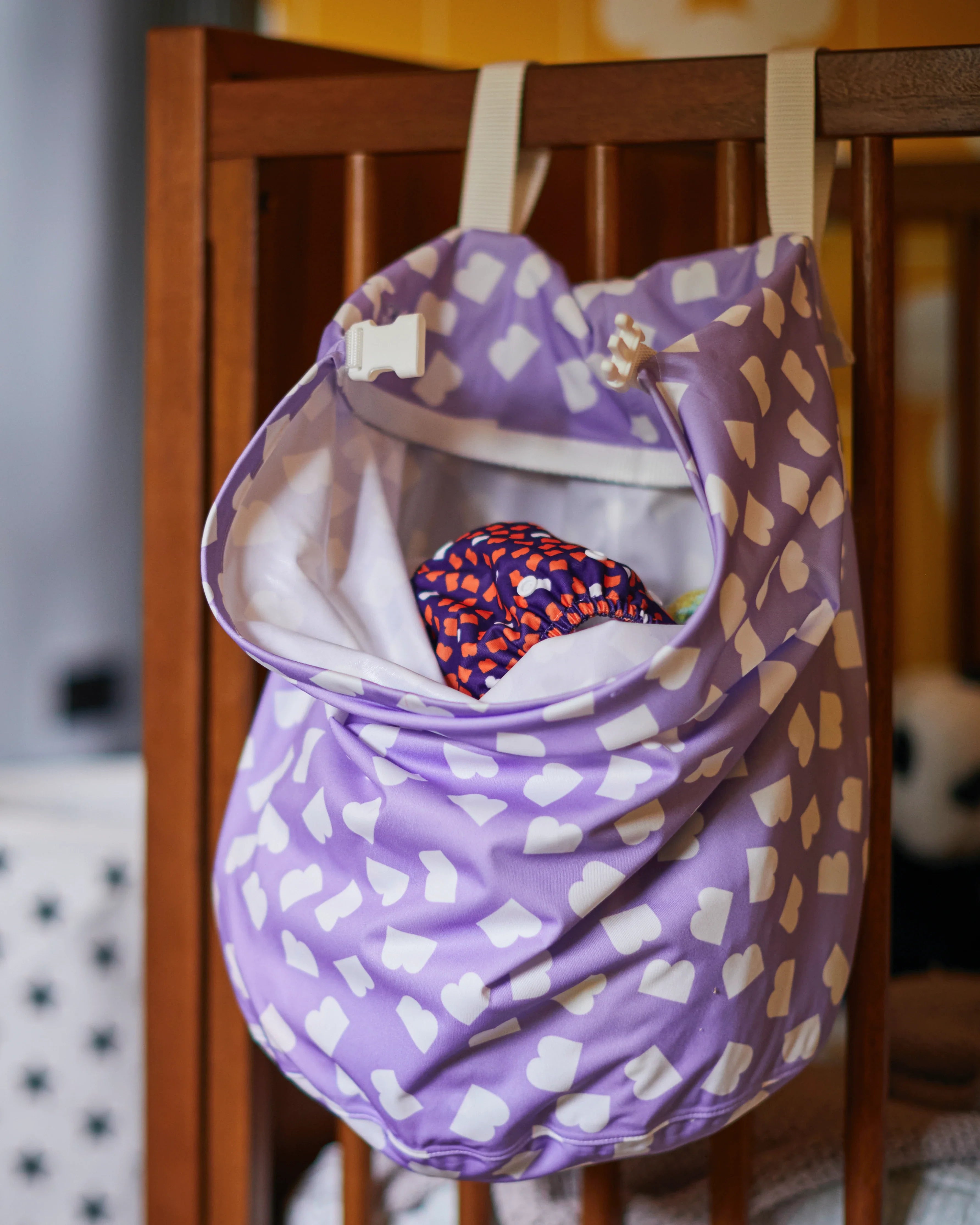
A wet bag is a waterproof, reusable bag for storing dirty nappies when you're out. Essential changing bag kit. Most are made from PUL, zip shut and wash alongside your nappies. Having at least two means one is always available while the other is being washed.
Wetness Indicator
A colour-change line on the outside of a nappy that shows when a baby has weed. More common on disposables than reusables.
Wool Cover / Wool Wrap
A nappy cover made from wool, used as the waterproof layer over a fitted or flat nappy. Breathable and water-resistant when treated with lanolin, though it needs more maintenance than a PUL wrap, including hand washing and regular lanolising.
Wrap
A waterproof cover worn over a flat, prefold or fitted nappy. The wrap provides the waterproofing while the inner nappy does the absorbing. Wraps can often be reused across multiple changes as long as they haven't been soiled.