
When are Kids Potty Trained? A Guide to the Best Age to Potty Train | Bambino Mio®
You know that moment at toddler group when someone casually mentions their little one is already using the potty, and you smile and nod and then spend the drive home wondering if you've somehow missed the memo? We've all been there.
Potty training is one of those milestones that comes with a surprising amount of pressure, and very little consensus on when it's actually supposed to happen. The truth is, it varies a lot more than most people realise, and understanding the answer to ‘when are kids potty trained’ has a much wider, more forgiving answer than the internet would have you believe.
So, let's talk about what the research actually says and how to tell whether your toddler is ready to give it a go.
When Are Kids Potty Trained? What the Averages Actually Tell Us
The average age for potty training in the UK is around two and a half years old, though the honest answer is that there's a pretty wide window on either side of that. UCL research shows that back in the 1950s, the average age was around 28 months, which had crept up to 37 months by the 2000s. Today, a significant number of children are starting school at 48 months old, still in nappies.
A lot of that change comes down to disposable nappies. They're designed to keep babies feeling dry, which is brilliant for comfort, but it does mean children often don't develop the body awareness that helps potty training click. When you can't feel that you're wet, the connection between sensation and what your body's doing takes longer to form.
The Institute of Health Visiting reports that nine in ten children are dry most days by age three, with most reliably dry every day by four. ERIC, the Children's Bowel and Bladder Charity, suggests the sweet spot for stopping nappies is between 18 and 30 months, noting that the longer training is left, the harder the adjustment can be.
None of that is cause for alarm if your two-year-old is showing zero interest. It's just useful context for why earlier tends to be gentler, even if it takes a bit longer.
What is the Best Age to Potty Train?
There's no single answer to this, and anyone who tells you otherwise is probably selling something.
Readiness isn't a switch that flips one morning, nor is it something to sit back and wait for. It’s best to start treating it as a gradual process rather than a big, dramatic event that tends to make the whole thing far less stressful for everyone involved. Think of it the same way you'd approach learning to use a spoon: you don't wait for them to tell you they're ready, you just pop one in their hand and see what happens.
Starting early doesn't guarantee finishing early, but it does mean the groundwork gets laid without any pressure.
Does it matter if you start later?
For most children, a slightly later start doesn't cause any lasting issues. That said, research does suggest that training beyond three years can be harder for children to adjust to and is linked to a higher chance of bladder and bowel difficulties down the line. The Coram PACEY report on potty training found that one in four children currently starts school not yet toilet trained, which brings its own set of challenges for little ones and their teachers alike.
If your child is heading toward three with no signs of engagement, a chat with your health visitor is always a good idea. Not to panic, just to get some support and a gentle plan together.

Signs Your Toddler is Ready for Potty Training
This is the bit everyone wants to know. How do you actually tell? The good news is that toddlers give you plenty of clues, even if they're not exactly spelling it out.
Your toddler may be ready if they:
- Notice when they're doing a wee or poo, or seem to clock it just before it happens
- Stay dry for an hour or two at a time, which suggests their bladder is starting to develop some real control
- Can sit down on a potty and get back up on their own
- Show an interest in what you're doing in the bathroom (yes, that means you've lost your privacy for a bit)
- Start to fidget, go quiet, or disappear behind the furniture when they need to go
- Can understand and follow a simple instruction
It's worth knowing that not every child will tick every one of these boxes before they're ready to start. Waiting for every sign to appear can end up delaying things unnecessarily. If your toddler is showing a good few of these fairly consistently, that's a perfectly reasonable moment to introduce the potty, leave it in the bathroom, and start chatting about what it's for.
Average Potty Training Age by Country
One of the most eye-opening things about potty training is how much the average age varies depending on where in the world you are. What feels completely standard in the UK is quite different from what's normal elsewhere.
| Country | Average age to begin training | Notable approach |
|---|---|---|
| UK | 2 to 2.5 years | Readiness-led, trending later |
| USA | 2.5 to 3 years | Readiness-based, trending later |
| France | Around 2.5 years | Relaxed, child-led |
| Germany | Around 2 years | Structured routines, readiness-focused |
| Japan | 18 months to 2 years | Patient, gradual, consistency-led |
| China | From around 12 months | Elimination communication and split-crotch pants widely used |
| Kenya and Tanzania | From birth (traditional communities) | Elimination communication from the newborn stage |
In China, the traditional use of split-crotch pants, known as kaidangku, means many children are trained by age two, with some families starting EC-style communication from just a few months old. In Japan, training tends to begin around 18 months with a slow, steady approach that prioritises consistency over speed. In Scandinavian countries, the philosophy is notably relaxed and child-led, rooted in a deep trust that children will get there when they're ready.
What is the Average Age Potty Training Happens in the UK?
The average age for potty training in the UK is around two and a half years, though as we've covered, the range is wide. Most children are reliably dry during the day by three, and fully dry day and night by four. If your little one is somewhere in that window, you're right in the middle of average.
Why Reusable Nappies Can Make a Difference
If you're already using reusable nappies, you may have given your little one a head start you didn't even know about. As reusable nappies don't pull moisture away from the skin the way disposables do, children in cloth tend to develop body awareness earlier. They can feel when they're wet, and that sensation is actually really important for building the connection that potty training depends on.
The Toilet Training Census found that by age two and a half, 72% of children using reusable nappies were toilet trained, compared to 54% of those in disposables. When children are more attuned to what their body is doing, they're in a much better position to start managing it themselves.
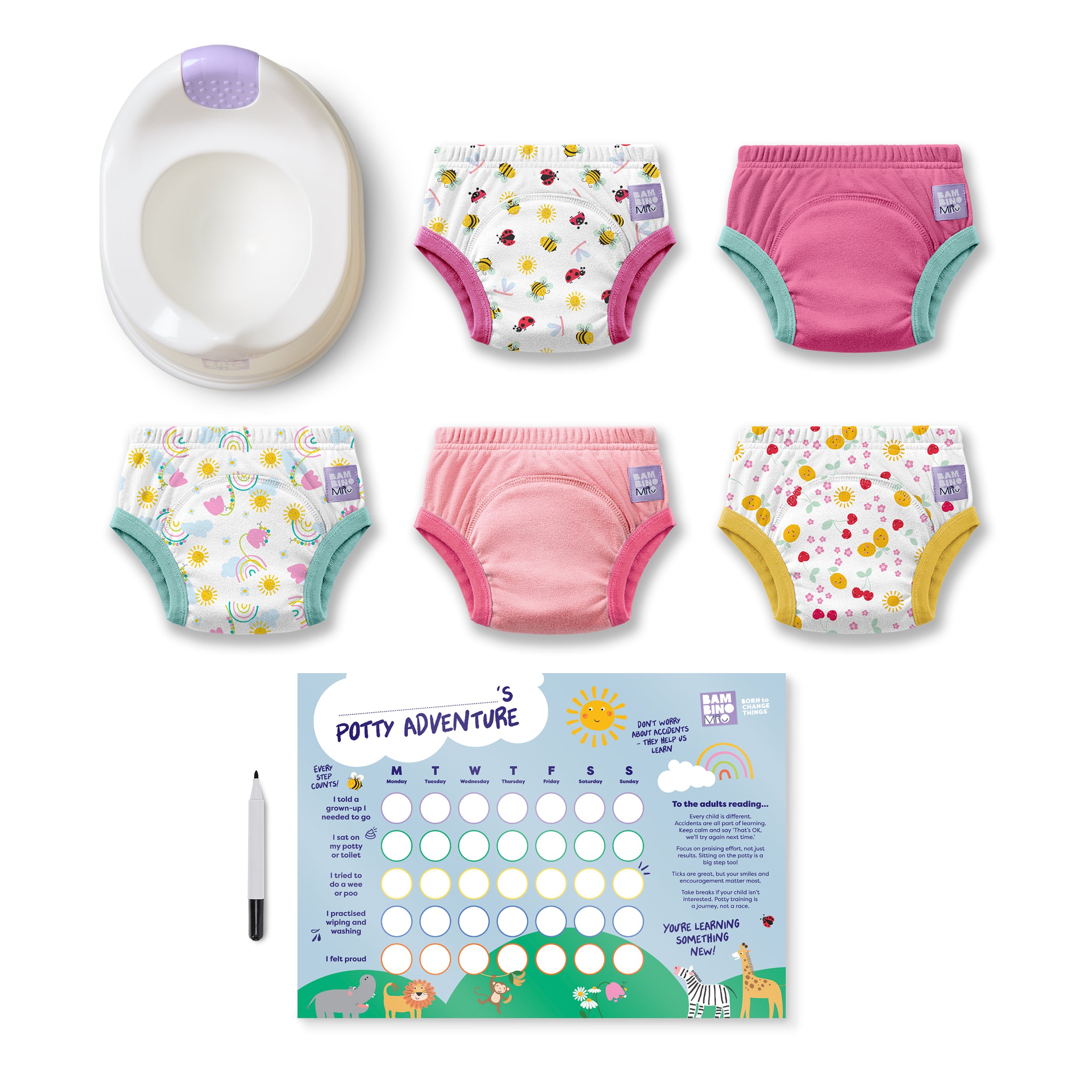
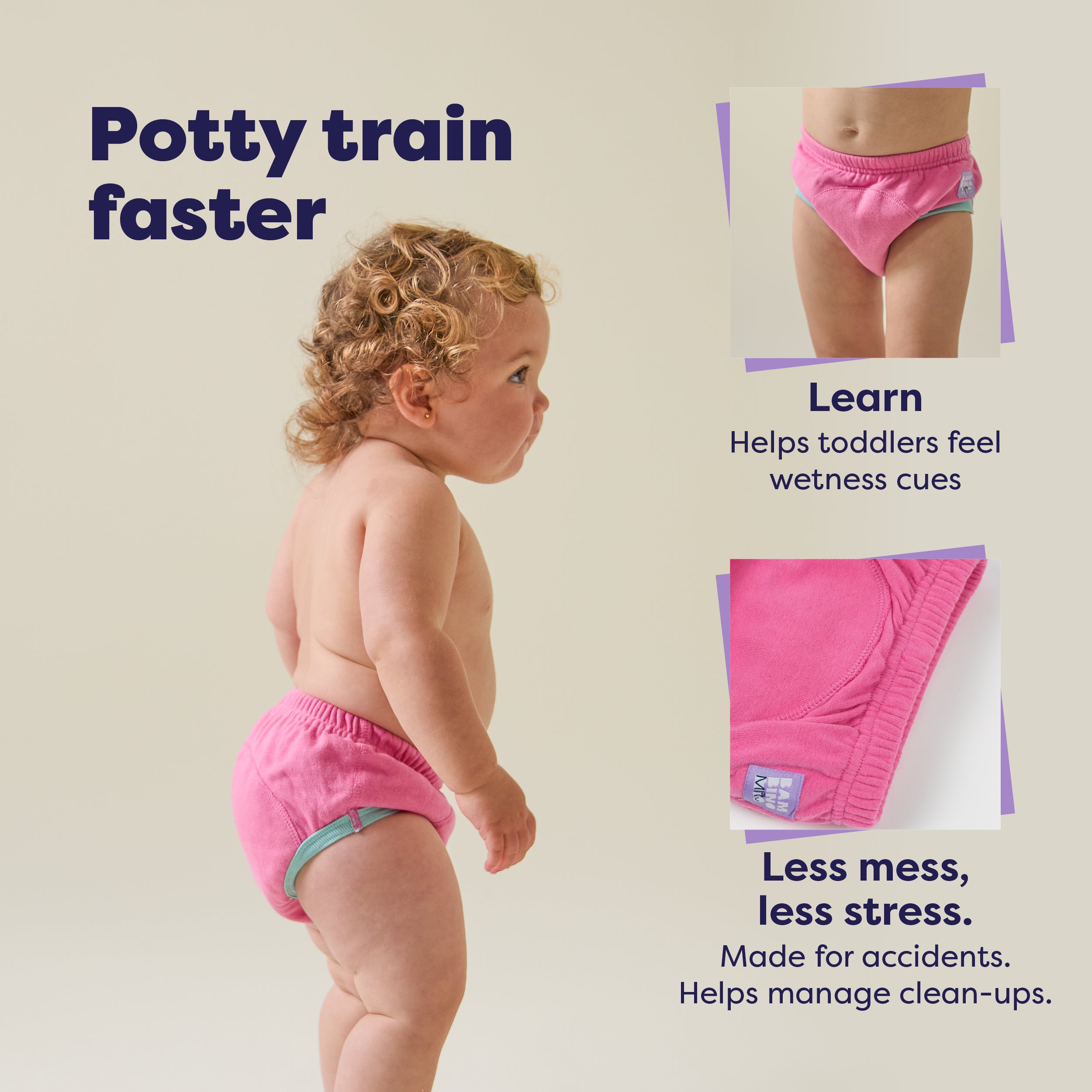
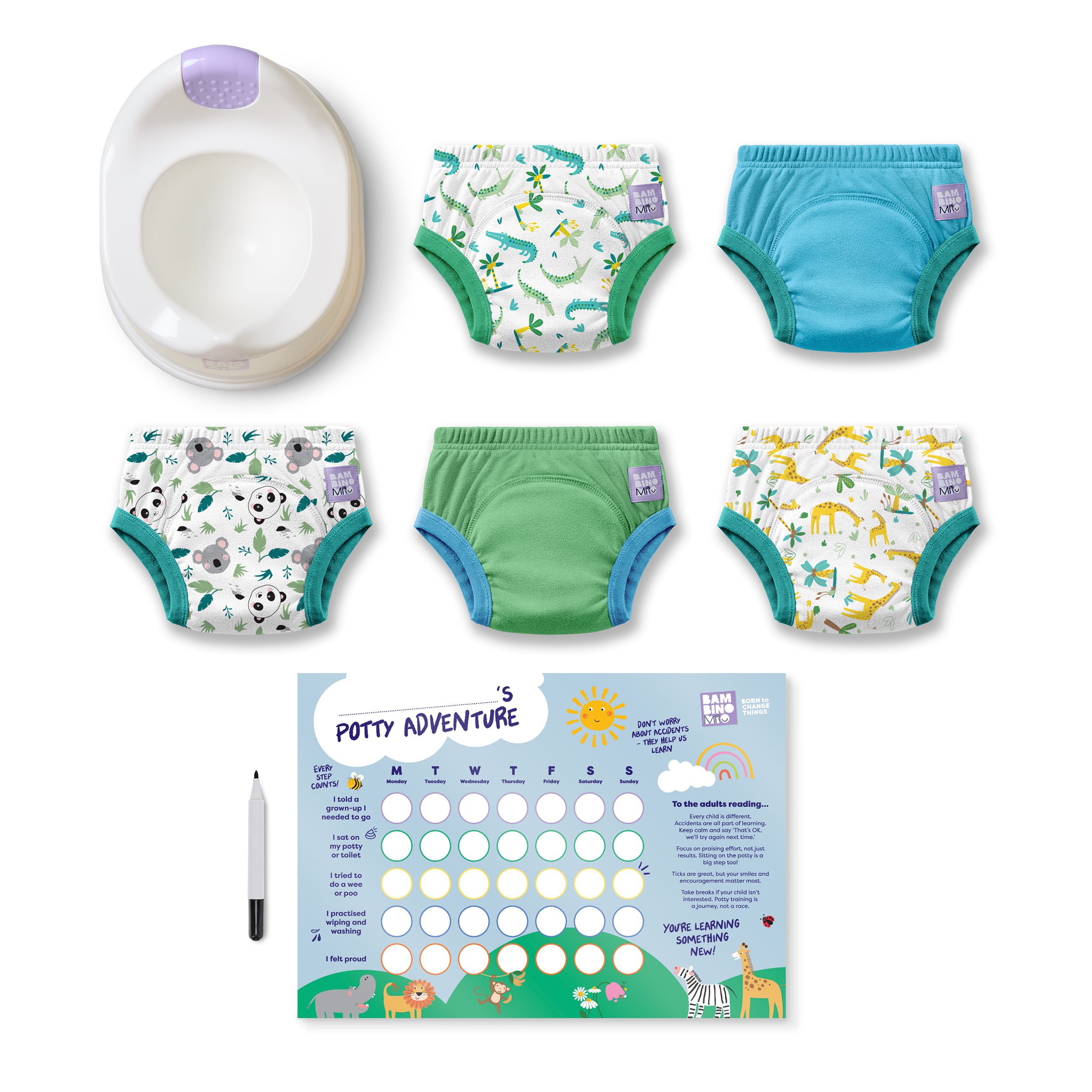
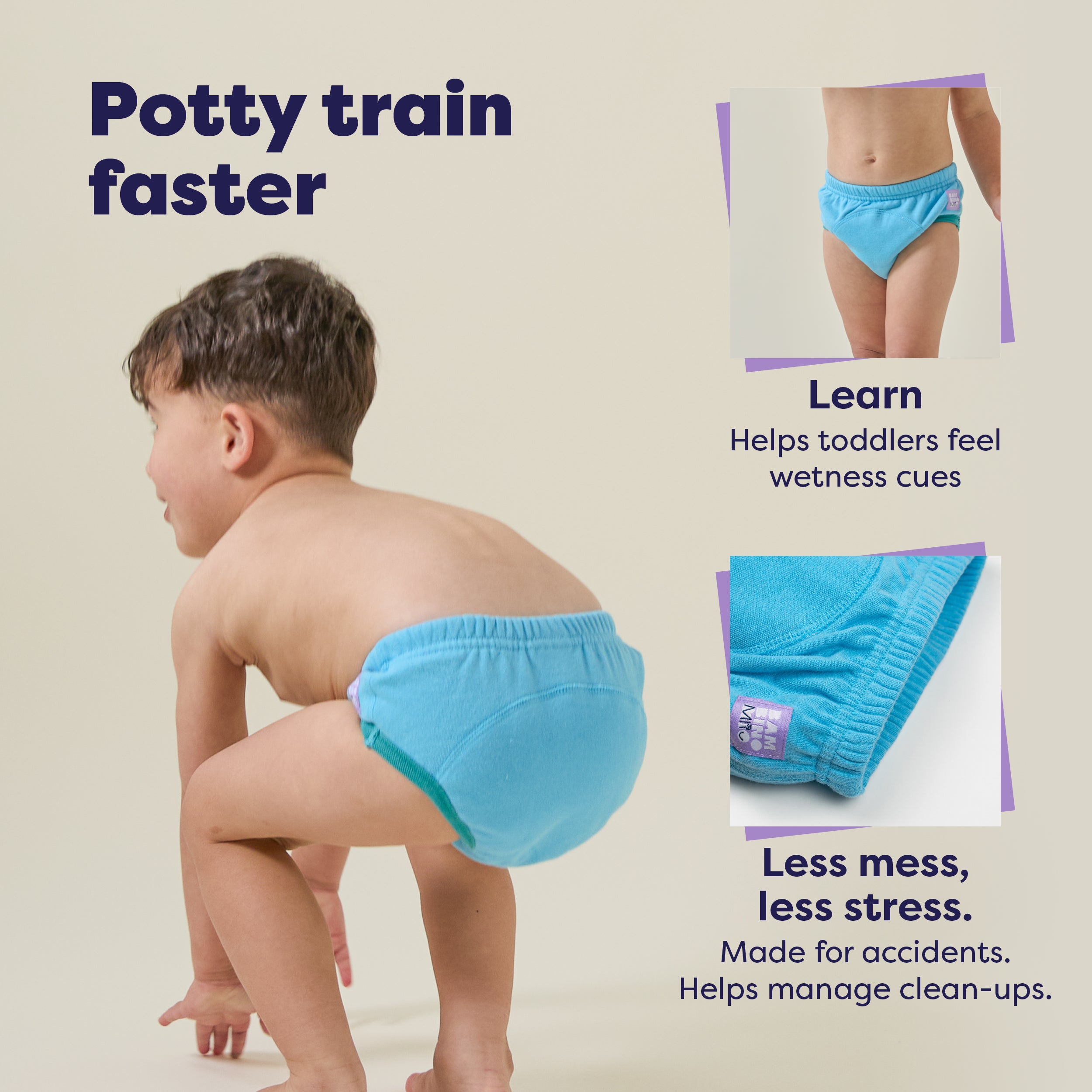
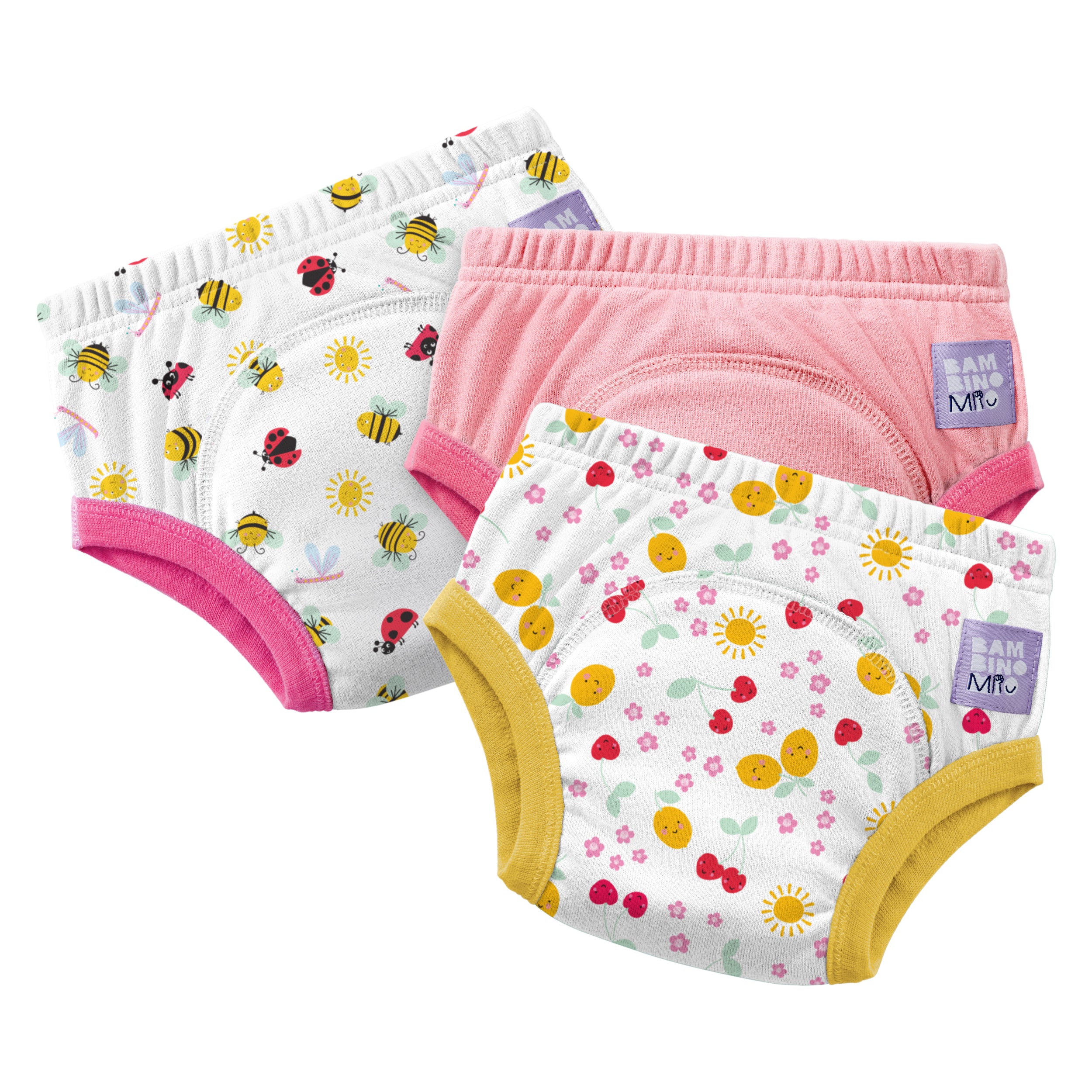
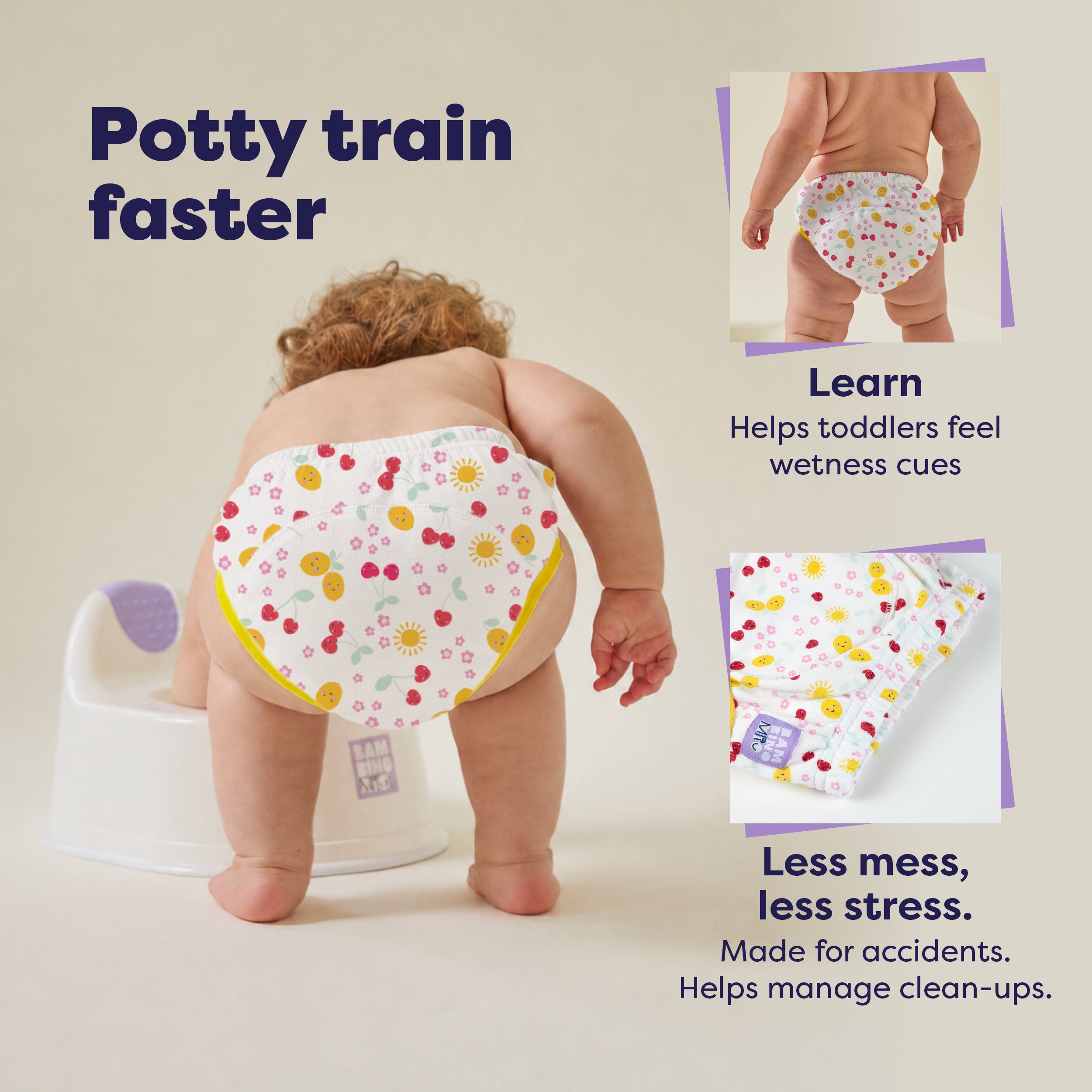
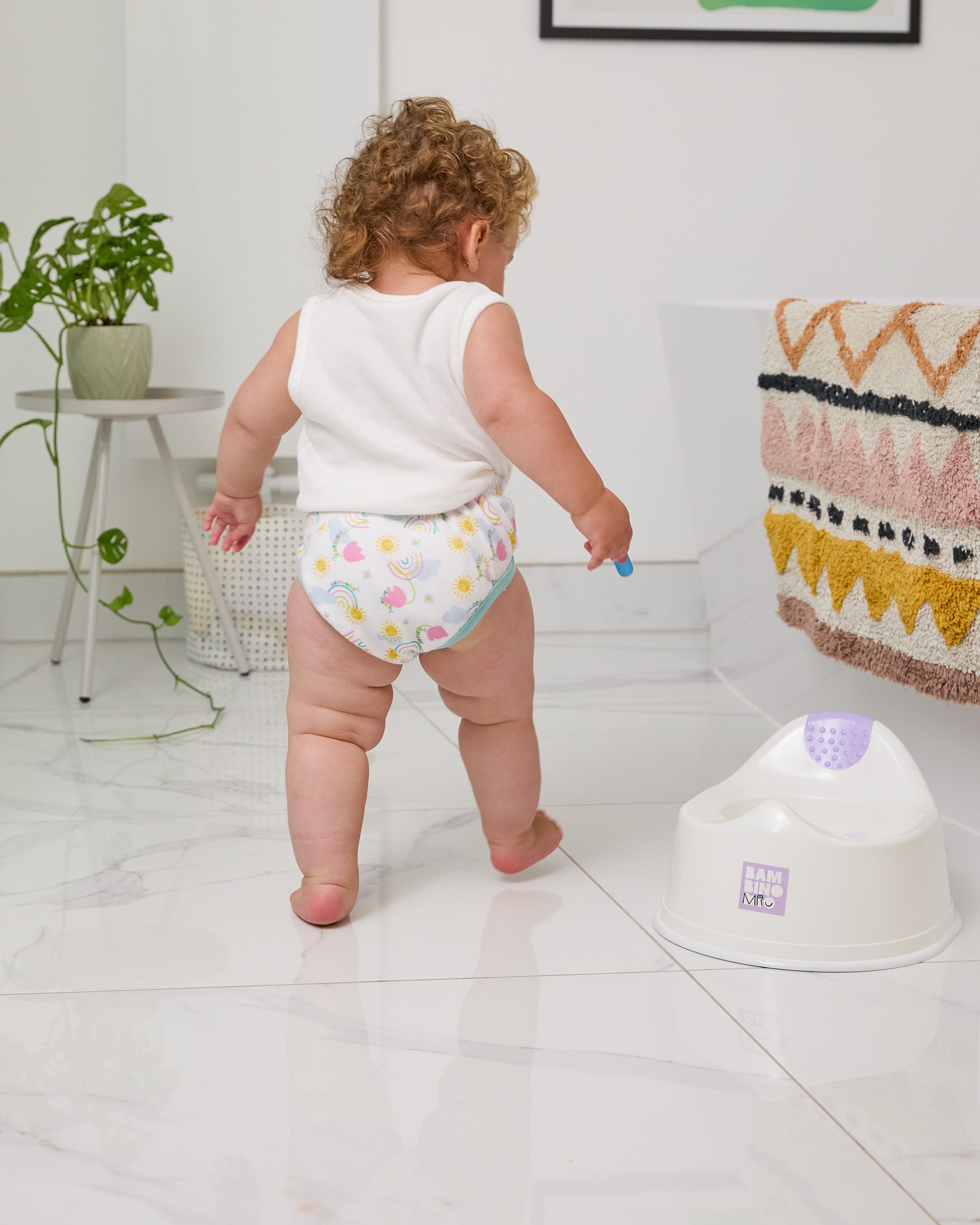
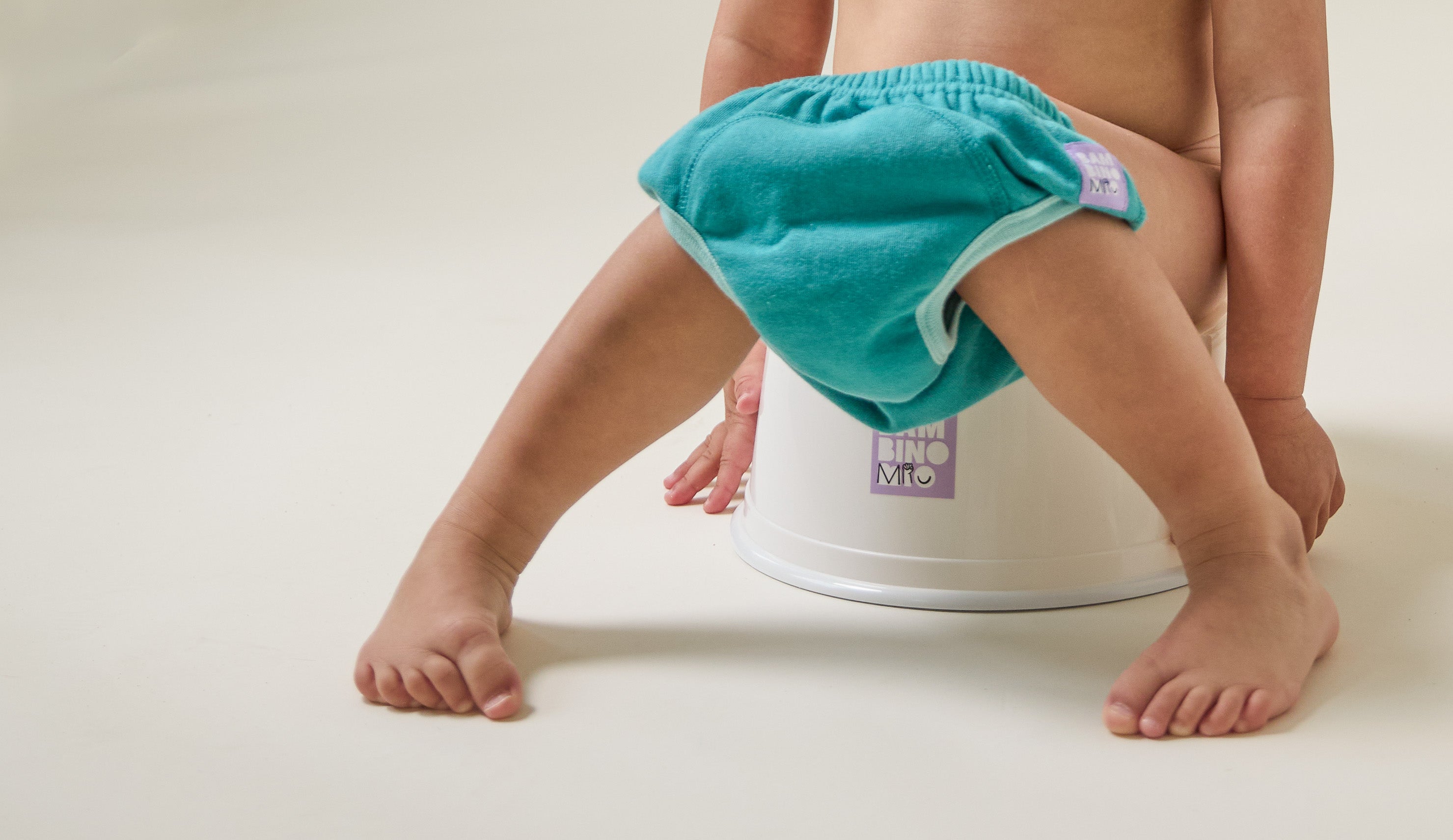
Our reusable potty training pants carry that same thinking into the training stage. They look and feel like proper big-kid pants, which toddlers absolutely love, with a built-in absorbent layer for when things don't quite go to plan. The slightly damp feeling when a wee happens prompts exactly the kind of recognition that makes the learning stick. They pull up and down independently, too, which is wonderful for a toddler who is very, very keen to do things by themselves.
How Long Does Potty Training Take?
Honestly? It depends entirely on the child and a fair amount of luck. Studies have shown an average of just over six months from start to finish, but some children crack it in a long weekend, and others take the best part of a year to feel confident. Second children often fly through it, partly because they've been watching an older sibling do it for months and partly because parents are a bit more relaxed this time around.
The intensive three-day method, staying home, ditching the nappies and leaning in hard, works brilliantly for some families and is absolutely not for others. A gentler, more gradual approach over a few weeks suits children who need time to get comfortable with new things. Neither is wrong, and both can work. You know your child.
What research consistently shows is that children who start earlier tend to progress more gradually, and children who start later often move through the process more quickly once they actually begin. Different routes, same destination.
A Note on Night-Time Dryness
Daytime and nighttime dryness are genuinely separate milestones, and it's completely normal for a gap between them. Lots of children crack daytime dryness and then spend another year or more in a nappy at night, and that's absolutely fine. Night-time bladder control depends on a hormone called ADH, which suppresses urine production during sleep, and it just takes time to kick in properly for some children. It's physiological, not a behaviour issue, so there's no point trying to push it before the body is ready.
The most reliable sign that night-time training might be worth trying is a consistently dry nappy when your child wakes up. When that starts happening regularly, that's your moment.
Every Single Child Gets There
Potty training is one of those stages that can feel enormous and slightly relentless when you're in it, especially when it seems like every other toddler has been dry for months. The research is reassuring: with a bit of consistency and a lot of patience, all children get there. The range of normal is wide, and approaching it from a place of calm and encouragement rather than pressure makes the whole thing easier for you both.
Thinking of getting started? Explore our full range of potty training accessories for everything you need at this stage.