
The Complete Reusable Nappy Guide for Parents
Switching to reusable nappies is one of those parenting decisions that just keeps on giving. Kinder to your baby's skin and much better for the planet, they slot into daily life more easily than most parents expect. The learning curve is short, so most parents wonder within a week or two why they didn't start sooner.
That said, it can feel like a lot to take in before you've actually got a nappy in your hands. There's a whole world of terminology, bundle options and washing advice out there. That's what this reusable nappy guide is for. Whether you've just ordered your first reusable nappies or you're still weighing things up, everything you need is here: how reusable nappies work, how they compare to disposables, how many to get, how washing works and how to get the fit right so you're not dealing with any surprise leaks.
What Are Reusable Nappies?
Reusable nappies, sometimes called cloth nappies or washable nappies, are nappies you wash and use again rather than throwing away. They're made from soft, high-performance fabrics rather than the plastics and chemical gels found in single-use nappies, and they're designed to see your baby all the way from birth through to potty training.
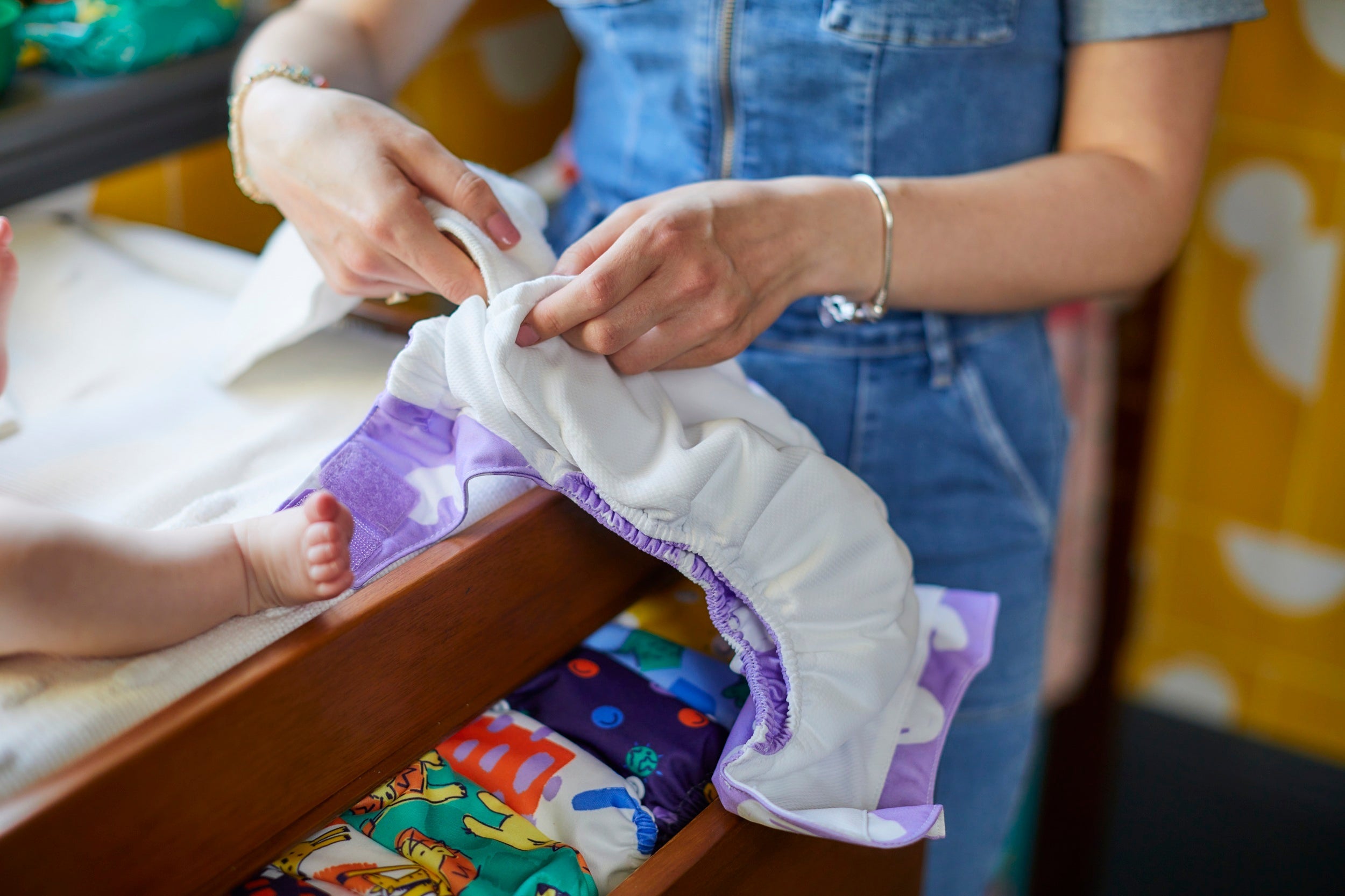
The Miosolo is an all-in-one design, which means everything is already in one piece. There's no fiddling around at 3 am trying to work out which bit goes where, no separate covers to wrestle with or origami-level folding required. Most parents have their first change done in under two minutes by the end of the first week.
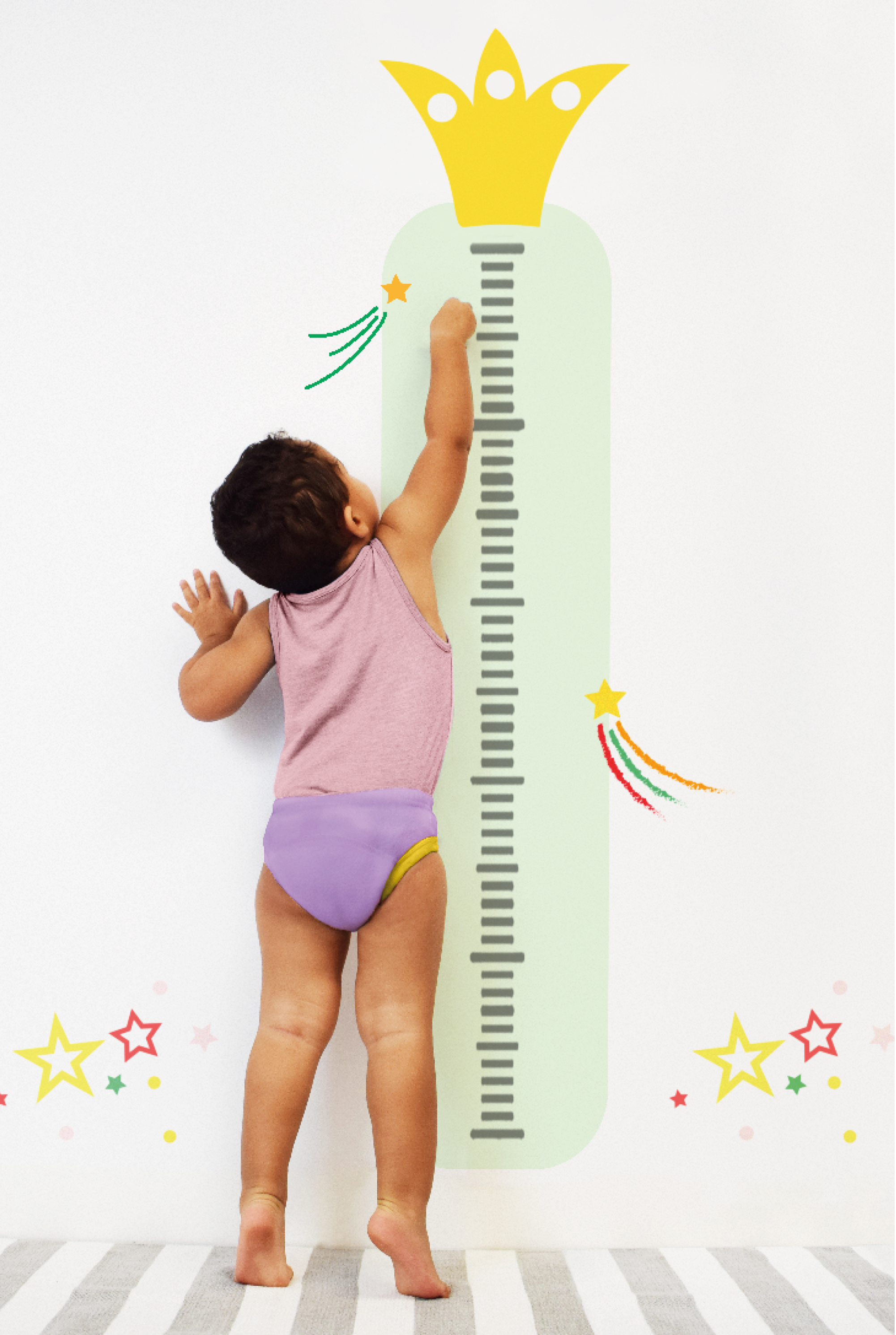
The Revolutionary Reusable Nappy, on the other hand, adjusts to fit your baby from newborn all the way through to potty training. The poppers at the front give you multiple rise settings, so the same nappy that fitted your baby at a few weeks old will still fit them at two and a half. Use them on a second child, and the value compounds even further.
Reusable vs Disposable Nappies: How Do They Compare?
It's the question every parent asks before making the switch, and it deserves a proper answer. Here's how the two stack up.
The environmental case
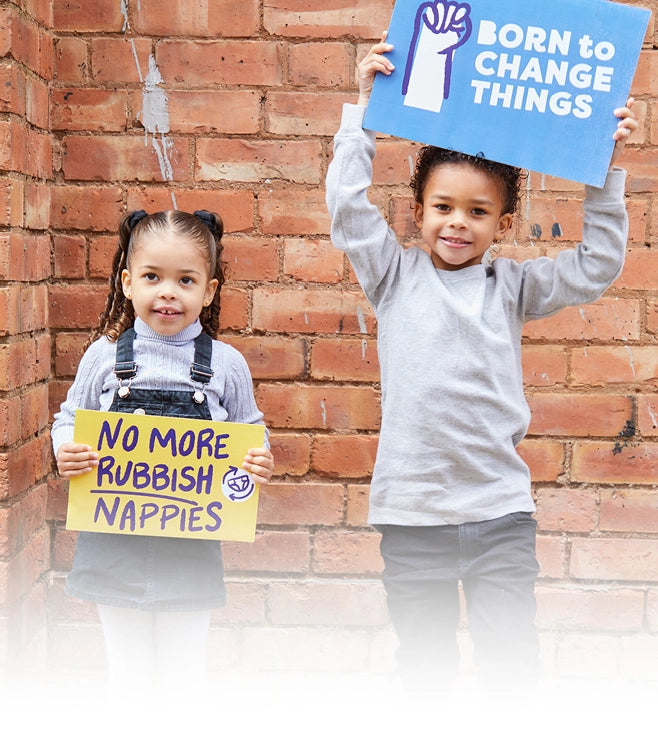
A baby in disposables will get through somewhere around 5,000 nappies before they're potty trained. Each one takes hundreds of years to break down in a landfill, and the average child has left quite a legacy before they've even started school. When washed responsibly and according to care instructions, reusable nappies stop all of those single-use nappies from being thrown away and produce around 25% less CO2 over their lifetime, according to a UK Environment Agency lifecycle assessment. Use them on a second child, and that saving roughly doubles.
The financial case
Disposable nappies cost the average family somewhere between £1,500 and £2,000 from birth to potty training. That's a lot of money disappearing into a bin, week after week, for two and a half years. A full reusable stash costs a fraction of that, and even once you factor in the washing costs, the savings are genuinely significant. One parent we heard from worked out she'd saved over £1,200 by the time her daughter was potty trained. Use the same nappies on a second child, and the economics become even more compelling.
The skin case
Disposable nappies rely on chemical gels to absorb moisture and lock it away from your baby's skin. Those gels are effective, but they're not breathable, and for babies with sensitive skin, they can be a contributing factor in nappy rash. Reusable nappies use soft, breathable fabrics that absorb moisture naturally, allowing airflow and keeping your baby's bottom in a more comfortable environment. It’s believed that the rates of nappy rash have increased alongside the widespread use of disposable nappies, which is worth knowing if your baby has particularly sensitive skin.
At a Glance: Reusable vs Disposable
|
Reusable |
Disposable |
|
|
Cost birth to potty |
From ~£300 |
Up to £2,000 |
|
Environmental impact |
Up to 5,000 fewer nappies in landfill |
~5,000 per child in the landfill |
|
Skin & breathability |
Soft, breathable fabrics |
Chemical gel absorbents |
|
Fit |
Adjustable from birth to potty |
Sized, need replacing as baby grows |
|
Convenience |
Needs washing |
Grab and go |
|
Nappy rash |
Lower rates reported |
Higher rates reported |
|
Usable on the second child |
Yes |
No |
How Many Reusable Nappies Do I Need?
Around 20 nappies is the sweet spot for full-time use, and here's the logic behind that number. Young babies need changing every two to four hours, and used nappies sit in the wet bag for up to three days before washing. You need enough to cover what's on your baby, what's waiting in the bag and what's airing on the line. Twenty gets you through comfortably without a 10 pm panic wash.
Not ready to go full-time straight away? That's completely fine. Lots of parents start small, get comfortable with the routine and build their stash up gradually. The Essentials Bundle is designed for exactly that: enough to get a proper feel for reusables without buying everything at once. Most parents who try it are reaching for the Everything Bundle within a couple of weeks, once they realise how straightforward the whole thing actually is. That bundle comes with 20 nappies and a selection of accessories for full-time use from day one.
If you're already thinking about baby number two, your stash will see them through just as well as it did your first. Those 20 nappies that felt like an investment start to look like an exceptionally good deal when you're not buying a single nappy for your second child.
Can I Use Reusable Nappies from Birth?
Yes, absolutely. The Bambino Mio Revolutionary Reusable Nappy is designed with newborns specifically in mind. The fabric is super-soft against brand-new skin, and the waist has a shaped cutout that sits comfortably around the umbilical stump while it's still healing. You don't need a separate newborn nappy or any transitional option. The same nappy that fits your baby in those first hazy weeks adjusts as they grow, right the way through to potty training.
That said, those first few weeks can be a lot. If you decide to use disposables while you find your feet and switch to reusables once something resembling a routine has emerged, that's a completely reasonable call. There's no wrong answer, and the nappies aren't going anywhere.
How to Use Reusable Nappies
Here's the thing nobody tells you: the first change takes a bit longer, the second is fine, and by the fifth you're faster than you ever were with a disposable. The key is setting the nappy up before you need it, not while you're mid-change with a wriggly baby doing their best impression of a break dancer.
Start by adjusting the rise poppers to the right setting for your baby's size. If you're using a liner, pop it in the centre of the nappy now. Then lay your baby down, bring the front of the nappy up and secure the tabs on each side. Check that all the fabric is tucked inside and that the elastic sits neatly in the leg creases rather than digging in or gaping. The two-finger test at the waistband is your guide: if two fingers slide in comfortably, you've got it right.
Most parents are completely comfortable with the routine within a week. A few are smug about it within three days. You'll get there.
What About the Poo?
Let's just get this one out of the way, because it's the thing everyone is quietly thinking about. The honest answer is that it's really not as bad as you're imagining, and nappy liners are the reason why.
Bambino Mio Messless Nappy Liners sit inside the nappy and do exactly what their name suggests. When it's time for a change, you lift out the liner, tip anything solid into the loo and either bin the liner or set it aside for washing if you're using the reusable version. The nappy itself usually comes out barely touched. On the odd occasion it doesn't, a quick rinse sorts it before it goes into the wet bag.
For breastfed babies, it's even simpler. Breastfed poo is water-soluble, which means it goes straight in the wash with no pre-rinsing required. It's one of those things that sounds unpleasant right up until you realise it's actually less effort than dealing with a disposable blowout. Ask any parent who's had one of those in a car seat, and they'll tell you reusable nappies are the low-drama option.
Storing Nappies Between Wash Days
When a nappy comes off, take any boosters out of the pocket before you store it. This helps everything wash more thoroughly and means you're not having to do it with wet hands on wash day. Fold the front tabs back on themselves, too, which protects the fabric and stops the loop side from catching on anything else in the machine.
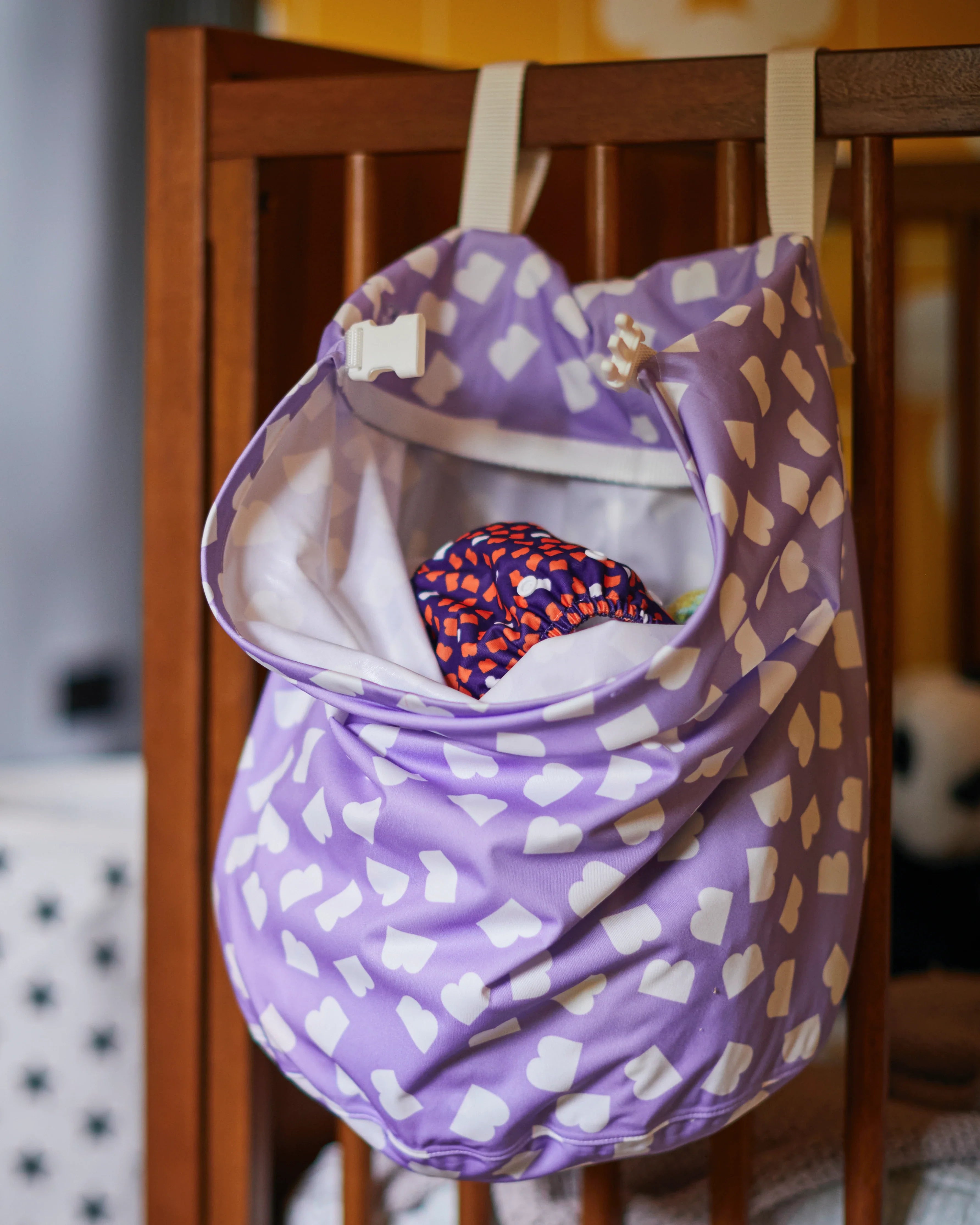
From there, used nappies go into the Stay At Home Wet Nappy Bag, which lives wherever makes most sense near your changing area. Leave it slightly open where you can: air circulation makes a real difference to how the bag smells over time. Nappies will sit happily in there for up to three days. After that, you'll know it's time, and that's really the only reminder you'll need.
How to Wash Reusable Nappies
Before your nappies meet your baby for the first time, wash them. This removes any loose fibres from the fabric and gets the absorbency ready for action. A normal cycle with a non-bio detergent is all it takes.
On wash day, carry the whole wet bag to the machine and tip the contents straight in. No need to handle each nappy individually. Aim to fill the drum to around three-quarters full so everything moves around freely and gets properly clean. Wash at 40°C with a non-bio detergent and skip the fabric softener entirely. Softener sounds like a nice idea, but it coats the fibres and kills absorbency over time, and that's the last thing you want.
There's no need for a pre-wash if you're following the care instructions. Skipping it is kinder to your machine and to the environment, and it works just as well. If you do want to run one, a short cold cycle with half a scoop of detergent does the job, and you can store the nappies damp until you have a full load.
After washing, air dry where possible or tumble dry on a low heat. Line drying in natural sunlight is genuinely brilliant for fading any staining, which happens occasionally and is perfectly normal. Just avoid high heat in the dryer, which can shorten the life of the elastic and the waterproof layer over time.
Troubleshooting the Fit
If you're getting leaks, the first thing to know is that it's rarely the nappy's fault. Leaks are nearly always about fit or absorbency, and both are easy fixes once you know what to look for.
Babies grow fast, and a nappy that fit perfectly two weeks ago might need adjusting today. If your baby's babygrows are feeling a bit snug, check the nappy fit too. Tight clothing can compress the absorbent core and squeeze out moisture that would otherwise stay put. A quick adjustment to the rise poppers is often all it takes.
If the fit looks right but you're still getting leaks, absorbency is usually the culprit. Babies produce more as they grow, and a nappy that was perfect at eight weeks might need a booster added at four months. Nappy boosters slot neatly into the pocket and give you exactly the extra absorbency you need.
Occasionally, a build-up of detergent or nappy cream in the fabric can cause the nappy to repel rather than absorb. If you've worked through the fit and the absorbency and things still aren't right, a strip wash is the answer. It's a longer, hotter wash that clears any residue and resets the fabric. It's not something you'll need often, but it's good to have in your back pocket.
That really is everything. Most parents are completely comfortable within a week, and wondering why they didn't start sooner shortly after that. Check out our bundles if you want everything in one go, or browse our selection of reusable nappies to find the right one for your needs.